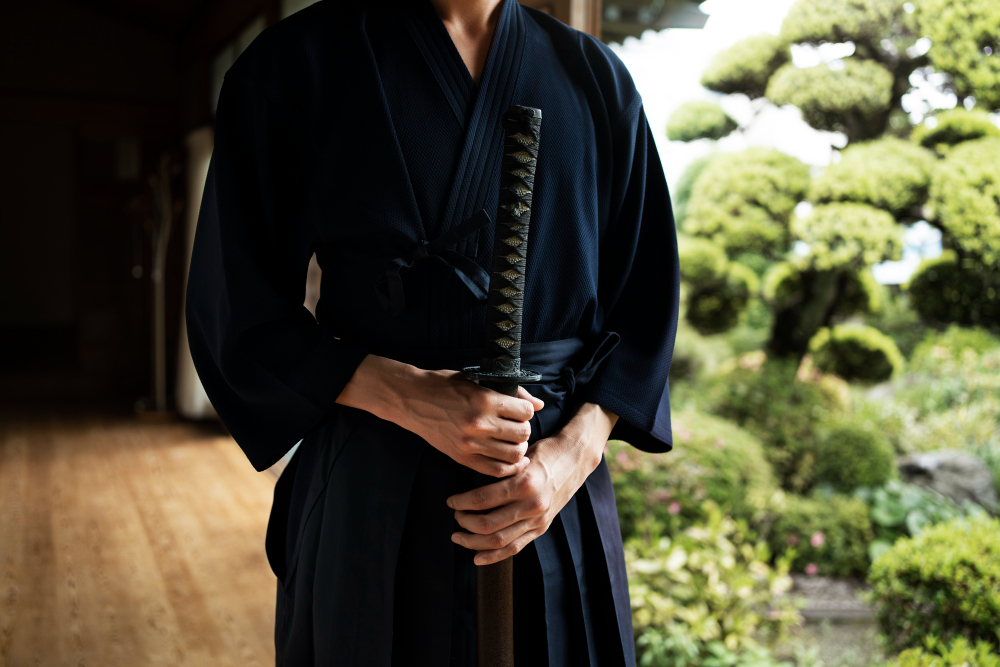
The katana remains easy to read before a character says a word. Put one in an anime frame, a game loadout, a film poster, or a collector’s room, and the viewer already knows what kind of energy has entered the scene. It can suggest restraint, danger, memory, discipline, or style without needing a speech about samurai history. A reader might not know the terminology, but they know the mood. The shape is old, but each medium gives it a different rhythm.
The Shape Carries Meaning Before the Story Starts
Some props do not need much screen time. A guitar says someone has a stage life. A leather jacket changes the temperature of a room. A crown brings power into the frame. The katana works the same way because the curved blade, long grip, guard, and saya give artists a shape people recognize quickly.
That is why katana customization has become part of modern collector culture: fans are not just choosing a blade shape, but also a color story, handle wrap, guard design, saya finish, and display mood. The object stays recognizable while the details make it personal.
A plain katana can feel quiet and ceremonial. A stylized one can belong to a cyberpunk assassin, a fantasy rival, or a game character built around speed. The silhouette holds together even when the setting becomes strange.
One Sword Can Carry Several Different Signals
The katana does not mean only one thing in pop culture. In a martial arts story, it can suggest discipline and repetition. In a revenge film, it can add threat. In anime, it may hold grief, inherited duty, or a character’s private code. In a bedroom display, it can mark a specific taste.
For collectors, even one katana sword can stand for a favorite character type, a visual era, or a broader interest in Japanese design and media culture. That does not require the piece to be historically exact. Its meaning often comes from memory and association.
That range keeps the sword useful to artists and fans. It can look disciplined, dangerous, elegant, nostalgic, or theatrical depending on the frame around it. Few design objects move so easily from animation to games to film to collector display.
Anime Made the Sword Feel Personal
Anime often turns a sword into a character extension. The blade may have a name, a color scheme, a family connection, a curse, a power system, or a history that follows the character through the story. The sword becomes a shorthand for what the character cannot say plainly.
Viewers remember the quiet rival who never raises his voice, the wandering swordsman with no real home, the student carrying an inherited blade, and the antihero tied to a cursed weapon. Those character types work because the sword can hold grief, pride, control, anger, or loyalty in a form the audience recognizes immediately.
Anime-inspired collector culture often cares about mood as much as material. Fans are not always trying to recreate history. They are preserving the feeling of a character, scene, color palette, or fictional world that stayed with them.
Games Turned the Katana Into a Playstyle
Games made the katana feel like a set of choices. It usually signals speed, timing, risk, and precision. A player expects it to feel different from a heavy axe, rifle, spear, magic staff, or oversized fantasy sword. It often reads as the fast build with a narrow timing window.
That fantasy should not be confused with real sword use. Game design uses the katana as a readable promise: clean counters, sharp timing, a glass-cannon feel, and punishment for sloppy movement. The weapon tells the player how the character is supposed to move.
That is why the katana still fits character builds so neatly. It gives players an identity before the plot catches up. The sword says the character is focused, fast, and risky in a way that feels chosen rather than random.
Film Uses the Katana for Silence and Tension
Film gave the katana much of its global cool by letting it slow scenes down. A doorway standoff, a quiet room before a fight, a hand near the handle, or a neon-lit hallway can carry more pressure than a loud threat. The sword makes the silence feel loaded.
The blade’s clean line also helps directors compose a frame. It can divide space, point toward a rival, reflect light, or sit quietly in the background until the scene needs it. Compared with louder weapons, the katana can make danger feel controlled.
That control is part of the appeal. The sword can belong in a period drama, a neon city, a minimalist apartment, or a stylized duel because it brings tension without needing too much explanation.
Collectors Care About the Story Around the Object
Collectors rarely care only about steel. They care about what the piece says about taste, fandom, photography, room design, character memory, and personal identity. A katana on a wall can be a design choice, a media reference, or a private reminder of a story that mattered.
Collectors still need practical judgment. Decorative, training, and functional pieces are different categories. Sharp blades require proper storage, legal awareness, and secure display. A strong cultural object should not become a careless object in the home.
The most interesting displays usually have restraint. One thoughtful sword in the right place can say more than a crowded wall trying to prove every influence at once.
The Symbol Lasts Because It Leaves Room for Reinvention
The katana keeps working because it balances beauty and restraint with danger and drama. It can be quiet enough for a close-up, bold enough for a game cover, and personal enough for a collector’s wall.
The katana lasts because it can be both a story object and a design object. It can belong to a character, a scene, a playstyle, or a room without losing its clean visual charge.
The post Why Katanas Keep Showing Up in Anime, Games, and Movies appeared first on Our Culture.