By the time you’re shopping for the best process ERP software, something is already costing you. I built this guide to help you find the platform that actually fits your operation.
When the platform fits, your production planning, batch traceability, and compliance reporting run from a single source of truth. When it does not, mismatched data, manual workarounds, and weak shop floor visibility compound across every department. Market research projects the global ERP software market will reach about $120.96 billion by 2031, reflecting how central these platforms have become to production governance across industries.
In this guide, I map process ERP options to the operational problems they most consistently solve, drawing on G2 review data across platforms used in real manufacturing environments. Use it to match each platform to your production environment and compliance requirements.
Let’s dig in.
7 best process ERP software for 2026: My top picks
- SAP Cloud ERP (formerly SAP S/4HANA Cloud): Best for global process manufacturing
Batch traceability, embedded analytics, and integrated supply chain planning for complex process environments. (Free trial available) - SAP ECC: Best for legacy SAP-based process operations
On-prem ERP covering finance, procurement, and production workflows for organizations maintaining established SAP landscapes. (pricing via SAP partners) - Kinetic: Best for mid-market process manufacturing modernization
Browser-based ERP combining production control, MES capabilities, and supply chain planning in a modern interface. (Demo available) - SYSPRO: Best for compliance and lot traceability in process industries
ERP supporting production planning, quality management, and regulatory reporting across highly controlled manufacturing sectors. (Demo available) - IFS Cloud: Best for asset-intensive process manufacturing
ERP combining manufacturing operations with asset lifecycle and service management for complex production ecosystems. (Demo available) - Ramco ERP: Best for AI-driven process production planning
Cloud ERP delivering predictive scheduling, maintenance automation, and intelligent production insights for manufacturers. (Demo available) - Infor SyteLine: Best for hybrid process and discrete production
Manufacturing ERP integrating planning, quality control, and supply chain coordination across mixed production models. (Demo available)
*These process ERP solutions are top-rated in their category based on G2’s Winter Grid® Report. Products were shortlisted based on a minimum of 30 all-time G2 reviews, along with recent review activity to ensure continued relevance and active usage.
7 best process ERP software I recommend
The platforms I shortlisted here were pulled from G2’s Winter Grid Report and filtered against one core question: Does this hold up in a real process manufacturing environment, not just on a feature checklist? That means batch traceability that doesn’t require manual reconciliation, formula and recipe management built into the production workflow, and compliance tooling your team can actually use without a dedicated administrator keeping it alive.
What you’ll notice across these picks is that the stronger platforms treat shop floor visibility and supply chain coordination as connected, two sides of the same operation built to work as one. That distinction matters more than it sounds when you’re managing lot-specific inputs, variable batch sizes, or regulatory reporting across multiple production lines.
These aren’t the only platforms on the market, but they’re the ones where G2 reviewers in process manufacturing environments consistently said the tool worked the way their operation actually runs.
How did I find and evaluate the best process ERP software?
I used G2’s Winter 2026 Grid Reports to shortlist platforms based on real user satisfaction scores and market presence, filtering out general-purpose ERP tools with limited process manufacturing relevance and keeping the focus on systems actively supporting production workflows.
From there, I ran AI-driven analysis across verified G2 reviews to surface recurring feedback tied to real manufacturing execution, separating platforms that create operational control from those that introduce data silos or friction in practice.
Since I haven’t personally implemented every platform here, I cross-referenced findings against feedback from operations leaders, IT teams, and manufacturing stakeholders using these systems in live environments. Visuals and product references are sourced from G2 vendor listings and publicly available documentation.
What makes the best process ERP software worth it: My criteria
After analyzing verified G2 reviews and cross-referencing feedback from operations leaders, plant managers, and supply chain stakeholders, a few dimensions consistently separated platforms that work in practice from those that look good on a demo. Here is what I weighted most:
- Batch traceability and lot-level control: Forward and backward traceability across materials and finished goods is non-negotiable in process manufacturing. I prioritized platforms where lot tracking is embedded in production workflows. When it breaks down, recalls get complicated, and quality control becomes reactive.
- Formula and recipe management: Process manufacturers need controlled flexibility, versioning, ingredient substitutions, and automated scaling without manual recalculation. Platforms where formula management lives inside the ERP, fully embedded, consistently produced fewer production errors in reviews.
- Production planning and real-time visibility: I rated platforms higher when users reported real insight into scheduling, bottlenecks, and resource utilization, the kind of insight available inside the platform, ready to act on. Your planning is only as good as what your ERP actually surfaces.
- Compliance and audit readiness: In regulated process industries, the real question is whether your team can produce compliance documentation without a dedicated person managing the process manually. I prioritized platforms where audit reporting is a workflow, something the system handles, something that just runs.
- Scalability across facilities and functions: ERP needs to grow with your operation without multiplying administrative overhead. I evaluated how well each platform handles additional production lines, plants, and users while keeping policy enforcement and reporting centralized.
No single platform excels across all five, so the right choice depends on where your operation feels the most pressure today.
To be included in this category, a product must:
- Manage formulas and recipes for manufacturing of finished goods
- Provide multiple units of measure and automated conversion between them
- Track expiration dates for ingredients, raw materials, and finished products
- Manage inventory in bulk and/or by batch, production lot, and expiration date
- Allow users to create alternatives to standard recipes and formulas
- Allocate raw materials and ingredients to production based on recipes
- Monitor the quality of the production batches and adjust when needed
- Include traceability features to track the origin of ingredients and raw materials
- Deliver standard and custom packaging options for finished products
This data was pulled from G2 in 2026. Some reviews may have been edited for clarity.
1. SAP Cloud ERP (formerly SAP S/4HANA Cloud): Best for global process manufacturing
I’d put it this way: SAP Cloud ERP is what replacing a legacy ERP landscape actually looks like when it’s done at enterprise scale. Finance, procurement, supply chain, and manufacturing all run on the same HANA in-memory data layer, so transactional workflows and analytics aren’t living in separate worlds. If your organization is consolidating multiple systems into one continuously updated core, this is the platform that conversation usually leads to.
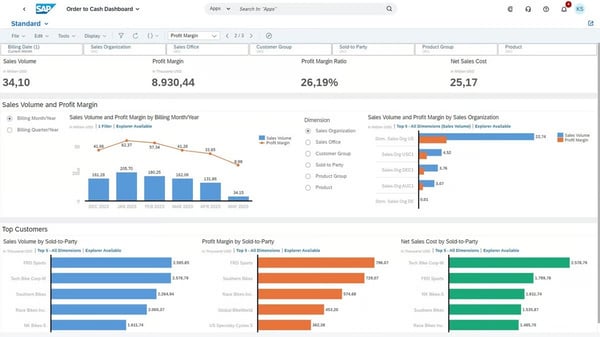
The number that stuck with me was 93% for receiving feature, and the review data behind it tells you exactly why. Financial closing, inventory updates, and operational reporting run significantly faster on HANA’s in-memory architecture than on traditional systems. G2 reviewers describe meaningfully shorter decision cycles and far less dependency on batch processing. For high-frequency procurement and inventory environments, that speed difference stops being a spec point and starts being a daily operational reality.
What you get here is finance, procurement, manufacturing, and supply chain all operating from the same data, no silos, no reconciliation back-and-forth between departments. G2 reviewers consistently describe shared visibility as the thing that changes how cross-functional teams actually collaborate day to day. Inventory tracking holds 92%, reflecting how reliably stock data stays consistent across every interconnected function on the platform.
Fiori’s role-based layout is something I’d genuinely call a smart design decision. Complex ERP, clean interface. G2 users across technical and non-technical teams describe noticeably easier navigation and faster adoption after go-live. Lowering daily interaction friction at this platform depth is an operational win. It is what keeps teams actually inside the system, doing the work it was built for.
I’d point to built-in best practices and automated workflows as one of the quieter wins on this platform. Fewer manual touchpoints, cleaner approvals, fewer process errors across finance and operations. G2 reviewers consistently connect these capabilities to real productivity gains. The kind of consistency that compounds across the whole operational stack, every department, all the way through.
If your team has ever had to pull data out of the ERP just to build a report, this is where SAP Cloud ERP saves you that step. Embedded analytics sit directly inside transactional workflows, giving leadership faster access to performance metrics without touching an external BI layer. Order history holds 93% on G2, reflecting how reliably those transactional records surface for planning, audits, and performance reviews across finance and operations.
Cloud delivery gets listed as a standard feature on most ERP platforms. Here, it actually pulls weight. Automatic updates land continuously, infrastructure overhead drops, and maintenance cycles simplify in ways that free up IT capacity for higher-value work. G2 reviewers highlight AI and machine learning compatibility as what makes the innovation roadmap feel credible, and I’d back that read entirely.
Moving to SAP Cloud ERP from a legacy environment involves a structured onboarding process, and G2 reviewers are consistent on this point. If HANA-based architecture is new territory for your team, the module depth takes time to navigate confidently. Organizations running deeply customized on-premise stacks feel this most during migration. SAP Cloud ERP’s breadth across finance, procurement, and supply chain stays reliable and consistent once that groundwork is in place.
Cloud delivery tightens configuration boundaries more than on-premise deployments. Specialized workflows can only stretch so far without additional planning. Some G2 users flag this as a real friction point. The deeper your process complexity, the more you will feel it during implementation. Even so, the standardized architecture keeps maintenance overhead tangibly low and system consistency solid across finance and operational workflows.
SAP Cloud ERP is a platform you build around from day one, all in. Real-time processing, embedded analytics, cross-functional integration, and a cloud delivery model that actually keeps pace with where enterprise technology is heading. For mid-market and enterprise organizations serious about modernization, this is the one I’d put at the top of that conversation. The digital core story here holds up.
What I like about SAP Cloud ERP:
- Real-time processing and embedded analytics give strong visibility across finance and operations, helping teams make faster, more informed decisions.
- Integrated modules and automated workflows reduce manual work while standardizing processes, which improves productivity and cross-team collaboration.
What G2 users like about SAP Cloud ERP:
“SAP Cloud ERP offers impressive in-memory computing capabilities, providing real-time analytics and a streamlined data model. Its strong integration across finance, supply chain, and operations enhances overall efficiency. The Fiori interface makes the system more user-friendly, while features like automated upgrades, built-in analytics, and extensibility via SAP BTP contribute to a secure and future-ready ERP environment.”
– SAP Cloud ERP review, Hirdesh P.
What I dislike about SAP Cloud ERP:
- The onboarding process has real depth to it. Heavily customized legacy environments take the longest to transition. That said, the platform’s finance and supply chain coverage holds up strongly post-implementation.
- Configuration flexibility is narrower on the cloud than on-premises. Complex legacy workflows hit this ceiling first. Maintenance overhead stays low, and the system runs consistently as a result.
What G2 users dislike about SAP Cloud ERP:
“Sometimes it feels a bit complex for new users, especially when trying to understand all the modules and configurations. The learning curve can be a little steep in the beginning, and a few features take time to get used to. Apart from that, it works pretty well once you get the hang of it.”
– SAP Cloud ERP review, Harikrishna R.
2. SAP ECC: Best for legacy SAP-based process operations
If your organization has spent years building highly customized SAP processes, you already know why SAP ECC is still in the picture. Finance, logistics, production, and workforce management run through a structured on-premise framework that handles extensive customization without flinching. Procurement, manufacturing execution, and financial reporting all operate within that same controlled environment. For processes built over long operational timelines, the depth of process control in the platform is honestly hard to walk away from.
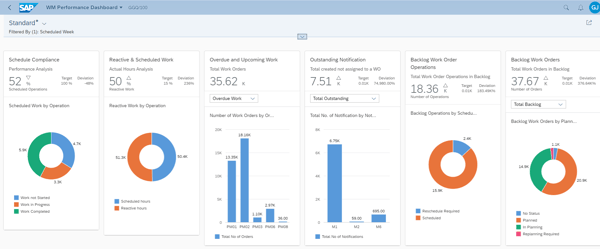
I’d say centralized data visibility is where SAP ECC quietly earns its keep. Completed activities, upcoming schedules, and responsible stakeholders are all visible without a single manual update. Order history scores 89% on G2, reflecting consistent transactional record-keeping across procurement and fulfillment cycles. Teams describe it as an operational roadmap. Progress tracked, fragmented communication cut, delays reduced across procurement, production, and financial workflows.
Customization flexibility in SAP ECC runs deep, and the specifics are worth paying attention to. Automated invoice posting through two- and three-way matching, smooth purchase order creation, payment batch execution, and Excel macro integration for reporting. Purchase orders reaches 90% on G2, consistent with the platform’s structured procurement execution strength. For highly specialized enterprise processes, that combination of standardization and adaptability is a serious operational advantage.
Here is the part I find most compelling about SAP ECC. Financial accounting, supply chain, production planning, and workforce operations are all running inside one modular ecosystem. The breadth across components is substantial, and G2 reviewers consistently point to it as what keeps process execution consistent across departments. When that many functions stay coordinated inside one platform, coordination stops being a daily problem.
Stability under pressure is where SAP ECC has quietly built its reputation, and the review data makes that case without any help from me. G2 reviewers describe reliable processing across significant data loads without operational continuity taking a hit. Receiving holds 89%, reflecting dependable performance across high-volume goods receipt and procurement workflows. Long-term power users call the SAP GUI their most dependable workspace when volume peaks. That loyalty tells you something.
Legacy infrastructure does not scare SAP ECC, and that matters more than people give it credit for. The platform connects smoothly with third-party systems, keeping interconnected application landscapes intact while modernization happens on your timeline. G2 users consistently highlight this as what makes incremental upgrades feel manageable, even smooth, never catastrophic. I’d call that a meaningful advantage for any organization not ready to rip everything out at once.
The ecosystem behind SAP ECC is one of those advantages that is easy to underestimate until you actually need it. Documented solutions, forum guidance, and experienced specialists — the answers are almost always already out there before you finish asking the question. G2 reviewers highlight this depth as what keeps implementation risk low and ongoing operations supported.
The traditional SAP GUI is not exactly welcoming territory. Navigating multi-step transactions is something that caught me off guard the first time. G2 reviewers consistently flag this as a steep entry point for teams without prior SAP exposure, who take noticeably longer to work independently across core modules. However, the process integration across the platform runs deep and stays dependable throughout.
SAP ECC’s native analytics and automation do not match what newer cloud platforms bring to the table. Multiple G2 users point this out, particularly those chasing real-time operational insight or advanced reporting capabilities. If that is your priority, you will notice the gap. Where ECC seriously earns its place is in process depth, stability, and customization, and those hold firm.
SAP ECC is anchoring seriously. Deep process integration, strong scalability, functional coverage that enterprise-scale operations are built on. The mature ecosystem and customization depth are exactly why organizations keep building around it, and keep building. For businesses where stability and structured ERP workflows are non-negotiable, this is where I’d start the conversation.
What I like about SAP ECC:
- It provides strong end-to-end visibility across finance, procurement, and operations, helping teams track workflows and responsibilities without relying on multiple systems.
- The platform’s deep customization, modular structure, and automation capabilities support complex enterprise processes while maintaining reliable scalability and data accuracy.
What G2 users like about SAP ECC:
“I appreciate the ease of accessing all relevant data across multiple teams in our organization. It gives me a clear view of completed activities, upcoming schedules, and who is responsible for the next steps. This transparency acts like a roadmap, reducing my work time since I don’t have to wait for responses from others. The visibility over the entire process builds trust that everything is on track and on schedule.”
– SAP ECC review, Sherlyrajan G.
What I dislike about SAP ECC:
- The traditional GUI and multi-step navigation create a steep entry point for teams new to SAP. Independent module navigation takes longer to develop without prior SAP experience. Process integration across the platform runs deep and stays dependable throughout.
- Native analytics and automation fall short of newer cloud ERP platforms. Teams focused on real-time reporting feel this gap most. Process depth, stability, and customization remain consistently strong across core enterprise workflows.
What G2 users dislike about SAP ECC:
“It can feel rigid and overly complex, especially when it comes to customization and the overall user experience. The interface isn’t very intuitive for new users, and it often requires extensive training to use effectively.”
– SAP ECC review, Ana B.
3. Kinetic: Best for mid-market process manufacturing modernization
Ask anyone running manufacturing operations across disconnected tools what the daily frustration looks like, and the answer is almost always the same. Kinetic fixes that at the source. Inventory, production planning, finance, and shop floor activity all run in one environment. Engineering, supply chain, and production teams work from shared operational records across BoMs, job tracking, scheduling, and fulfillment. No system switching, no visibility gaps, no guesswork in coordination.

For teams tired of reconciling procurement data against production records manually, this is where Kinetic earns immediate respect. Purchasing, inventory, and sales workflows connect directly to financial reporting inside one shared environment. Shop floor time entry and job tracking tie into inventory flows, keeping labor monitoring and production visibility running in sync. Inventory tracking holds 85% on G2, and I consider that stability across materials and stock movement to be one of the more underrated parts of this platform.
I’d single out the quoting-to-execution flow as one of Kinetic’s more impressive operational handoffs. Quoting workflows transition smoothly into job travelers and manufacturing processes, carrying structured production execution from initial estimate through shop floor activity. Job notes, scheduling tools, and process management features keep coordinated task management intact from planning through fulfillment. Work orders hold 83% on G2, reflecting consistent production execution support across the platform’s manufacturing scope.
Automatic general ledger flow is one of those things that sounds routine until you see how much reconciliation work it actually eliminates. Sales, purchasing, and financial data move into the ledger without manual handoffs. Credit limits scores 83% on G2, reflecting stable financial workflow coverage. Operational and financial reporting stay aligned across the full quote-to-cash cycle. G2 reviewers consistently highlight the cross-department transparency this creates between finance and operations.
If you are managing manufacturing requirements that fit no standard template, Kinetic’s flexible configuration model was built for exactly that reality. Low-code modules adapt to detailed process setups or simplified workflows depending on what the business actually needs. Collaboration tools and QMS connectivity extend functionality without touching core processes. I find that kind of extensibility rare at this platform depth.
Kinetic’s move toward AI integration and browser-based delivery is already showing up in daily operations, shipped, live, and in use. Cloud access from any location, AI capabilities that reduce manual overhead, and an architecture that keeps ERP activity continuous regardless of where the team is working. For distributed and remote production environments, that shift in how manufacturing teams interact with ERP data matters more to me than most features on this list.
I’ll be direct: accessibility across experience levels is something Kinetic’s review base keeps returning to, and for good reason. The quote-to-cash flow is straightforward to learn. The interface supports manufacturing workflow navigation without leaning on administrator assistance at every turn. For a platform operating at this complexity, that approachability is a bigger deal than it sounds.
Setting up security in Kinetic is not something you can rush. Role hierarchies and access governance need careful structuring before the system feels properly controlled, as multiple G2 reviewers point out. Smaller teams without dedicated IT support carry the heaviest burden here during initial setup. The payoff is real, though, with tighter operational governance and more predictable access control across the platform.
If out-of-the-box financial statements are what you are counting on, Kinetic will ask more of you than expected. G2 users note that standard accounting report coverage has gaps, particularly around Balance Sheet and income statement outputs. Teams expecting ready-built financial reports feel this earliest in deployment. Kinetic’s manufacturing execution and inventory workflows stay tightly connected and perform reliably across the platform.
Kinetic is built for mid-market manufacturers who are done patching together disconnected systems and ready for something that actually holds. The process depth and configurability here are substantial, and across everything I worked through in the review data, the operational transparency story is the one that lands hardest. For manufacturers where fragmented systems are the real problem, this one solves it.
What I like about Kinetic:
- BoMs, inventory, scheduling, and shop floor data operate within one system, supporting smooth coordination across manufacturing workflows.
- Integrations and low-code modules provide flexibility to adapt processes while keeping departments aligned in a unified ERP environment.
What G2 users like about Kinetic:
“All in one system that can integrate Quality attributes for manufacturing and with DocStar the QMS system overall.”
– Kinetic review, Kim A.
What I dislike about Kinetic:
- Security configuration and access governance require careful structuring before the system feels properly controlled. Smaller teams without dedicated IT support find this stage most demanding. Operational governance and access control tighten considerably once setup is complete.
- Standard accounting report coverage requires closer configuration, with gaps in out-of-the-box financial statement outputs. Teams expecting ready-built reports encounter this earliest in deployment. Manufacturing execution and inventory workflows remain tightly integrated and consistently strong throughout.
What G2 users dislike about Kinetic:
“Help is lacking sometimes. More often than not, I find more help going to the EUG to find others who had a similar issue to see how it was resolved. There’s nothing worse than just getting the answer that it is ‘working as designed.'”
– Kinetic review, Dawn K.
4. SYSPRO: Best for compliance and lot traceability in process industries
SYSPRO is the kind of platform that makes fragmented ERP setups look exhausting by comparison. Manufacturing, finance, and inventory workflows all run inside one environment. Order entry through fulfillment and payment processing without a single system switch. Centralized visibility, structured workflows, and far less manual tracking between departments. For operations-centric organizations, that consolidation is exactly what I’d want running underneath a production program.
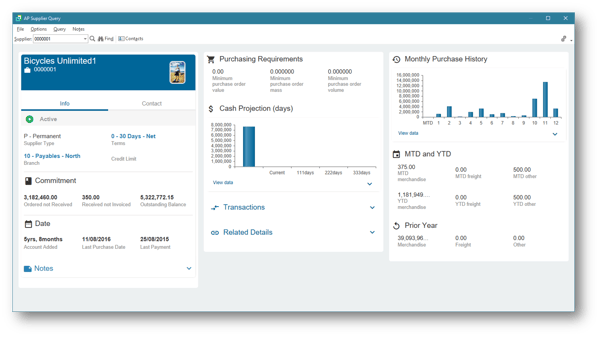
Raw material and production input monitoring in SYSPRO is where procurement and shop floor coordination actually come together. No disconnected tracking systems, no guesswork around production readiness. G2 reviewers describe the visibility here as what keeps inventory review accurate when it matters most. Receiving capabilities reaches 91%, and to me, that number is one of the strongest signals of how consistently this platform performs across inventory and financial process execution.
I’ll say it plainly: running customer billing and supplier settlements inside the same environment is operationally cleaner than most manufacturing teams are used to. SYSPRO handles multiple payment workflows without pushing finance teams toward separate accounting tools. Manual reconciliation drops. Payment methods scores 88% on G2, reflecting reliable transaction handling across the financial workflows that manufacturing operations depend on daily.
Clean data architecture is something SYSPRO takes seriously. Intuitive database structures and clearly defined schema naming make reporting far less painful than usual. Custom reports and applications become accessible without compromising the operational foundation underneath. Customer master holds 88% on G2, and that consistency across data management is what I keep coming back to.
Tailored applications and KPI reporting built around your internal processes. That flexibility separates SYSPRO from more rigid ERP environments, and I mean that seriously. Performance tracking stays sharp across manufacturing and finance because the platform bends to fit the operation. Regular updates land without disrupting workflows. Intuitive navigation cuts onboarding time down considerably. Continuous improvement stops being a goal and starts being the default.
Centralized scheduling and production visibility are what SYSPRO is built around, the core of it. Everything else is radiating out from there: Master schedules, work-in-progress status, and remaining job timelines are all visible from one interface. No hunting across systems, no delayed updates. I’d describe that consolidated view as the kind of shop floor clarity that makes resource allocation and production stage coordination feel manageable.
SYSPRO’s third-party connectivity is one of those platform strengths that quietly does a lot of heavy lifting. External systems slot in alongside native modules without touching established workflows. Version transitions happen cleanly. G2 reviewers describe that extensibility as what lets specialized tools coexist with the ERP without creating data sprawl. If your organization is running a deep stack of specialized tools alongside your ERP, this is the one area where SYSPRO will pleasantly surprise you.
Here is something worth knowing before you go live. The purchase order receipt inspection workflow adds extra steps when processing supplier returns, and in a high-volume procurement environment, that additional handling time adds up fast. Across G2 reviews, this surfaces most clearly when throughput pressure peaks. That said, the structured inspection process keeps quality verification accurate and audit records clean throughout.
Certain screens in SYSPRO can feel cluttered when you are working across multiple modules at once. From what I have seen in G2 reviews, this hits hardest for staff coming in without prior SYSPRO experience, where the initial training curve is the steepest. Once past that stage, however, the structured module layout kicks in, and process execution stays consistent and reliable across the platform.
I’d sum SYSPRO up this way: one solid ERP backbone for manufacturing and operations-centric organizations that are done with disconnected tools. Centralized process management, structured data models, and production visibility that holds up across both financial and operational control. For mid-market manufacturers where process depth and usability need to coexist, this platform delivers on both without asking you to compromise on either.
What I like about SYSPRO:
- Centralizes manufacturing, inventory, and financial workflows in one system, supporting unified tracking and reducing reliance on separate tools.
- Intuitive interface with structured data and reporting flexibility, enabling quick navigation and custom KPI or application development with minimal training.
What G2 users like about SYSPRO:
“Syspro is very easy to use. I just began using about 3 weeks ago and with minimal training videos, I can now navigate through many screens. I am exploring ways to improve KPI’s and it is user-friendly. We have developed custom apps and report from it and our team has been able to leverage this to improve our processes and workflow.”
– SYSPRO review, Steve S.
What I dislike about SYSPRO:
- Purchase order receipt inspection adds extra steps when processing supplier returns. High-volume procurement teams feel the handling time most when throughput pressure peaks. The structured inspection process keeps quality verification accurate and audit records clean.
- Certain screens feel cluttered when navigating across multiple modules simultaneously. Staff without prior SYSPRO experience find the initial training period most demanding. The structured module layout supports consistent and reliable process execution once that stage passes.
What G2 users dislike about SYSPRO:
“I think we can make it more fast and UI can improve, looks outdated.”
– SYSPRO review, Rudra Pratap Singh R.
5. IFS Cloud: Best for asset-intensive process manufacturing
IFS Cloud is built for asset-intensive environments, and it shows. Production planning, maintenance scheduling, supply chain, and financials are all running together without breaking a sweat. Organizations replace entire legacy application stacks with IFS modules that manage equipment lifecycles, service contracts, and project delivery alongside core ERP transactions. For manufacturers where production activity, financial oversight, and service execution need to stay connected, this is the platform built for that exact load.
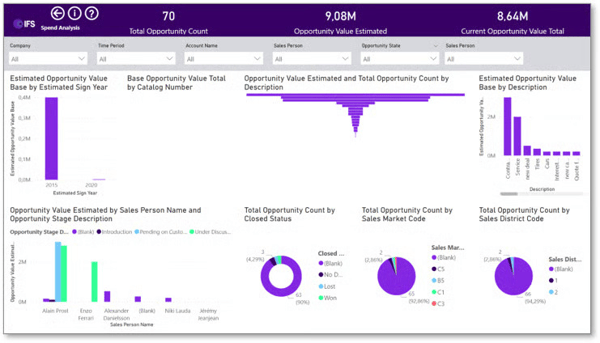
Live inventory visibility is where IFS Cloud stops being a feature list and starts being an operational advantage. Stock levels and warehouse activity are monitored in real time, replenishment cycles are managed without lag, and material requirements are forecasted against what is actually on the shelf. G2 reviewers are consistent on this, and inventory tracking at 90% on G2 tells me the platform earns that reputation every single day.
I’ve dug into enough procurement reviews to know that traceability from requisition to fulfillment is where most platforms make promises they struggle to deliver on. IFS Cloud delivers. Structured purchasing processes give manufacturing and distribution teams real control over supplier interactions and spending. Complex sourcing requirements do not rattle this platform. Procurement execution holds 89% on G2, reflecting exactly the reliability these environments depend on.
Centralized item data across specifications, pricing, and lifecycle information is where IFS Cloud quietly makes cross-functional coordination look easy. Product master holds 88% on G2, reflecting dependable performance in centralizing item data across functions. When your logistics, finance, and production teams stop chasing reconciliation and start working from the same foundation, the operational difference is immediate.
Here is what separates IFS Cloud from the crowd: finance, HR, maintenance, and project modules all operating inside one platform without a single disconnected system in sight. Operational and financial information stays synchronized across every function automatically. No manual reconciliation, no data gaps between tools. For organizations tired of stitching together module after module from different vendors, that kind of native cross-functional coverage is a breath of fresh air.
REST API connectivity and external platform compatibility on IFS Cloud is the kind of integration story that actually holds up under scrutiny. Tailored workflows and vendor systems slot in without touching core ERP processes. LMS solutions connect cleanly. Incremental modernization becomes a real strategy, executable, credible, built for how change actually happens. My read on IFS Cloud’s integration flexibility is straightforward: the extensibility here runs deep.
I’d stake this on what the review data consistently shows: industry configurability is where IFS Cloud earns serious attention. Manufacturing, aviation, oil and gas, and service-sector practices are all baked into the platform’s architecture. Organizations adapt workflows to internal requirements without abandoning standardized ERP foundations.
IFS Cloud is powerful, but that power demands proper investment upfront. Teams new to enterprise ERP environments need dedicated onboarding time before navigating modules independently, something G2 reviewers flag with some consistency. If you are stepping up from a lighter ERP tool, this is where you will feel the difference most during rollout. The functional depth that drives that demand is exactly what makes IFS Cloud a dependable operational backbone long term.
Finding answers independently in IFS Cloud is not always as straightforward as you would hope. Across G2 reviews, users flag that documentation navigation feels less streamlined, particularly during complex configuration or upgrade phases. Teams without dedicated ERP administrators feel this gap most acutely. The vendor support network and partner ecosystem fill that space well for organizations with access to either.
IFS Cloud is built for specific organizations. For those organizations, it is exceptional. That is the whole point. Asset-intensive manufacturers and service-driven enterprises in regulated industries will find this platform stops being a good option and becomes the obvious one. Inventory visibility, procurement structure, and cross-module integration are all running without friction. I’ll leave it here: for organizations serious about enterprise transformation, IFS Cloud is the one.
What I like about IFS Cloud:
- It brings manufacturing, supply chain, finance, and service workflows into one integrated platform, reducing reliance on disconnected systems.
- Strong inventory and procurement capabilities support real-time stock visibility and structured purchasing, helping teams plan production and sourcing with confidence.
What G2 users like about IFS Cloud:
“IFS Cloud is helpful because it brings finance, operations, supply chain, and projects into one unified system with real-time dashboards, making it easier to see what’s happening across the business and allowing us to make faster decisions with all the data in one place.”
– IFS Cloud review, James B.
What I dislike about IFS Cloud:
- Teams new to enterprise ERP need dedicated onboarding time before navigating modules independently. Organizations stepping up from lighter ERP tools run into the hardest challenges during initial rollout. Functional depth across manufacturing and supply chain continues to deliver without gaps.
- Documentation navigation feels less streamlined for independent troubleshooting. Teams without dedicated ERP administrators feel this most. However, the vendor support network provides accessible resolution pathways.
What G2 users dislike about IFS Cloud:
“Difficulty in both commercial and technical support. Extraction of information for third-party applications: BI; Mobile; etc.”
– IFS Cloud review, Juan Antonio R.
6. Ramco ERP: Best for AI-driven process production planning
Payroll, compliance, procurement, and production all under one roof. Ramco ERP treats that as a baseline, not a selling point. Workforce management, inventory coordination, and transactional data move through a shared system without manual handoffs between departments. Compliance tracking stays embedded throughout. For mid-market manufacturers consolidating workforce and operational data into one environment, this is a platform worth taking seriously, and I’d add that the review data backs that up convincingly.
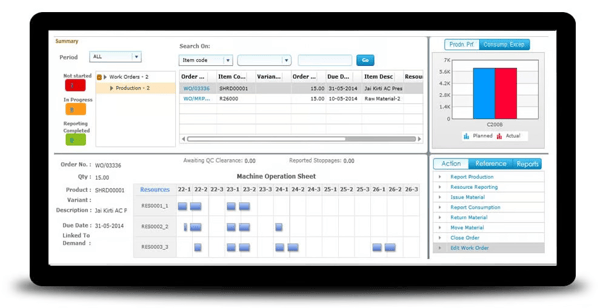
Ramco ERP’s interface is built for the people actually using it, and that accessibility runs deeper than surface-level design. Manufacturing, procurement, and operational workflows are all within reach without extensive expertise. Organizational data stays secure across every operation without trading usability for protection. If your team is stepping into a new ERP environment without a deep bench of technical specialists, this interface will not slow you down.
I’d highlight the Contract Labor Management module specifically for large process manufacturers managing contract workforces across multiple production sites. Productivity tracking, statutory compliance, manpower planning, and attendance reconciliation are all handled inside the same ERP environment as procurement and production. No separate workforce management system needed. Payroll reaches 88% on G2, reflecting consistent strength in workforce compliance execution across multi-plant operations.
Multi-plant, multi-geography, and multi-company operations are where Ramco ERP hits its stride. Business processes are configured around how your organization actually works, built to your requirements, yours specifically. Purchase orders scores 88% on G2, reflecting reliable procurement execution across multi-entity configurations. Procurement, manufacturing, finance, and human capital management all inside one environment. In my view, that consolidation without sacrificing configurability is where Ramco ERP earns its place.
The production module on Ramco ERP handles more manufacturing grounds than most platforms attempt. Process and discrete manufacturing together, full traceability, and every production mode from make-to-order through engineer-to-order. Work orders scoring 89% on G2 tell you how reliably that holds up in practice. The Real Time Integrator pulls live shop floor data straight into the ERP. Your shop floor and your ERP stay in sync without anyone manually bridging the gap.
I’ve yet to see AI integration land this practically in a mid-market ERP. Ramco ERP’s embedded algorithms alert users to data anomalies, apply default values, and pre-populate fields from historical production data. Voice-enabled interactions and Zero UI let production staff complete transactions through conversation. Event-driven notifications surface operational alerts in one click. If your team manages active shop floor activity, that monitoring burden drops considerably.
Finance and accounting on Ramco ERP is wired directly into production and supply chain as one living operation. Real-time ledger reconciliation, job order costing, and multi-country, multi-currency compliance all without a separate financial system. Straight-through processing and robotic automation cut manual intervention considerably. If you are running manufacturing operations across multiple geographies, the granular cost and revenue analysis here is, to my mind, one of the strongest reasons to take Ramco ERP seriously.
Ramco ERP does not come pre-configured out of the box, and that caught me off guard initially. Business processes require selective configuration to match your organization’s unique manufacturing requirements before the platform runs as needed. G2 reviewers flag that teams expecting ready-to-run workflows hit this earliest during deployment. That configuration investment pays off with a setup that maps tightly to specific process and compliance needs.
Page load times and navigation responsiveness slow down under heavy concurrent data loads. That is worth flagging if high-volume production reporting is part of your daily reality. Some G2 users highlight that this is most noticeable during peak-period transaction cycles across multiple modules. Within standard daily volumes, however, the platform moves consistently and without meaningful disruption.
Ramco ERP earns its place by delivering where it matters most: payroll, material management, compliance, and cross-module coordination inside one environment. No bloat, no unnecessary complexity. Mid-market manufacturers seeking incremental modernization without blowing the budget will find this platform punches well above its price point. Looking across everything the review data covers, my verdict is straightforward. Ramco ERP is built for organizations that want serious ERP capability without the enterprise price tag.
What I like about Ramco ERP:
- It centralizes HR, payroll, and operational workflows in one system, helping teams manage data securely without switching between tools.
- Payroll automation and compliance checks simplify recurring HR processes, reducing manual effort while keeping statutory requirements aligned.
What G2 users like about Ramco ERP:
“Ramco is so friendly user and can keep all the data secure.”
– Ramco ERP review, Verified User
What I dislike about Ramco ERP:
- Ramco ERP requires selective configuration before workflows run as needed. Teams expecting ready-to-run manufacturing processes hit this earliest during deployment. The configured setup maps tightly to specific processes and compliance requirements once complete.
- Page load times and navigation are slow under heavy concurrent data loads. Teams running intensive multi-module operations during peak cycles are where this shows up most. Within standard daily transaction volumes, the platform performs consistently and without disruption.
What G2 users dislike about Ramco ERP:
“The UI can be much more fun and engaging. Right now it is very black and white and looks boring. There can be deeper analysis and reports for the employees also to view.”
– Ramco ERP review, Ruhi S.
7. Infor SyteLine: Best for hybrid process and discrete production
Infor SyteLine is purpose-built for hybrid manufacturers, and that focus shows in everything from shop floor activity through to financial reporting. Inventory, financials, and operational data all inside one environment. If your team is moving away from homegrown systems, departmental alignment around consistent operational records stops being a project and starts being the default.
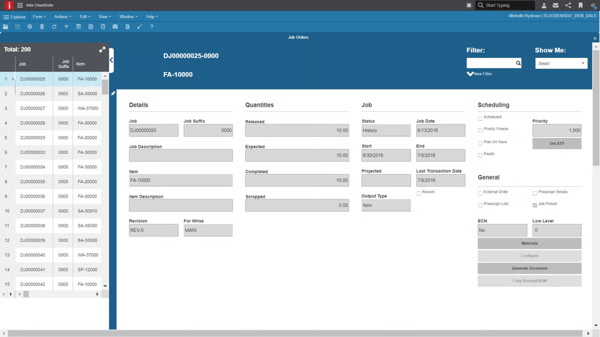
Consolidating accounting, warehouse operations, sales, and quality management into one unified interface is something Infor SyteLine does without making a fuss about it. Homegrown system dependency drops. Consistent operational data across departments stops being an aspiration. Inventory tracking holds 89% on G2, and I’d rate that accuracy across manufacturing and distribution workflows as one of the platform’s most dependable qualities.
Core item data management on Infor SyteLine is the kind of foundation that holds everything else together. G2 reviewers describe the product master as what keeps manufacturing and distribution operations reliable at their core. Item data management performs consistently at 89% on G2. Errors across procurement, production, and fulfillment drop. Departments stay aligned without manual cross-referencing, eating into your team’s time.
If I had to pick one capability that long-time SyteLine users consistently underestimate, cloud deployment would be it. Improved uptime, disaster recovery, and easier scalability all come with the transition. Integration with other Infor products gets smoother. For your teams’ expanding capabilities without rebuilding system continuity from scratch, that SaaS move pays off faster than expected.
The Mongoose framework is where Infor SyteLine’s customization story gets interesting. Workflows, interfaces, and integrations are all tailorable without touching core processes. Experienced users describe it as what lets the platform grow alongside evolving operational requirements, adapting as things change without a rebuild. If your organization runs complex workflows, this is the framework built for exactly that.
I’ll admit reporting rarely excites me as a capability. On Infor SyteLine, it is worth a second look. Logs and report creation are well-documented and accessible without technical overhead. Inventory forecasting reaches 86% on G2, supporting forward-looking stock decisions that keep production planning and replenishment cycles on track. Operational insights surface quickly, and performance monitoring stays within reach without building anything custom around it.
Order processing and contract management visibility inside one integrated environment. That is where Infor SyteLine makes coordination feel less like a daily negotiation. Forecasting and planning become more structured. Legacy system fragmentation stops disrupting the picture. If you have ever managed forecasting across disconnected systems, you already know exactly what that relief feels like.
Infor SyteLine’s interface prioritizes function over form, and if you are used to the sleek look of modern SaaS platforms, the visual gap is noticeable. G2 reviewers flag this as affecting initial engagement, particularly for less experienced ERP users joining the platform for the first time. That said, the operational accuracy and process depth underneath that interface remain a substantial strength across daily manufacturing workflows.
Transitioning from earlier SyteLine versions takes more planning than you might expect. G2 users note that sourcing specialized implementation expertise adds lead time, especially for organizations running complex multi-facility deployments in regions where SyteLine specialists are thin on the ground. Even so, the platform’s customization depth and cloud scalability remain strong and consistently available throughout the transition process.
Infor SyteLine is the kind of ERP that rewards organizations willing to invest in it properly. Strong product data management, a customization framework that actually bends to operational reality, and cloud scalability that holds up as the business grows. Mid-market manufacturers looking to unify operations without sacrificing industry-specific workflows will find this platform built precisely for that ambition. My conclusion after working through the review data is simple: this one delivers on its promise.
What I like about Infor SyteLine:
- It centralizes manufacturing, inventory, and financial workflows into one system, giving teams clearer operational visibility without relying on multiple tools.
- Its flexible customization and cloud scalability allow manufacturers to tailor processes while benefiting from SaaS uptime, integration, and long-term growth support.
What G2 users like about Infor SyteLine:
“It is an extraordinary and different from all similar structures. Thanks to its integrated structure, it provides the ability to gather all departments under a single roof. Easy installation, minimum resource consumption, maximum efficiency and ease of use. It also has an easy-to-use interface. Easy applicability thanks to its very flexible structure, data that is updated very quickly and simultaneously with all departments.”
– Infor SyteLine review, Turan A.
What I dislike about Infor SyteLine:
- The interface prioritizes function over visual polish. Teams accustomed to modern SaaS platforms notice the gap most during initial engagement. Operational accuracy and process depth across manufacturing workflows hold up well regardless.
- Transitioning from earlier SyteLine versions requires advance planning. Organizations running complex multi-facility deployments in regions with limited specialist availability face the longest lead times. Customization depth and cloud scalability remain strong and available throughout.
What G2 users dislike about Infor SyteLine:
“We are newly transitioned to the SL10/CSI system and do not have any major concerns. There is a bit of a learning curve for users of previous versions. We have also found that there is a shortage in experts on this product for assistance in development and deployment.”
– Infor SyteLine review, Charlie P.
Comparison of the best process ERP software
Software | G2 rating | Free plan | Ideal for |
| SAP Cloud ERP | 4.5 / 5 | No | Enterprise cloud ERP for complex process manufacturing |
| SAP ECC | 4.2 / 5 | No | Legacy SAP ERP for established process-driven enterprises |
| Kinetic (Epicor Kinetic) | 3.9 5 | No | Modern mid-market manufacturing ERP with MES capabilities |
| SYSPRO | 4.1 / 5 | No | Compliance and traceability-focused process manufacturing |
| IFS Cloud | 4.0 / 5 | No | Asset-intensive manufacturing and service lifecycle ERP |
| Ramco ERP | 4.1 / 5 | No | AI-enabled ERP for manufacturing and operational optimization |
| Infor SyteLine (CloudSuite Industrial) | 3.8 / 5 | No | Hybrid process and discrete manufacturing ERP |
*These process ERP solutions are top-rated in their category based on aggregated user feedback reflected in G2’s 2026 Winter Grid®-style evaluations.
Best process ERP software: Frequently asked questions (FAQs)
Got more questions? G2 has the answers!
What are the highest-rated process ERP systems for manufacturing operations and supply chain integration for enterprise teams?
SAP Cloud ERP and IFS Cloud are the strongest enterprise picks, with SAP Cloud ERP running finance, procurement, supply chain, and manufacturing on a single HANA in-memory layer, and IFS Cloud combining manufacturing, supply chain, asset lifecycle, and financials in one integrated platform. Both are consistently cited by G2 reviewers for cross-functional integration that eliminates manual reconciliation across departments.
Which process ERP systems are most trusted by operations teams based on G2 user reviews?
Based on G2 ratings from the Winter 2026 Grid Report, SAP Cloud ERP leads at 4.5/5, followed by SAP ECC at 4.2/5, and SYSPRO and Ramco ERP both at 4.1/5. G2 reviewers consistently value SAP ECC for process depth and stability, SYSPRO for structured production visibility and compliance tracking, and SAP Cloud ERP for real-time operational insight across finance and manufacturing.
Which process ERP platforms are designed for manufacturing and distribution to support growing teams?
Kinetic, SYSPRO, and Ramco ERP are the clearest picks for growing mid-market teams, offering modular structures and cloud delivery that scale without compounding administrative overhead. Infor SyteLine is also well-suited for teams consolidating manufacturing, inventory, and financial workflows into a single environment as operations expand.
What industry-specific ERP functionality should I look for when comparing process ERP vendors for manufacturing or distribution operations?
The four capabilities that consistently separate effective process ERP from general-purpose tools are batch traceability and lot-level control, formula and recipe management, compliance and audit-ready reporting, and production planning with real-time visibility. For distribution-side requirements, inventory tracking accuracy and procurement workflow integration are the key differentiators to evaluate across platforms like SYSPRO, IFS Cloud, and Infor SyteLine.
Which process ERP solutions offer inventory management and demand planning integrated with procurement workflows?
IFS Cloud, SYSPRO, and SAP Cloud ERP are the strongest options here. IFS Cloud scores 90% for inventory tracking and 89% for procurement execution on G2, with real-time stock visibility and structured purchasing tightly connected. SYSPRO’s receiving capabilities reach 91% on G2, reflecting reliable coordination between procurement and shop floor activity. SAP Cloud ERP holds 92% for inventory tracking on G2, with stock data flowing directly into procurement and financial workflows.
Which process ERP systems provide legacy system integration and data migration support for seamless deployment?
SAP ECC is the primary reference here — the platform connects smoothly with third-party systems and supports incremental upgrades without disrupting established workflows, which G2 reviewers describe as what makes modernization manageable rather than catastrophic. SAP Cloud ERP offers structured migration paths from ECC environments. IFS Cloud also supports integration with existing application stacks through REST API connectivity, with reviewers noting that incremental modernization is a credible and executable strategy on the platform.
What process ERP software provides the strongest supply chain visibility features and real-time inventory tracking capabilities?
IFS Cloud and SAP Cloud ERP are the top picks for supply chain visibility and real-time inventory tracking. IFS Cloud monitors stock levels and warehouse activity in real time, scoring 90% for inventory tracking on G2. SAP Cloud ERP’s HANA architecture supports faster inventory updates and financial closing, holding 92% for inventory tracking on G2. SYSPRO and Infor SyteLine are also consistently cited for inventory accuracy across manufacturing workflows, with SYSPRO at 91% for receiving and Infor SyteLine at 89% for inventory tracking.
Which process ERP systems unify procurement, inventory, and operations management for organizations evaluating solutions?
SYSPRO and Infor SyteLine are the article’s clearest examples of platforms consolidating procurement, inventory, and manufacturing operations into a single environment, eliminating the need to reconcile across separate tools. SAP Cloud ERP achieves this unification at enterprise scale across finance, procurement, and supply chain. Ramco ERP extends the model further by adding HR, payroll, and workforce management into the same operational stack.
What training and change management support should I look for from process ERP vendors before signing a long-term contract?
G2 review patterns across these platforms suggest asking vendors directly about onboarding depth, partner network availability, and post-go-live support before committing. SAP Cloud ERP and IFS Cloud require the most dedicated onboarding investment, particularly for teams new to enterprise ERP or migrating from heavily customized on-premise environments. SYSPRO and Kinetic show faster user adoption in reviews — SYSPRO reviewers describe independent navigation within weeks of going live. The stronger vendors in this space offer implementation partners and ecosystem support that meaningfully reduce deployment risk.
How do I evaluate process ERP vendors with implementation experience in my specific industry vertical before signing a long-term contract?
The article’s clearest guidance is to push vendors on whether the platform was built for process manufacturing or adapted for it — and to verify specifically how batch traceability, formula management, and compliance reporting connect natively, since that integration is where most implementation surprises live. IFS Cloud has manufacturing, aviation, oil and gas, and service-sector practices baked into its architecture. SYSPRO is the most frequently referenced platform for food, chemical, and pharmaceutical environments. SAP Cloud ERP covers regulated industries at enterprise scale.
When your ERP keeps up with production
The pressure point shifting fastest in process manufacturing right now is traceability, not because the requirement is new, but because regulators and retail customers are raising the bar on response time. An ERP that could produce a batch record in 48 hours was acceptable two years ago. That window is shrinking, and platforms that rely on manual record assembly are already showing the strain in G2 reviews from food, pharma, and chemical manufacturers.
Formula and recipe complexity is also outpacing what a lot of mid-market ERP systems were originally built to handle. More manufacturers are running smaller batch sizes across more SKUs, which puts real pressure on version control, yield tracking, and ingredient substitution workflows. If your current or target platform treats recipe management as a secondary module, that gap tends to surface fast once production volumes diversify.
For your near-term decision, the honest question is whether the platform you are evaluating was built for process manufacturing or adapted for it. That distinction rarely shows up in a demo but becomes obvious once your team is managing a real production run inside the system. Push vendors on how batch traceability, formula management, and compliance reporting connect natively, because that integration is where most of the implementation surprises live.
Want to expand beyond process ERP software? Explore G2’s best supply chain & logistics software products for planning, inventory, fulfillment, and operations coordination.
(function(d, s, id) {
var js, fjs = d.getElementsByTagName(s)[0];
if (d.getElementById(id)) return;
js = d.createElement(s); js.id = id;
js.src = “//connect.facebook.net/en_GB/sdk.js#xfbml=1&version=v3.0”;
fjs.parentNode.insertBefore(js, fjs);
}(document, ‘script’, ‘facebook-jssdk’));