It’s a lose-lose situation. You’re paying $40K+ for a role that’s 80% repetitive, or you’re letting calls go to voicemail where leads go to die. I’ve evaluated various innovations that have crossed my desk, but the shift to AI employees is the structural fix for the workforce gap every business has been looking for.
This guide covers what AI employees are, why they matter, and how to deploy one using Nextiva — with no technical team required.
Try XBert AI free for 14 days
Answer questions and capture leads. Just three minutes to add your 24/7 AI answering service.
What Is an AI Employee?
An AI employee (also sometimes called an AI agent) is an autonomous, AI-powered software agent that performs specific business tasks, such as qualifying leads or answering FAQs, without continuous human oversight.
Unlike basic automation tools or scripted chatbots, AI employees use conversational AI, natural language processing (NLP), large language models, and machine learning to complete these tasks. As a result, they can:
- Understand context
- Interpret caller intent
- Make informed decisions (and make smarter decisions over time based on feedback, effectively learning)
- Execute multistep workflows in real-time without human input
This means that AI employees are unique compared to other tech, like standard chatbots, even if those tools also use some AI elements.
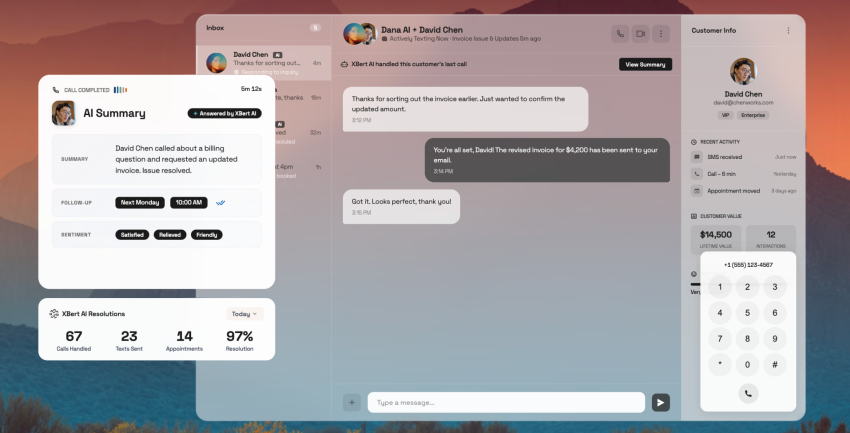
Here’s what sets AI agents apart:
- Not a chatbot: AI employees go far beyond scripted Q&A. They hold natural, multi-turn conversations across voice, chat, SMS, and email. They understand nuance, ask clarifying questions, and adapt their responses based on context and CRM data.
- Task execution beyond basic responses: AI employees can book appointments, update records, process payments, qualify leads, route complex issues to human workers, and trigger follow-up workflows.
- Trained on your business: The best AI employees are grounded in your data, including your services, policies, and workflows. This ensures accurate, brand-consistent, high-quality output.
- Continuous learning: AI employees improve over time since machine learning models refine their understanding of customer intent, language patterns, and resolution paths with every interaction.
- Omnichannel presence: A modern AI employee operates across every customer touchpoint, including phone calls, SMS, web chat, email, and social media messaging. This means your customers don’t have to repeat themselves when they switch channels.
- Built-in human escalation: When a conversation requires human judgment, empathy, or authority, the AI employee seamlessly transfers the interaction to a live team member with full context. The customer never repeats themselves, and your agent picks up with complete information.
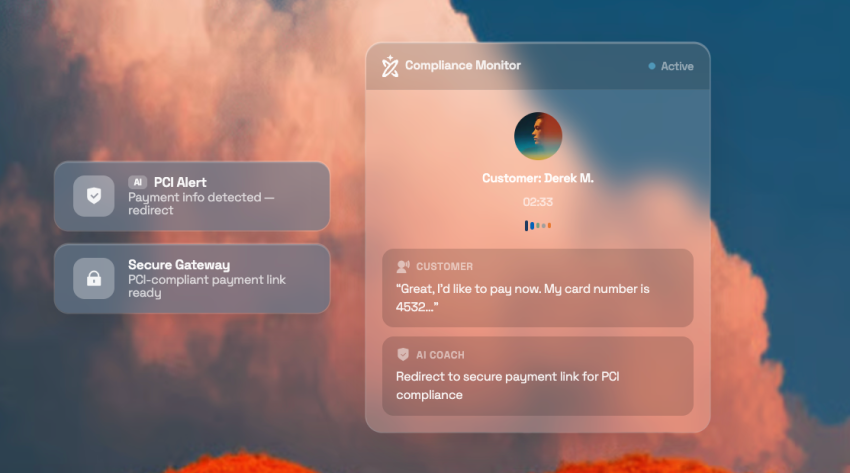
- Compliant payment processing: It can securely generate a PCI-compliant payment link during a voice call, wait for the transaction to clear, and email the receipt, all while staying on the line.
These differences compound to create a powerful and convenient customer experience.
Let’s say a customer calls a dental office at 8 p.m. to reschedule an appointment. The AI voice agent answers on the first ring, pulls up the patient’s record, checks the calendar, reschedules to the next available slot, and sends a confirmation text — all without human involvement.
Advantages of AI Employees
I’ve worked with customer-facing teams where up to 70% of inbound interactions are repetitive, routine questions. This can be incredibly time-consuming, and while the questions need answering, it’s a waste of your team’s time. That’s why AI employees are becoming so valuable, offering key operational advantages that are significant for small businesses.
24/7 availability without staffing costs
Most businesses can’t afford to staff around the clock, but all business owners know that customers don’t stop calling at 5 p.m. AI employees handle customer interactions 24/7, including nights, weekends, and holidays, and it all happens without any overtime, shift scheduling, or risk of agent burnout. They just work.
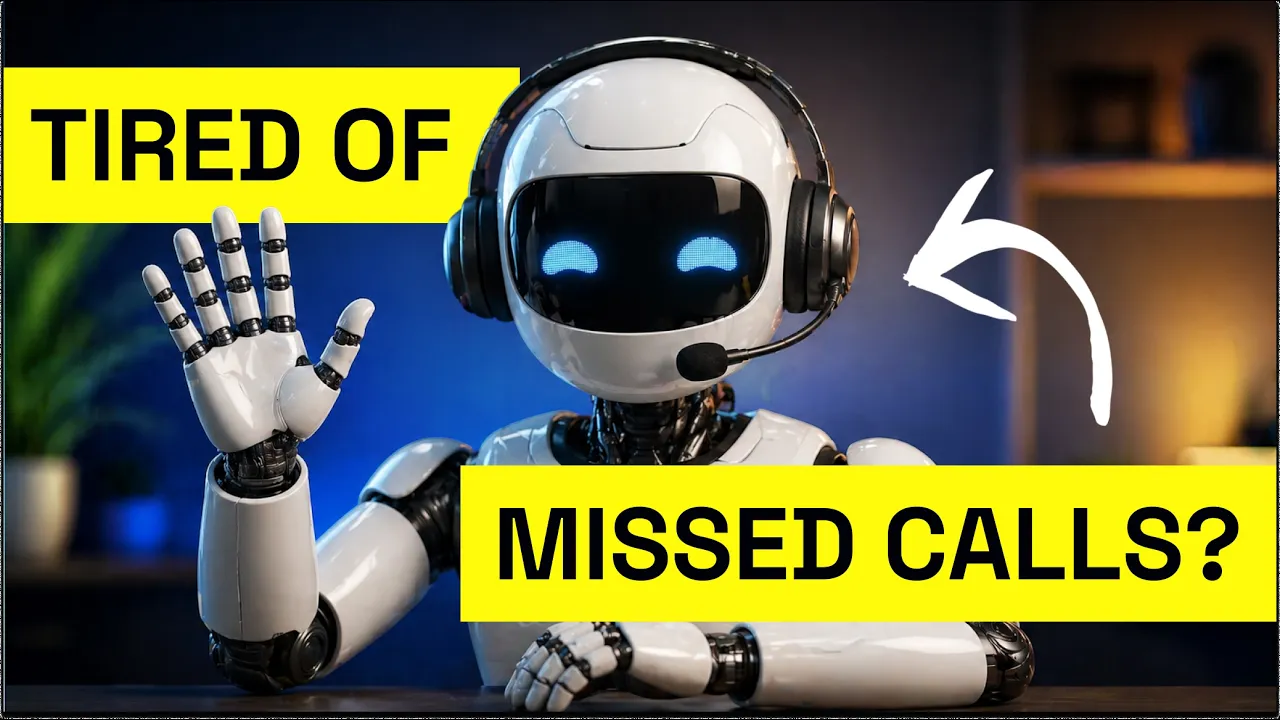
For businesses that currently send after-hours calls to voicemail, this is a big deal. Most callers won’t leave a message, which means every missed call is potentially a lost customer. An AI employee answers every time, so you never miss a lead or leave a customer waiting until morning.
The cost comparison makes it even clearer. An AI employee works around the clock for a fraction of the annual cost of a single full-time receptionist or customer support rep.
Increased efficiency and productivity
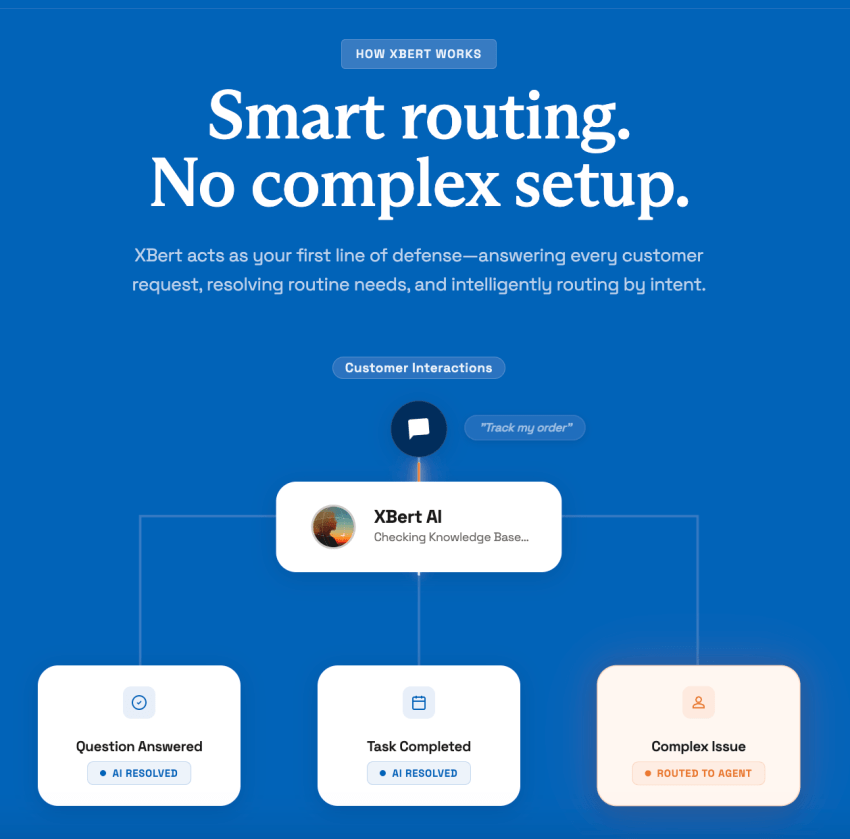
Your best employees shouldn’t spend their days answering the same questions on a loop, but someone has to. AI employees handle those repetitive, time-consuming tasks that eat up the most human agent hours — think answering FAQs, checking order status, scheduling appointments, and routing inquiries. They do it instantly and accurately, and they do it without getting tired of saying “yes, we are open until six.”
This frees your human employees to focus on complex, high-value work like relationship-building, problem-solving, and strategic sales conversations — the stuff that actually requires judgment and empathy. Your team gets more done because they’re not bogged down with work that doesn’t need them.
Consistency and accuracy
Humans have bad days. They forget details, or they may give slightly different answers depending on who’s asking and when.
AI employees don’t have that problem. They deliver the same quality of response on the 500th interaction as on the first. There’s no risk of variation in brand voice, policy inconsistencies, or accidentally going rogue.
When trained on your business data, AI employees minimize the errors that come from human memory lapses, misinformation, emotion, or inconsistent training. And every interaction is recorded, meaning it’s both transcribed and auditable. That gives you a compliance and quality assurance layer that’s difficult to maintain with human-only teams.
Scalability without proportional headcount
Customer service hiring doesn’t scale linearly. Every new rep requires recruiting, onboarding, training, and management overhead. This is part of the reason so many small businesses rely on contact centers to begin with.
AI employees handle multiple conversations simultaneously. A single AI answering service can manage dozens of concurrent calls, chats, and messages. It’s quite literally impossible for a human agent to successfully do this.
During volume spikes (such as seasonal peaks, marketing campaigns, and product launches), AI employees absorb the surge without requiring temporary hires or overtime. Scaling from 100 to 1,000 customer interactions per day doesn’t require 10 times the staff; it requires the same AI employee handling more conversations.
This changes the math on growth. You can take on more customers without proportionally increasing headcount.
Cost savings and ROI
The financial case for AI employees is straightforward. They reduce operational costs by automating tasks that would otherwise require full-time staff.
Gartner estimates that AI agents can reduce operational costs by up to 30%. But the savings go beyond direct labor costs. AI employees also reduce missed revenue from unanswered calls, abandoned chats, and slow follow-up. Every call that used to go to voicemail is now a potential booking or qualified lead.
The ROI compounds over time. AI employees improve with every interaction, handle increasing volume without additional cost, and never require raises, benefits, or PTO. The longer you run them, the better they get and the more value they deliver.
Improved customer experience
Customers don’t want to wait. They also don’t want to navigate phone menus, and they most certainly don’t want to repeat themselves to three different people.
AI employees eliminate hold times, reduce transfers, and resolve routine inquiries without forcing customers through menus or callbacks. Response times drop from minutes (or hours) to seconds.
And when an AI employee does need to escalate to a human, it transfers the call with full context. The customer never repeats themselves. That handoff alone can transform the customer experience.
Keep in mind that faster response times, instant answers, and 24/7 availability directly improve customer satisfaction scores.
Try XBert AI free for 14 days
Answer questions and capture leads. Just three minutes to add your 24/7 AI answering service.
Key Considerations for Deploying AI Employees
AI employees are powerful, but they require thoughtful implementation. Rushing deployment without addressing these factors leads to poor results and frustrated customers. Here’s what to evaluate before you go live.
Data privacy and security
AI employees interact with sensitive customer data: personal information, payment details, health records, and account numbers. If your platform isn’t secure, you’re creating liability.
Look for platforms that are PCI DSS compliant, HIPAA compliant, SOC 2 certified, and GDPR compliant. Encrypted voice transmission, role-based access controls, and audit trails are nonnegotiable.
Finally, make sure all AI interactions are recorded, transcribed, and auditable for compliance and quality assurance. If something goes wrong, you need to be able to trace exactly what happened.

Human-in-the-loop and escalation design
Even the best AI employee will encounter situations it can’t handle. Emotionally charged conversations, complex exceptions, and high-value negotiations require a human.
The escalation path must be seamless: full conversation context transferred to the human agent instantly, with no awkward re-explanations from the customer. A bad handoff is worse than no AI at all because it wastes the customer’s time twice.
Define clear boundaries for what the AI can handle autonomously and where human oversight is required. And yes, human oversight will always be required. That said, your AI employee should make your team more effective, not create new problems for them to clean up.

Role definition and training
AI employees perform best when you clearly define their role. What tasks do they handle? What tone do they use? What data can they access? When do they escalate?
Vague instructions equal generic results. Training an AI employee on your business-specific data, therefore, is essential. Generic AI without a business context produces generic or inaccurate responses, and that erodes customer trust fast.
Plan for ongoing refinement. Review transcripts, identify gaps in coverage, and update the AI’s knowledge base as your business evolves. Your AI employee should get smarter over time, not stay static.
Ethical and transparency considerations
You never want to try to trick customers into thinking they’re talking to an actual person. Customers should know when they’re interacting with AI. Transparency builds trust. A simple greeting like “Hi, I’m the AI assistant for [Business Name]” sets expectations up front.
You also want to make sure all customers get equal treatment. Monitor for bias in AI responses. Make sure the AI treats all customers consistently and doesn’t produce discriminatory or inaccurate outputs. This is both an ethical concern and a business risk.
Accountability is critical here. Every AI decision should be traceable, and businesses should regularly audit AI interactions for quality and fairness. If you can’t explain why your AI said something, you have a problem.
Integration with existing systems
An AI employee is only as effective as the data it can access. If it can’t pull customer records, check your calendar, or update your CRM, its usefulness decreases dramatically.
The AI must integrate with your CRM, scheduling system, billing platform, knowledge base, and communication tools. Evaluate whether the AI platform supports native integrations with your existing tech stack (including apps like Salesforce, HubSpot, and other SaaS tools) or requires custom development.
Unified platforms that combine AI, communications, and CRM in one system eliminate integration friction and reduce the total cost of ownership. Stitching together point solutions creates complexity and increases the chance that something breaks.
Types of AI Employees
Not all intelligent virtual agents do the same thing. The right type depends on your business model, your customer touchpoints, and where you’re losing the most time or revenue. Here’s a breakdown of the different types available and the use cases for each one.
| Type of AI Employee | What It Does | Best For |
|---|---|---|
| Voice AI Agent | Answers phone calls, holds natural conversations, qualifies leads, books appointments, routes complex issues to humans | Businesses with high inbound call volume that need 24/7 phone coverage |
| Conversational AI Chat Agent | Handles live chat, SMS, and social messaging with natural, context-aware responses grounded in business data | E-commerce, SaaS, and service businesses with high digital inquiry volume |
| AI Receptionist | Functions as a virtual front desk; greets callers, manages scheduling, captures caller details, and routes calls intelligently | Medical offices, law firms, salons, and any business with appointment-heavy workflows |
| AI Customer Support Agent | Resolves support tickets, answers FAQs, troubleshoots issues, and escalates complex cases with full context | Contact centers and support teams handling high volumes of repetitive inquiries |
| AI Sales Agent | Qualifies inbound leads, captures contact information, scores prospects, books demos, and routes hot leads to sales reps | Sales teams that need faster pipeline velocity and 24/7 lead capture |
| AI Workflow Assistant | Automates back-office processes: follow-ups, reminders, CRM updates, task routing, and internal notifications | Operations teams looking to eliminate manual, repetitive administrative tasks |
Voice AI agent
For businesses that rely on phone calls, this is the highest-impact AI employee you can deploy. An AI voice agent answers calls instantly, holds natural conversations, and executes tasks like booking appointments, qualifying leads, and routing complex inquiries to the right team member on hold.
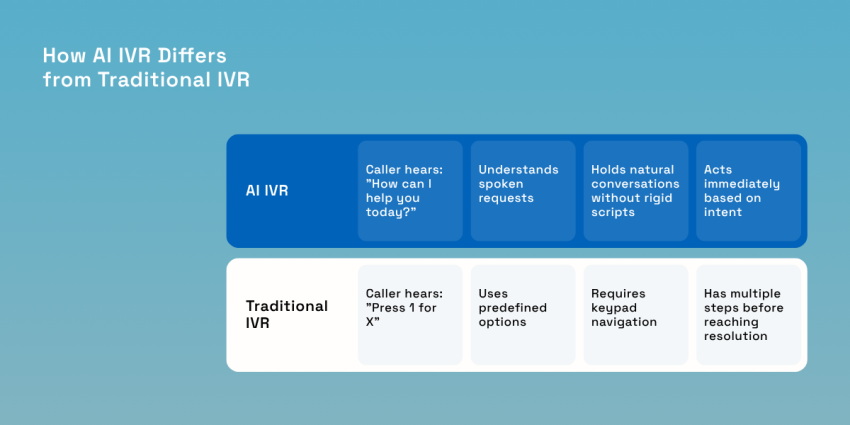
Unlike traditional IVR menus that rattle off instructions like “press 1 for sales,” a voice AI Agent understands natural speech, responds conversationally, and resolves requests without forcing callers through rigid phone trees. Customers state what they need, and the AI figures out how to help.
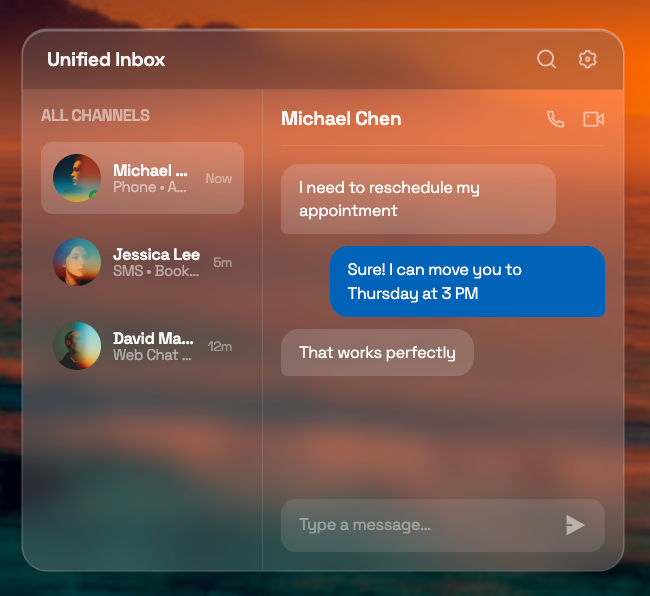
For example, a caller might say, “I need to reschedule my appointment for next Thursday.” The voice AI agent checks the calendar, confirms availability, reschedules, and sends a confirmation text.
Conversational AI chat agent
Phone calls aren’t the only channel that matters. Many customers prefer to reach out via chat, text, or social media.
Conversational AI solutions handle real-time conversations across web chat, SMS, and social media channels. They use NLP and large language models to understand customer intent and respond with accurate, brand-consistent answers.
Unlike rules-based chatbots that break the moment someone phrases a question differently, a conversational AI chat agent holds multi-turn conversations, remembers context within a session, and can execute actions like placing orders or updating account information.
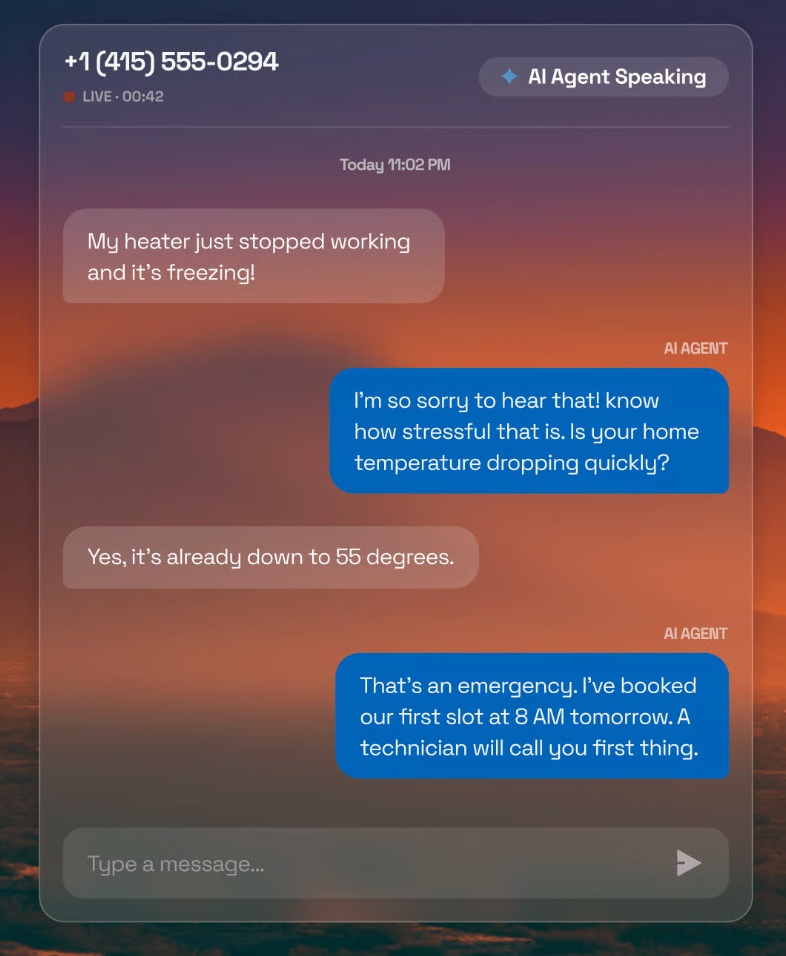
This is particularly effective for e-commerce, SaaS, and service businesses where customers expect instant digital responses. If someone messages your business at 11 p.m. asking about a return policy, the AI handles it immediately instead of making them wait until morning.
AI receptionist
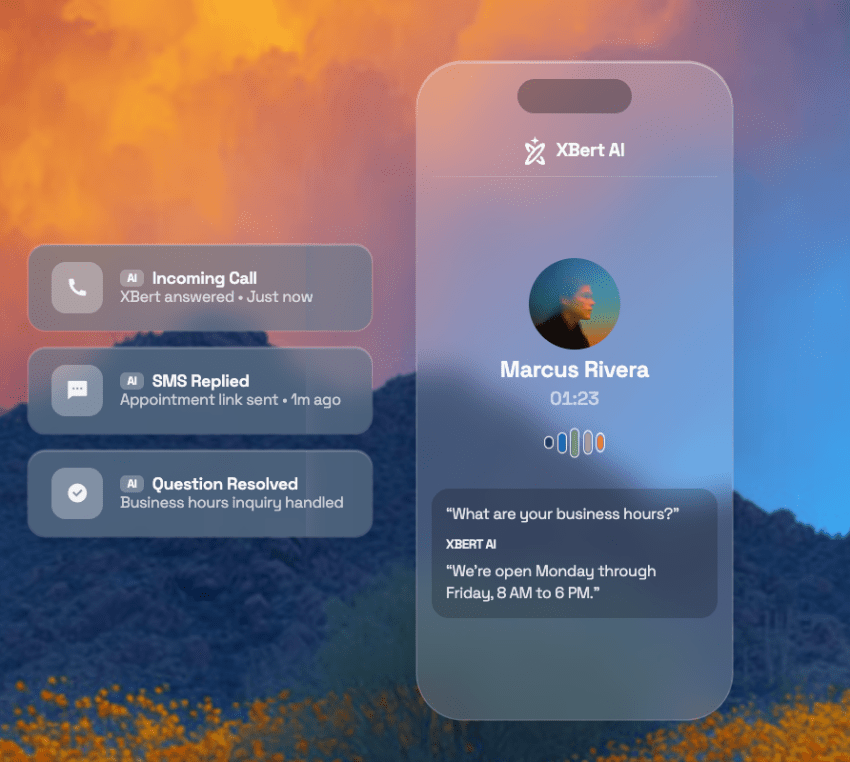
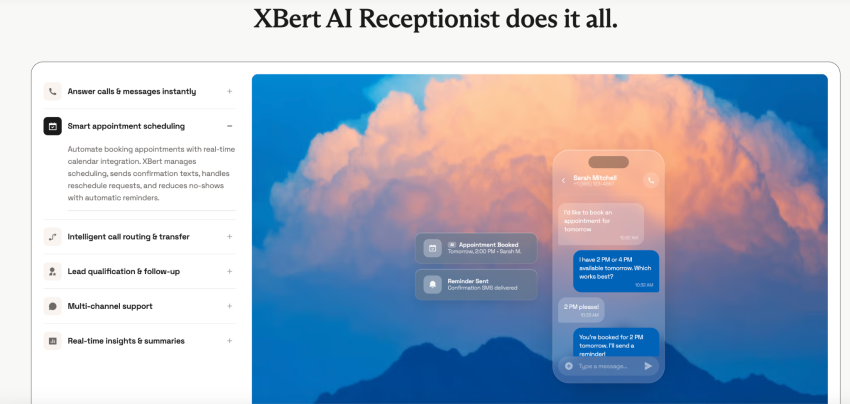
Think of this as a virtual front desk that never takes a break. An AI receptionist greets callers, manages appointment scheduling, captures caller details, answers common questions, and routes calls to the right person. And it does it all with a professional, natural-sounding voice that represents your brand.
This is ideal for businesses with appointment-heavy workflows: medical offices, dental practices, law firms, salons, and HVAC companies. It’s useful anywhere missed calls directly translate to lost revenue.
An AI receptionist operates 24/7, so after-hours and weekend calls are handled with the same quality as peak-hour interactions. A patient calling at 7 a.m. to confirm their appointment gets the same experience as someone calling at 2 p.m.
AI customer support agent
Most support inquiries follow predictable patterns: order status, account questions, billing issues, and password resets. It’s the same handful of requests, over and over. That’s where AI agent assist software can really help your team reclaim time.
An AI customer support agent resolves these routine inquiries autonomously: no ticket created, no agent involved, no customer waiting. It pulls data from your systems, provides the answer, and moves on.
When issues do require human expertise, the AI support agent escalates with full conversation context, no repeated explanations, and no cold transfers. The customer picks up right where they left off, and your agent has everything they need to help.
This reduces average handle time and increases first-contact resolution by handling up to 80% of inquiries that don’t actually need a human. Your support team can focus on the hard problems instead of answering “where’s my order?” for the hundredth time.
AI sales agent
Leads don’t wait. If someone is interested in your product and you don’t answer, they call someone else who might have an answering service. And just like that, the sale is gone.
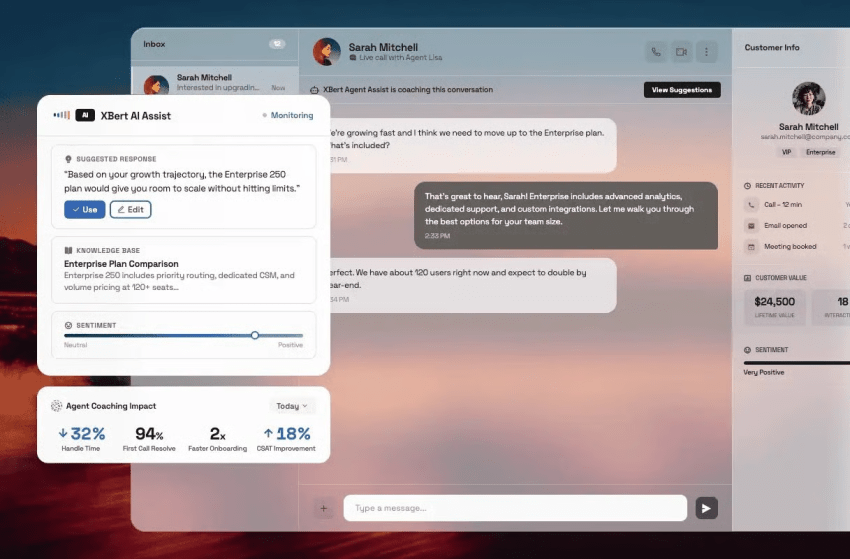
An AI sales agent qualifies inbound leads by asking screening questions, capturing contact information, scoring prospects based on predefined criteria, and routing hot leads directly to sales reps with full context. Every inbound inquiry, regardless of time of day, is captured, qualified, and actioned, with no more “sorry I missed your call” follow-ups that come too late.
This turns phone calls and chat conversations into pipeline opportunities without requiring a live agent to screen every interaction. Your sales team talks to qualified prospects instead of spending half their day figuring out who’s actually ready to buy.
AI workflow assistant
Not all AI employees are customer-facing. Some do behind-the-scenes work that keeps operations running.
An AI workflow assistant automates back-office tasks like sending follow-up emails, triggering appointment reminders, updating CRM records, routing internal tasks, and generating reports. This is repetitive administrative work that eats up hours every week.
Think of this as the link between your processes. When your AI receptionist books a dental cleaning, the workflow assistant in the background checks insurance eligibility, updates the HIPAA-compliant patient record, and notifies management if a co-payment is overdue. This eliminates the manual synchronization that typically occurs between the phone call and the appointment.
This is particularly valuable for operations teams that spend hours per day on repetitive administrative work. The AI handles the busywork so your team can focus on work that actually requires their judgment.
How to Create an AI Employee With Nextiva
Adding an AI employee to your business doesn’t require a technical team or a six-month implementation timeline. Here’s what the process looks like when you deploy an agent with Nextiva’s NEXT platform.
Step 1: Define the role and scope
Before you touch any technology, get clear on what you actually need your AI employee to do.
Start by identifying the specific tasks your AI employee will handle. Look for the top five to 10 interactions that consume the most staff time. Common starting points include:
- Answering phone calls
- Booking appointments
- Responding to FAQs
- Qualifying leads
- Handling after-hours inquiries
From there, define boundaries. What should the AI handle autonomously, and when should it escalate to a human? An AI employee might handle appointment scheduling and FAQs on its own, but escalate complaints or high-value sales conversations to a live agent.
With Nextiva’s NEXT platform, you define exactly what your AI employee can and can’t do. This gives you full control over the scope of automation from the start.
Step 2: Provide your business context
Your AI employee is only as good as the information you give it. Feed it your services, pricing, business hours, policies, FAQs, and common customer scenarios. It’s like onboarding a new employee, but this employee learns really fast.
Nextiva’s XBert AI absorbs all this information instantly and builds a working knowledge base from it. It uses this information to help answer customer questions.
Remember, the more specific and comprehensive the business context, the more accurate and helpful the AI employee’s responses will be. You can use templates to speed up this process if you’re starting from scratch.
Step 3: Set the tone and persona
How your AI employee communicates matters just as much as what it says. Define the tone you want the AI to use. For example, you might instruct it to be professional, friendly, and concise. Or you can encourage it to be enthusiastic and witty (though you’ll want to put some serious guardrails in place for this).
Remember that the voice should match your brand and customer expectations. A law firm’s AI receptionist has no business sounding like it’s programmed by the team running Wendy’s social media accounts.
Fortunately, Nextiva’s virtual receptionist can be customized to reflect your business’s personality, from the greeting to the way it handles objections and confirms appointments.
Step 4: Connect your channels and systems
Most businesses make the mistake of getting a chatbot from one provider and a voice system from another. In my experience, this leads to data silos. Activate your AI assistant through the channels your customers actually use, such as phone, SMS, web chat, email, and social media messaging, using a unified communications platform.
With Nextiva’s NEXT platform, your AI assistant has a single point of contact. For example, if a customer chats with you on Monday and calls on Tuesday, the AI remembers Monday’s conversation. This continuity makes the AI feel like a full-fledged employee, not just a tool.
After the initial setup, you connect your CRM system, appointment scheduling system, and other business applications so the AI assistant can access real-time data and take action. This allows it to schedule appointments, update records, and trigger outreach workflows without human intervention.
Step 5: Test, launch, and refine
Now it’s time to evaluate your AI employee, launch it, and make changes as needed. Run test conversations across each channel before going live. Take the time to review transcripts to ensure accuracy, tone, and escalation behavior match your expectations.
Some providers offer support for this stage. Nextiva’s expert team configures and sets up your XBert AI at no additional cost — assistance is automatically included at the $99 per month price point.
After launch, review conversation transcripts and analytics regularly. The reality is no amount of initial testing will likely catch all edge cases, so ongoing evaluation and refinement are essential. This means you should identify gaps in training, add new FAQs, and refine the AI’s knowledge base as your business evolves.
AI Employees vs. Traditional Automation: What’s the Difference?
I’ve used everything from simple auto-attendants to advanced AI agents. The difference in capability and business impact is significant. Here’s a quick overview:
| Capability | Traditional Automation (Chatbots, IVR, Auto-Attendants) | AI Employee |
|---|---|---|
| Interaction Style | Scripted menus, keyword matching, rigid flows | Natural language conversation, context-aware responses |
| Learning Capability | Static — requires manual updates | Dynamic — learns and improves from every interaction |
| Task Execution | Basic routing, FAQ lookup | Books appointments, qualifies leads, processes payments, updates CRM |
| Channels | Typically single-channel (phone or chat) | Omnichannel: voice, chat, SMS, email, social |
| Personalization | None or minimal | CRM-integrated, customer-history-aware, context-driven |
| Escalation | Transfers blindly or drops call | Seamless handoff with full conversation context |
| Availability | Always on or available on specific schedules (basic) | Always on with intelligent, adaptive responses |
| Business Context | Pre-programmed scripts only | Trained on your specific business data, policies, and workflows |
| Analytics | Basic call/chat logs | Transcripts, sentiment analysis, intent trends, and resolution tracking |
| Scalability | Requires manual updates for new scenarios | Scales with AI model improvements and interaction volume |
There are a few things to take note of here.
Traditional automation tools force customers into structures that the business designed. AI employees adapt to the way customers naturally communicate. If you’ve ever found yourself tempted to scream “TALK TO A REPRESENTATIVE!!” into an automated phone system, you’ll understand the importance of that.
The shift from scripted to intelligent fundamentally changes the customer experience and the economics of customer-facing operations. This is why small businesses and enterprises alike are moving to agentic AI phone answering services.
The Bottom Line: AI Employees Are Here
I’ve evaluated AI tools across multiple business environments, and the difference between operating with and without agentic AI for small businesses is nearly structural at this point.
The businesses that win with AI phone assistants aren’t the ones with the biggest teams and software, but the most efficient ones. You can keep letting your best staff answer FAQs, or you can deploy an AI employee that never sleeps, never forgets a lead, and costs less than a monthly coffee budget for the office.
Nextiva’s XBert AI starts at $99 per month: no long-term contracts, no technical headaches. Stop managing the chaos and start scaling the work. Book your demo today.
The employee that never clocks out.
XBert is your AI employee, trained on your business and working around the clock. It answers calls, handles chats, books appointments, resolves issues, and follows up so your team can focus on the work that matters.
Frequently Asked Questions About AI Employees
A chatbot follows scripted flows and keyword matching. An AI employee, however, holds natural, multi-turn conversations and understands context. It can execute tasks like booking appointments, qualifying leads, and updating CRM records.
AI answering services can often handle tasks such as:
– Answering phone calls
– Responding to FAQs
– Booking and rescheduling appointments
– Qualifying leads
– Handling customer support inquiries
– Sending follow-up messages
– Routing complex issues to human workers with full context
Yes, AI employees are incredibly secure if you choose the right platform. Look for the following:
– PCI DSS compliance
– HIPAA compliance
– SOC 2 certification
– Encrypted communications
– Role-based access controls
– Audit trails
Nextiva’s call center AI solutions meet all of these standards.
AI employee costs vary significantly by provider and capabilities. That said, Nextiva’s XBert AI starts at $99 per month, which is a fraction of the cost of hiring additional staff for the same workload.
No, AI employees aren’t here to replace your human staff. AI answering services handle repetitive tasks, so your team can focus on high-value work that requires judgment, creativity, and empathy. It’s a force multiplier, not a replacement. The best implementations use AI to handle up to 80% of routine interactions while freeing human employees for work that matters.
It can be surprisingly fast to set up an AI employee. With Nextiva, most businesses go live in under an hour. The real investment is training the virtual receptionist on your business knowledge and refining it based on initial interactions — this should be treated as an ongoing process.
Yes, modern AI receptionists operate across every channel — voice, SMS, web chat, email, and social media — from a single platform. Nextiva’s NEXT Platform unifies all of these channels with AI built in.