A €450 week and a €550 week at a Morocco surf camp can be closer in value than they look. Add lunch, an airport transfer or a private room to the cheaper one, and the gap starts to disappear.
On October 5, 2026, we looked at 18 active surf offers across Taghazout, Tamraght, Aourir and Imsouane. Sixteen were conventional seven-day packages we could compare directly. Below you’ll find what those weeks cost, what the price covers, what it leaves out, and how the four towns differ. All four sit on the same stretch of Atlantic coast north of Agadir, close enough to combine in one trip but different enough that where you stay shapes the week.
Compare and Book Surf Camps With Moramara
If you’d rather compare packages side by side than message camps one by one, Moramara lists surf camps across Taghazout, Tamraght, Aourir and Imsouane in one place, with what each package includes spelled out before you book.
Good to know
You pay 10% online to reserve, and the rest directly to the camp when you arrive.
Free cancellation up to 7 days before arrival for camp stays, and up to 24 hours before for single activities.
Prices are negotiated with each camp and listed at the same rate as booking direct or lower.
Support is available in English and French, by email or WhatsApp, 7 days a week.
Travel Dudes code: type tdudes at checkout for 5% off your surf camp, up to €50
Prices (per person, checked November 2026)
7-day surf guiding package, Tamraght: from €499
7-day surf and yoga package, Tamraght: from €510
7-day beginner–intermediate surf camp, Tamraght: from €546
3-day coaching weekend, Tamraght: from €230
2.5-hour group surf lesson, Tamraght or Taghazout: from €25
2.5-hour beginner surf lesson, Agadir: from €22
One limitation: Individual camp listings carry only a handful of reviews each (between 3 and 21 when we checked), so read them alongside each camp’s own review history rather than relying on the site’s overall score.
Compare Morocco surf camps on Moramara →
This section contains partner links. If you book through them, we may earn a commission at no extra cost to you. We only feature partners whose services we believe add genuine value for travelers.
What a Week at a Morocco Surf Camp Costs
Advertised starting prices for the 16 comparable seven-day packages ran from €405 to €819, with a median of €493. Roughly half the packages started below €493 and half above.
We left two products out of the comparison: a three-day coaching product and a stand-up paddle product. Neither is a week-long surf camp stay, and counting them would have skewed the numbers.
These are advertised starting prices from a single date. Treat them as a snapshot. Your final price depends on room type, dates and what you add.
Prices by Town
| Town | Median starting price | Comparable packages |
|---|---|---|
| Tamraght | €449 | 7 |
| Aourir | €484 | 4 |
| Imsouane | €546 | 4 |
| Taghazout | €819 | 1 |
Advertised starting prices, checked October 5, 2026.
What the Price Usually Includes
Across the sample, the common inclusions were accommodation, surf lessons or guiding, board and wetsuit, transport to the surf spots, and breakfast. Many packages also covered lunch and dinner.
Airport transfers were the least consistent item. Some packages include one, others charge extra. Of everything on the list, this is the one I’d check first.
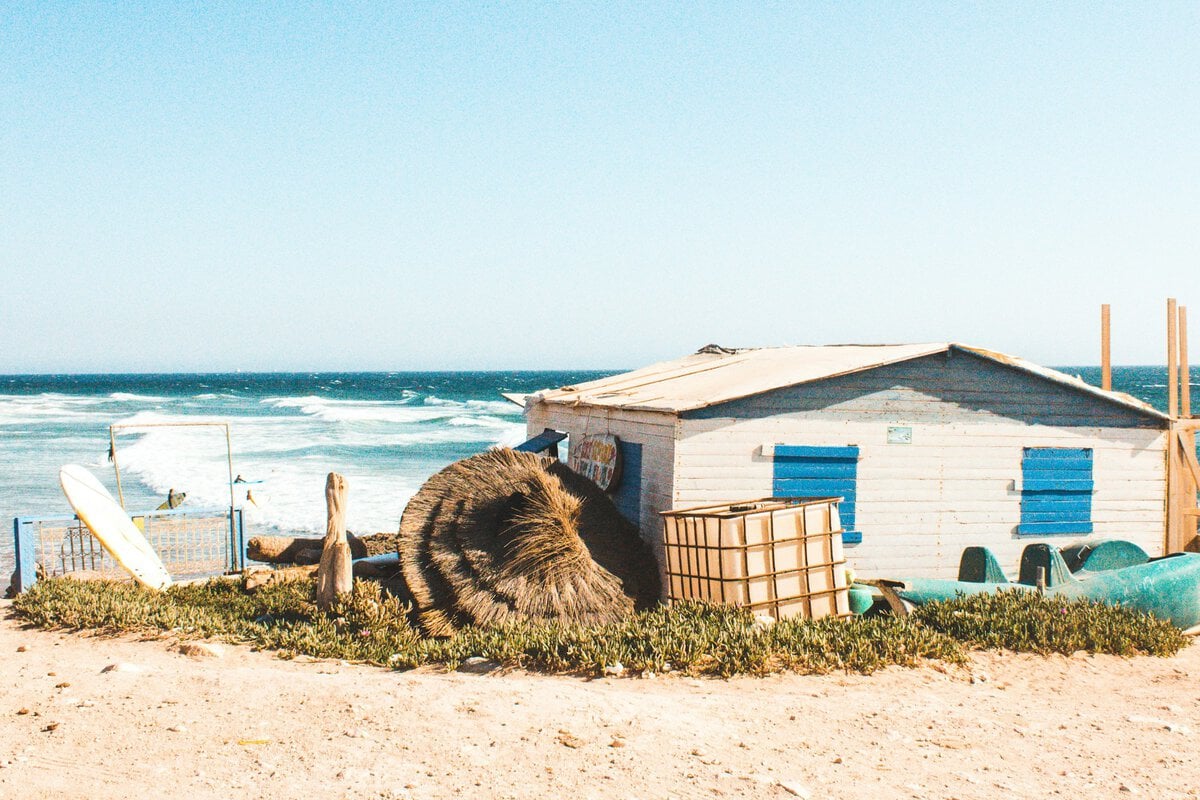
We see the same situation often. A traveler picks the cheapest camp because its headline price sits well below the rest. On arrival, they learn that lunch is extra, the transfer is extra, the room is shared rather than private, or the coaching is lighter than they assumed. By the end of the week, the total lands close to a pricier package that included most of those things from the start.
Packages also differ in the number of surf sessions, whether yoga or excursions are part of the deal, and how much coaching you get per session. Two camps at very different prices may be selling very different weeks. A higher price doesn’t guarantee a better camp either. What matters is whether the package fits your surf level and the trip you want.
How the Four Towns Compare
Most travelers arrive through Agadir, and the change comes quickly once you leave the city and follow the coast north. The road opens onto the Atlantic, with dry hills on one side and surf beaches on the other. Boards ride strapped to car roofs, wetsuits dry outside guesthouses, and surf camp signs appear at almost every turn. What surprises first-timers is how close the towns sit to each other, and how different each one feels after a few days.
Taghazout
Taghazout has the busiest, most international atmosphere, with surf schools, cafés and restaurants packed into a small area. The one comparable package we found cost €819, the top of our range. A single data point can’t tell you whether that reflects the town or just that camp.
Tamraght
Tamraght is quieter and more residential. It had the most packages in our sample (seven) and the lowest median at €449. It’s the calmer side of the same coastline, close enough to reach the same breaks as Taghazout.
Aourir
Aourir feels more local. Its four packages had a median of €484, just under the overall median.
Imsouane
Imsouane sits further north, and the pace slows down again. It’s a fishing village, and grilled sardines and tagines are common on menus there. Its median of €546 was the highest among the three towns with more than one package. Our data doesn’t explain why, so check what each Imsouane package actually includes before assuming it’s a premium.
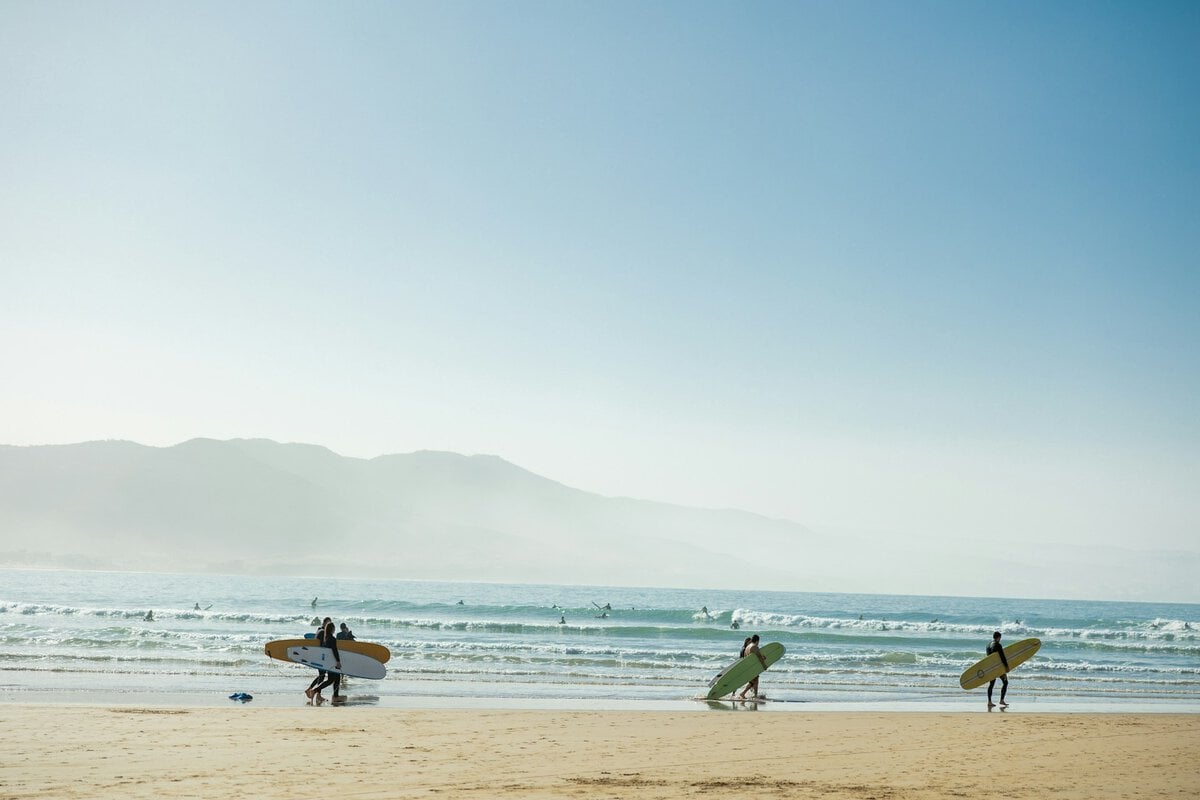
Spend Time Around Taghazout and Tamraght
Even if you’re staying elsewhere, I’d spend time around the Taghazout and Tamraght stretch. Surf schools, cafés, local restaurants, beach access and several surf spots are concentrated within a small area. Seeing the lively side and the quiet side back to back shows you what kind of stay you actually prefer before you choose a camp.
What to Check Before You Choose a Camp
The Full Package
Line up the same items for every camp you’re considering: room type (shared or private), number of surf sessions, coaching level, which meals are covered, equipment, transport to the beach, and extras like yoga or excursions. Then compare totals, not headline prices. For a wider framework, see our guide to how to find the right surf camp.
Airport Transfer
Ask whether it’s included before you arrange transport separately. Many camps can organize it directly, which is usually simpler than sorting out your own.
How the Camp Chooses Where to Surf
Local surfers don’t walk to the nearest beach and stay there. Early in the morning, instructors check several spots along the coast, reading swell direction, tide, wind and how many people are already in the water. Around Taghazout and Tamraght, that might mean looking at Banana Point, Devil’s Rock, Panoramas or other nearby breaks before committing to a session.
This morning call shapes your whole week. A camp isn’t only handing you a board and a lesson; it’s deciding where you’ll be in the water given that day’s conditions. Ask each camp how it makes that decision. For what a beginner session on this coast feels like from the water, read What Your First Wave Surfing in Taghazout Bay Actually Feels Like.
Local Context Worth Knowing
The surf coast is now a major tourism area, but its communities are much older than surf tourism. Many towns and villages here have strong Amazigh roots, and fishing, small family businesses and farming came long before the first surf camps. Today residents, Moroccan surfers, international visitors and seasonal workers share the same small towns. Surf culture has grown on top of the older local culture rather than replacing it.
Morocco is a Muslim country, so daily life follows prayer times, Ramadan and family routines, with more conservative social norms than many European beach towns. You don’t need to be formal. Dress respectfully away from the beach, be considerate during religious periods, and ask before photographing people. Our Morocco travel tips cover more of the basics.
For breakfast, order fresh Moroccan bread with amlou and mint tea. Amlou is a spread of roasted almonds, argan oil and honey: rich, nutty and slightly sweet. You’ll find it at camps, cafés and breakfast spots around Taghazout, Tamraght and Aourir.
Practical Information
Best Time to Go
Surfing is possible year-round, but the experience changes with the season.
- October to March: the most consistent North Atlantic swell. I’d choose this window if surfing is the main reason for the trip, especially for intermediate and advanced surfers. The point breaks around Taghazout are more active, though bigger days bring more experienced surfers into the water.
- April to June: a transition period. Good swells still arrive, but conditions are less consistent and often more manageable.
- July to September: smaller surf around Taghazout, which suits beginners and travelers mainly after lessons and warm weather. Advanced surfers will find fewer quality swell days.
For a first surf camp trip, autumn and spring are good compromises between conditions, weather and crowds.
Getting There
Most international travelers fly into Agadir Al Massira Airport. Tamraght and Taghazout are usually reached by private transfer, taxi or a camp-arranged transfer, which takes roughly 45 minutes to an hour depending on traffic. Aourir is slightly closer. Imsouane is about 115 km north of the airport, close to two hours by car.
From Marrakech, allow about three hours by car to the Taghazout area, closer to four by bus. Imsouane takes longer. If you’re starting your trip in the city, our guide to Marrakech’s main sights helps you plan the days before the coast.
Costs
Advertised starting prices for a seven-day package ranged from €405 to €819 in our October 2026 sample, with a median of €493. Add whatever your package leaves out, starting with transfers and meals.
What to Bring
- A warm layer. Morocco looks hot in photos, but mornings, evenings and windy days by the Atlantic can feel surprisingly cool.
- Strong sunscreen and sun protection for the water. The sun can be strong even in winter.
- Some cash. Cards are increasingly accepted, but small cafés, taxis and local shops may be easier with cash.
- Less surf gear than you think. Most packages include a wetsuit and board, but confirm it. If rental is covered, traveling light makes it much easier to move between Taghazout, Tamraght and Imsouane.
Frequently Asked Questions
What wetsuit do I need for surfing in Morocco in winter?
The sea around Taghazout averages roughly 16.5–18°C (62–64°F) from December to March, so most surfers wear a 3/2mm full suit in winter. From July to October the water averages around 20–21°C (68–70°F), and a shorty or spring suit is often enough. If your package includes a wetsuit, ask which thickness they provide for your dates.
How long does it take to get from Agadir airport to Imsouane?
Usually around two hours by car. Many surf camps can arrange the transfer directly, so ask when you book whether it’s included or charged separately.
How much does a transfer from Agadir airport to Taghazout cost?
Pre-booked private transfers to Taghazout were listed at around €30–35 per car when we checked in November 2026, and around €60 to Imsouane. Taxis wait at the airport rank, but reported fares vary, so agree on the price before you get in. If your camp includes the transfer, that cost disappears from the comparison.
Can I combine Taghazout, Tamraght and Imsouane in one trip?
Yes. The towns sit along one coast and each offers a different mix of waves, atmosphere and camp style. If your board and wetsuit rental are already covered, you can travel light between them.
Does the cheapest Morocco surf camp offer the best value?
Not automatically. A low headline price may leave out lunch, the airport transfer or a private room, and the final total can end up close to a pricier package that included them. Compare what each package covers before you compare prices.
What should I wear away from the beach?
Dress respectfully in town, since everyday life here is shaped by prayer times, family life and more conservative social norms than many European beach destinations. Be considerate during Ramadan, and ask before photographing people.
!function(f,b,e,v,n,t,s){if(f.fbq)return;n=f.fbq=function(){n.callMethod?
n.callMethod.apply(n,arguments):n.queue.push(arguments)};if(!f._fbq)f._fbq=n;
n.push=n;n.loaded=!0;n.version=’2.0′;n.queue=[];t=b.createElement(e);t.async=!0;
t.src=v;s=b.getElementsByTagName(e)[0];s.parentNode.insertBefore(t,s)}(window,
document,’script’,’https://connect.facebook.net/en_US/fbevents.js’);
!function(f,b,e,v,n,t,s)
{if(f.fbq)return;n=f.fbq=function(){n.callMethod?
n.callMethod.apply(n,arguments):n.queue.push(arguments)};
if(!f._fbq)f._fbq=n;n.push=n;n.loaded=!0;n.version=’2.0′;
n.queue=[];t=b.createElement(e);t.async=!0;
t.src=v;s=b.getElementsByTagName(e)[0];
s.parentNode.insertBefore(t,s)}(window, document,’script’,
‘https://connect.facebook.net/en_US/fbevents.js’);
fbq(‘init’, ‘819570121508305’);
fbq(‘track’, ‘PageView’);