BMW has a habit of attaching poetic names to engineering that would otherwise sound like a parts-bin spec sheet. The Heart of Joy could easily have been one of those, a marketing flourish hung on a control unit nobody outside the company would ever think about. Instead, a year into production cars actually carrying it, it’s turning into the single most consequential piece of engineering BMW has introduced this decade, and it’s no longer theoretical. It’s in the iX3 customers are driving right now, it’s landing in the i3 sedan this year, and it’s confirmed for the electric M3. This is no longer a concept car story. It’s the foundation BMW has decided every great-driving car it builds from here forward will sit on.
The problem it solves is real, and it predates electrification even if EVs are what exposed it. A typical car spreads driving-dynamics functions across a dozen or more separate controllers, each with its own supplier, its own software stack, and its own decade-old assumptions about how fast a system needs to respond. That patchwork was tolerable when a combustion engine was the slowest thing in the loop. Electric motors respond in milliseconds, and BMW’s own dynamics engineers have said plainly that the old, balkanised controller network simply couldn’t keep pace with what electric propulsion is capable of. The Heart of Joy is the fix: drivetrain, steering, brakes and energy recuperation, folded onto a single controller processing information roughly ten times faster than BMW’s previous systems allowed.
That’s the part worth sitting with. This isn’t a bigger motor or a cleverer suspension setting. It’s the computing layer underneath all of it, and BMW has built the case that the computing layer is now the thing that determines whether a car feels alive or merely competent.
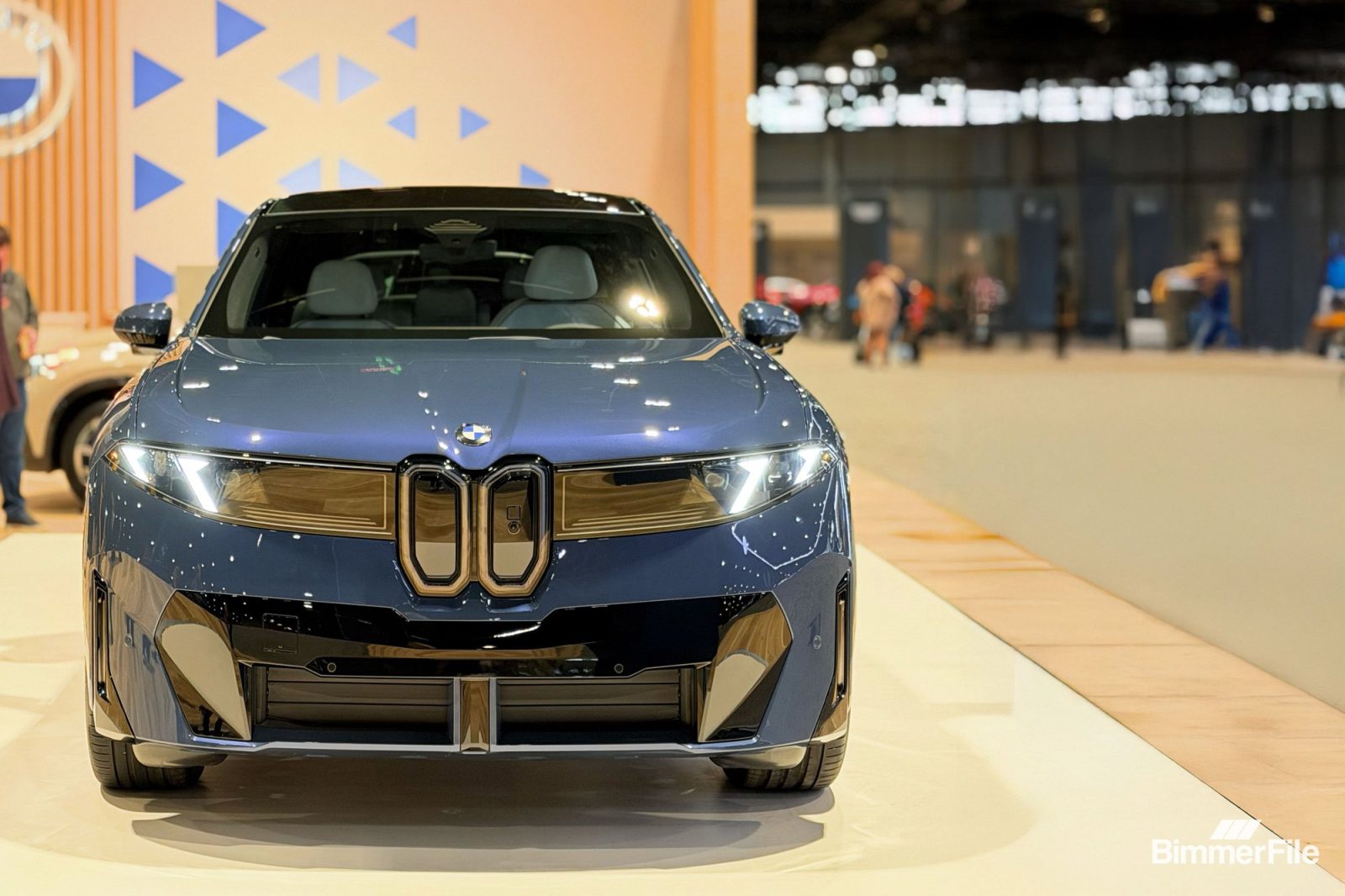
The iX3 is the proof point, and the reviews landing since it went into customers’ hands back that up. A recurring theme across outlets that came in sceptical is a 2.3-tonne SUV that manages to shrug off its own mass in corners, staying flat through direction changes without adaptive dampers or active anti-roll doing the work, the kind of body control usually reserved for cars several hundred kilos lighter. The brake pedal draws particular attention: because the Heart of Joy decides in real time whether to use regeneration or friction braking, testers keep noting a single, consistent pedal feel rather than the two-stage mushiness that plagues most EVs blending the two. BMW puts a number on it, claiming the system handles roughly 98 percent of everyday stops through regeneration alone. A few reviewers have flagged inconsistent ride quality on rougher pavement with larger wheel options, so the tuning clearly still varies by spec and trim, but nobody driving the finished car is calling the underlying system a gimmick anymore.

I had an early, unusually direct look at what this architecture is built to survive before any of that reached customers. Riding in the BMW Vision Driving Experience, a rolling test rig producing more than 13,000 lb-ft of torque and using ground-facing fans to physically suck itself onto the pavement, what stood out wasn’t the torque figure. It was how little drama the car made of managing it. That test mule was never meant for a showroom. Its entire purpose was to abuse the Heart of Joy at a scale no customer will ever ask for, so that the version reaching production feels, by comparison, effortless. Having felt that stress test firsthand, the composure showing up in iX3 reviews now reads less like a surprise and more like the architecture doing exactly what it was built to do.
What makes this a foundation rather than a feature is scale. The Heart of Joy is one of four superbrains underpinning the Neue Klasse electronics architecture, alongside separate units for automated driving, infotainment and core vehicle functions, and BMW has been explicit that this isn’t a one-model exercise. It’s the digital nervous system meant to underpin dozens of future BMWs, EVs, plug-in hybrids and combustion cars alike, which is why the company has called it the single largest platform investment in its history. The i3 sedan picks it up next, and BMW has already confirmed the electric M3 will lean on the same unit to manage its all-wheel-drive torque distribution and dynamics calibration. For a division whose entire identity rests on feel, handing that job to a centralised software system is a genuine departure from how M has calibrated cars for decades, and it says plenty that BMW is betting its most scrutinised nameplate on it rather than treating the Heart of Joy as an SUV-only convenience.
That’s really the shift worth understanding here. For most of the last decade, what made a BMW feel like a BMW was mechanical, chassis tuning, suspension geometry, steering weight. None of that has gone away, but the Heart of Joy is now the layer that decides how well all of it gets expressed in real time. BMW is betting that great driving cars in this next era get built from the computing architecture outward, not bolted onto it afterward. Based on what’s actually reaching customers so far, that bet is paying off.