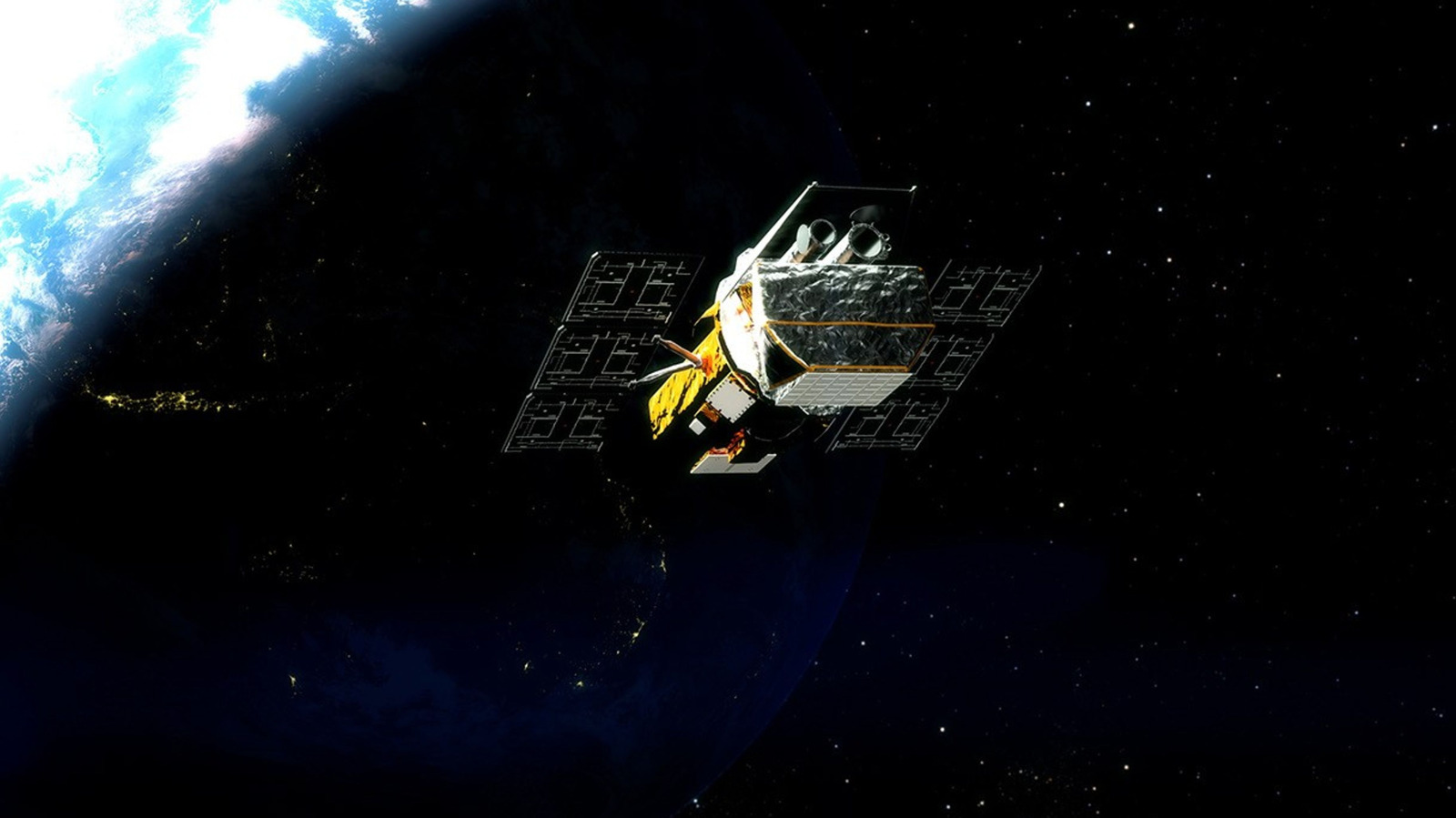
On Wednesday, NASA’s Neil Gehrels Swift Observatory, a space telescope that’s been in orbit since 2004, finally re-entered Earth’s atmosphere above Indonesia. However, it appears to have done so with a risk of casualties five times beyond what NASA technical standards mandate. How and why this happened isn’t immediately clear; NASA Public Affairs Specialist Alise Fisher told Jalopnik, “In the leadup to Swift’s Nov. 20, 2004, launch, NASA determined the risk was consistent with mission requirements as allowed by agency policy.” Somewhere between launch and reentry, that risk assessment shifted. It’s unlikely that anybody made a specific mistake; this is probably the result of, well, space being hard. Still, it does highlight that our main defense against the detritus of astronomical ambitions is pure luck.
Swift is only crashing to Earth because it ran out of fuel to stay in orbit or adjust its trajectory. To NASA’s credit, it did throw $30 million at a private company in an unprecedented attempt to rescue Swift with another satellite that would pull it back up into safe orbit. Sadly, the rescue satellite itself failed, dooming Swift to this fate.
Shifting odds of risk from above
In Swift’s instance, however, NASA played its cards a little close to its chest. For one thing, it did not put out a risk assessment for the reentry, which is unusual. Then, in the middle of a longer announcement, the agency mentioned that Swift’s risk of human casualties was actually “1 in 2,100.” That’s a risk of human injury or death five times beyond what it was meant to be.
The odds will give out eventually
That’s a roll of the dice, though. At some point, as thousands of satellites de-orbit per year in our new megaconstellation era, laws should be passed to manage this formally. That would likely mean requiring controlled reentries, when the satellite still has a little fuel left to navigate to a safe spot out in the ocean. The other option, which companies like SpaceX have been pursuing, is to design the satellite to burn up entirely on reentry. The issue there is what effect all that vaporized metal might have on the atmosphere. Scientists don’t yet know the answer, for the simple reason that there was never a reason to ask that question before. Now, the health of our planet may depend on it.
As space gets busier and busier, more and more will fall to us down here from up there. Up until now, the power of statistics has kept us safe. But eventually, a 1 in 10,000 chance is going to happen. Especially if some of those chances turn out to be riskier than intended.