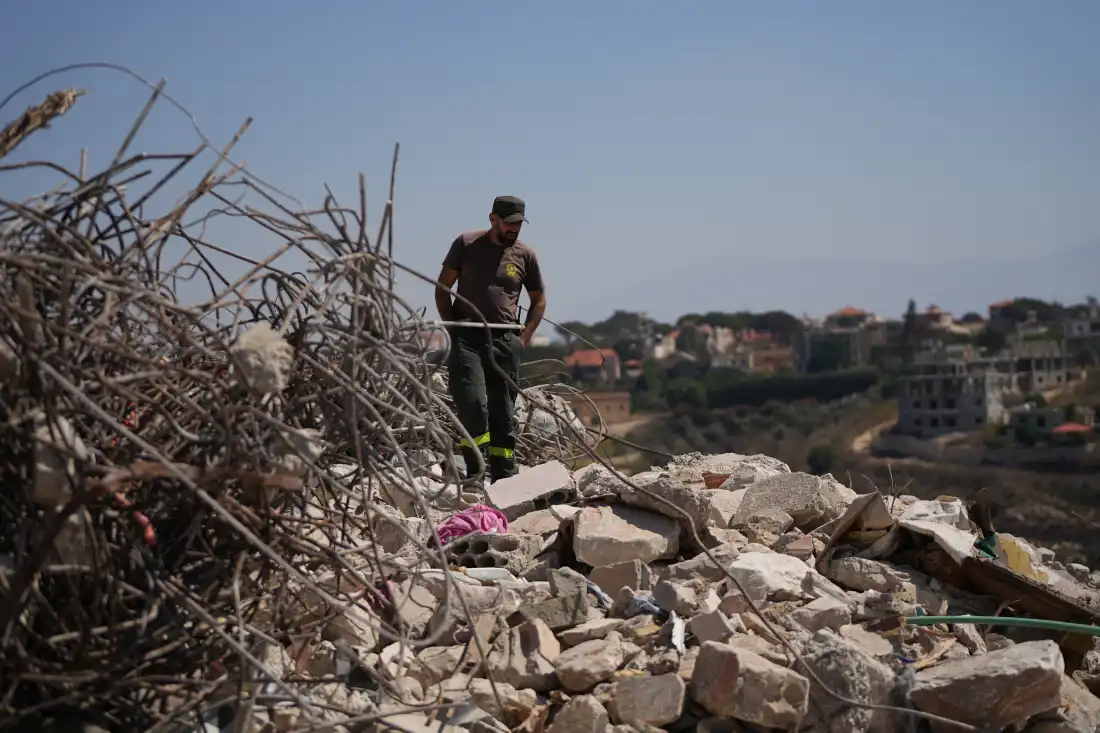
A destroyed home in the village of Zawtar al-Gharbiyah in southern Lebanon. The family says Israeli forces demolished their home and two other homes of extended family when they occupied the village after a U.S.-brokered ceasefire.
Mohammed Yassine for NPR
hide caption
toggle caption
i
Mohammed Yassine for NPR
ZAWTAR AL-GHARBIYAH, Lebanon — After two decades of working installing vehicle air conditioning in Saudi Arabia, Atef Kadouh saved up enough money to build a house in his hometown in southern Lebanon.
He and his wife, Soumaya Yaghi lived in the house for 40 years and had five children — all born at home.
Now there are four.
A photo of the youngest, Adel, is propped up in a basket of dried flowers near the doorway.

Adel, clean-cut with a trimmed beard, was a sports teacher and a basketball champion who was planning to travel to France this summer to pursue his doctorate. When the war with Israel began this year, he decided to volunteer as an ambulance driver.
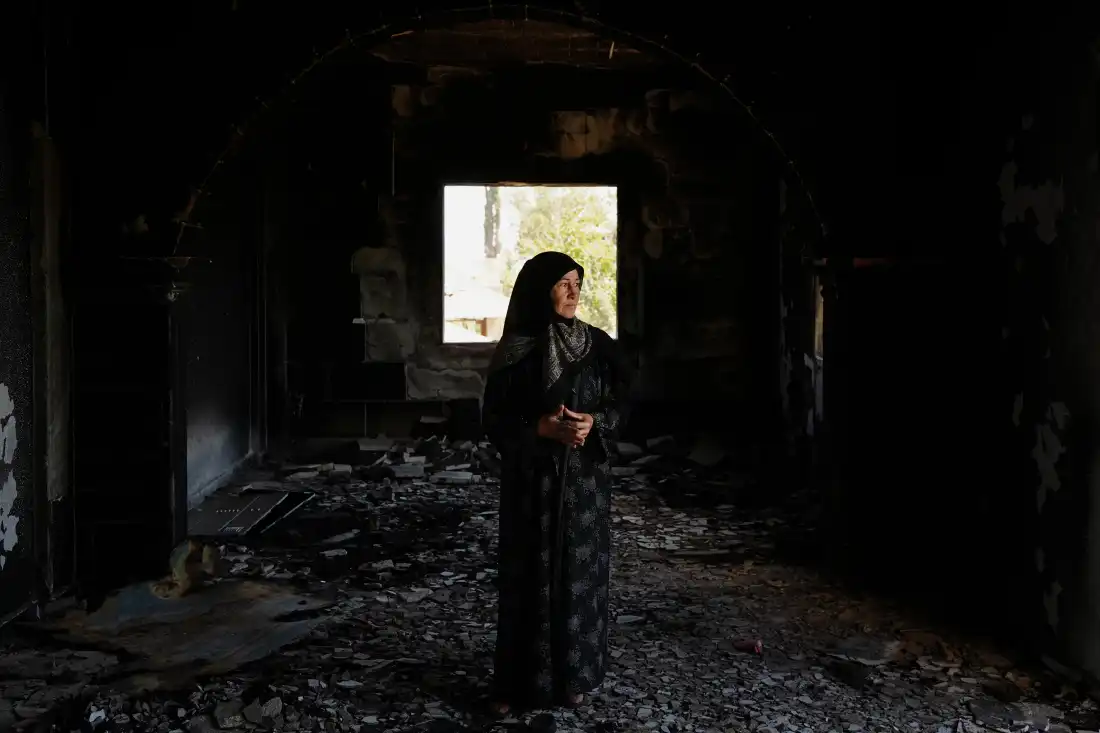
Soumaya Yaghi stands in her damaged home. Israeli forces occupied the house while they were in the village and it was set on fire as they left. The second floor was burned almost completely.
Mohammed Yassine for NPR
hide caption
toggle caption
i
Mohammed Yassine for NPR
The Israeli military killed him and four other medics on March 28 in a drone strike as the first responders buried a 75-year-old man who had died in hospital.
“This one broke me,” his father says. “He was my youngest son, 27 years old. There have been wars in every country in the world but there are rules for war … you attack a paramedic rescuing wounded people, children? He was not a fighter at the front.”
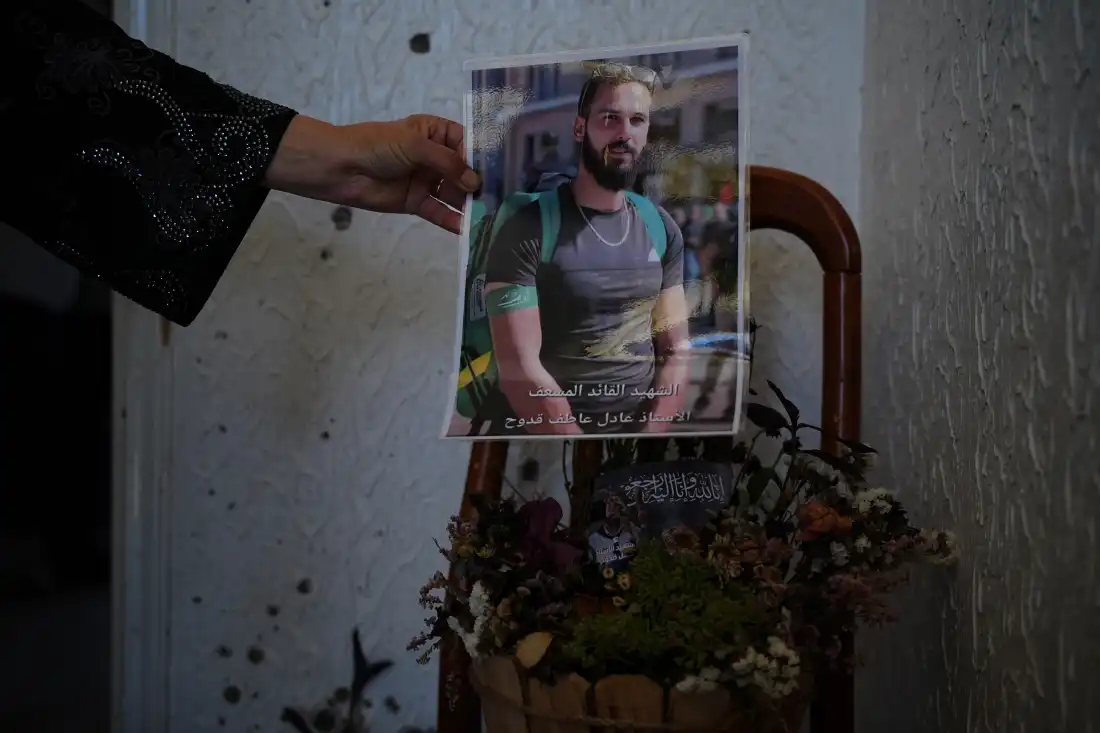
Soumaya Yaghi holds an image of her son Adel, a volunteer ambulance driver who was killed in an Israeli airstrike in March along with four other paramedics as they were burying an elderly man who had died in hospital.
Mohammed Yassine for NPR
hide caption
toggle caption
i
Mohammed Yassine for NPR
He says he warned his son that Israel could not be trusted not to kill medical personnel.
“He would not listen to me. He said, ‘Dad there are wounded children — we have to go rescue them,'” he says.
Lebanon’s Health Ministry says Israel has killed more than 135 first responders and medical staff in the past two years.

Asked about this airstrike, the Israeli military replied, without providing proof, that militants routinely pose as paramedics and transport weapons in ambulances for the militant group Hezbollah and its allies.
It did not respond to follow-up questions pointing out the five were not killed in an ambulance but at a burial.
A test case
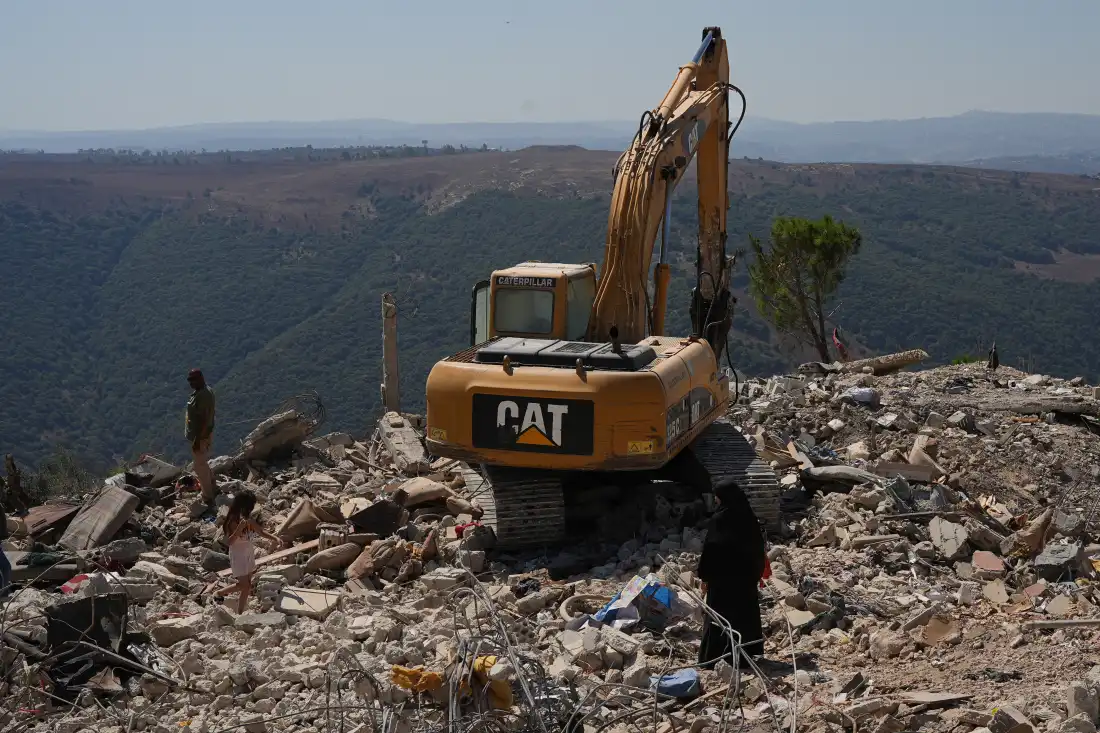
A family goes through the rubble of their home after it was demolished by Israeli forces when they occupied the village. They have brought in a bulldozer to clear the rubble.
Mohammed Yassine for NPR
hide caption
toggle caption
i
Mohammed Yassine for NPR
The Kadouh family returned to the village in July when it became the first and until now only test of a U.S.-brokered plan for Israeli forces to withdraw and the Lebanese army to take over.
The plan is aimed at keeping Iran-backed Hezbollah out of the area, after they started firing rockets across the nearby border in solidarity with the Palestinian militant group Hamas who launched a surprise attack on southern Israel in October 2023.
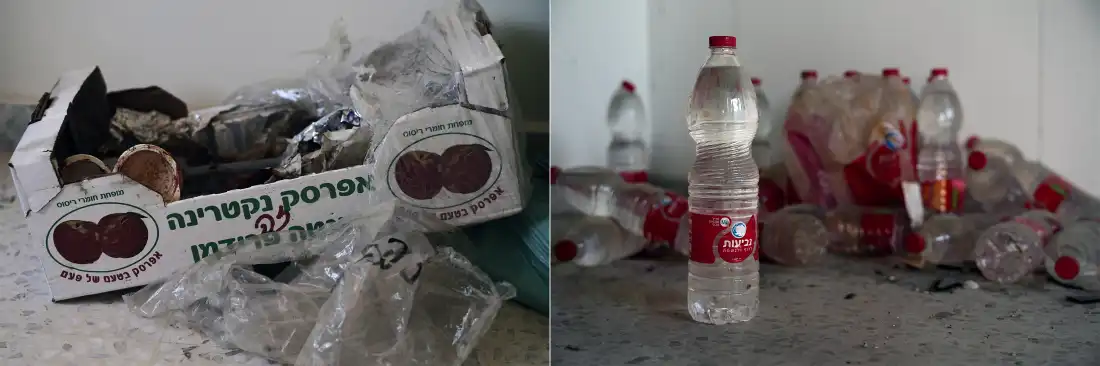
Packaging in Hebrew left behind after Israeli soldiers occupied the Kadouhs’ home before the house was set on fire as Israeli forces withdrew.
Mohammed Yassine for NPR
hide caption
toggle caption
i
Mohammed Yassine for NPR
Israel responded with devastating air strikes and eventually a ground invasion, and says it has continued attacks in south Lebanon following a U.S.-brokered ceasefire this year to eliminate what it believes are continued threats to northern Israel. Israel’s defense minister has acknowledged destroying more than 20,000 homes across the Lebanese border in a self-declared security zone.
When Kadouh and Yaghi returned to the village, they found that Israeli soldiers had occupied their house. And then it had been set on fire.
Wrecked home
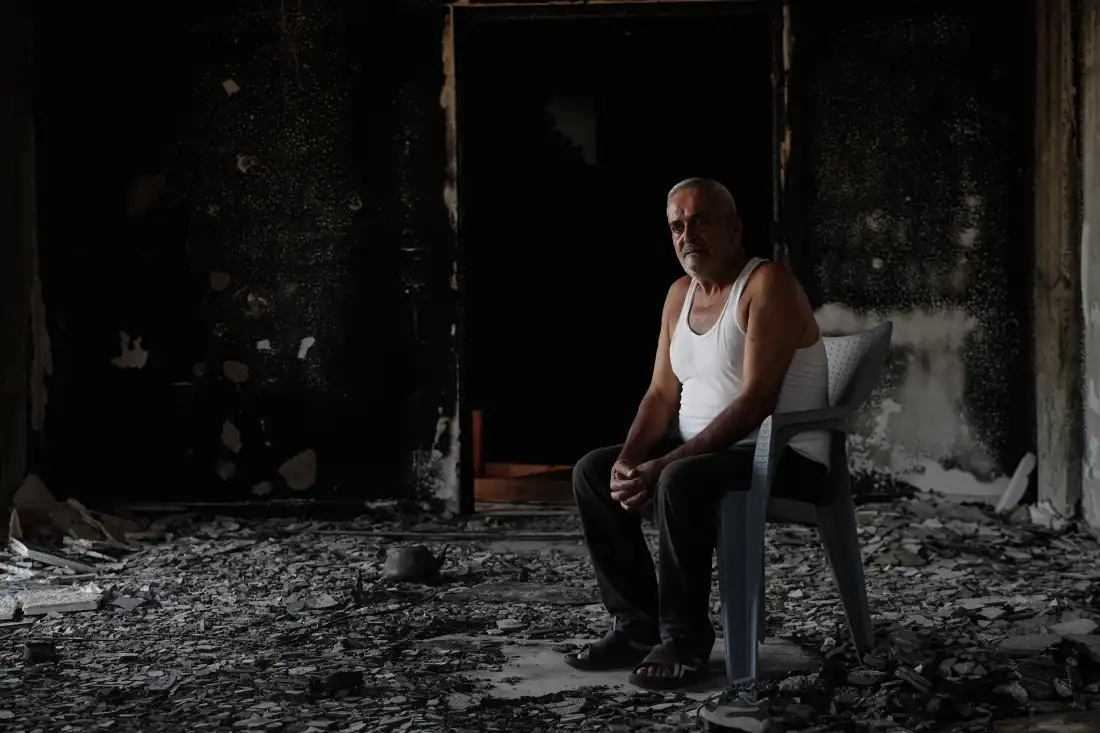
Atef Kadouh sits in the middle of his burned and damaged house in south Lebanon after Israeli forces occupied the house and then withdrew in a plan to hand over security to Lebanese forces.
Mohammed Yassine for NPR
hide caption
toggle caption
i
Mohammed Yassine for NPR
Upstairs in the hallway, near scorched walls and shattered windows, what appeared to be a work roster was written on the wall in blue marker in Hebrew with the first names of Israeli soldiers.
Almost everything in the house had been destroyed. Appliances — the fridge, freezer and washing machine — had bullet holes in them. Some, along with furniture, had been pushed over the second floor balcony, smashing on the ground below.
Kadouh says they knew from satellite photos there was destruction in their village “but the level of destruction — we were not expecting that. Everything that could be broken they broke.”
In the kitchen were shattered floor tiles and kitchen cupboards wrenched from the walls.
The fire appeared to be set as the soldiers were leaving. Blackened, burned food packets — fruit boxes and cans of energy drinks with Hebrew writing — were on the floor along with rotting sandwiches.

In their 18-month-old grandson’s bedroom, soot from a scorched ceiling dripped down on walls decorated with images of hot-air balloons and teddy bears climbing ladders to the moon.
Yaghi shows a bullet — one of many she says she found throughout the house. The spent engine casing of a missile or a drone with English markings reading “propulsion unit – tactical” was found in one of the rooms.
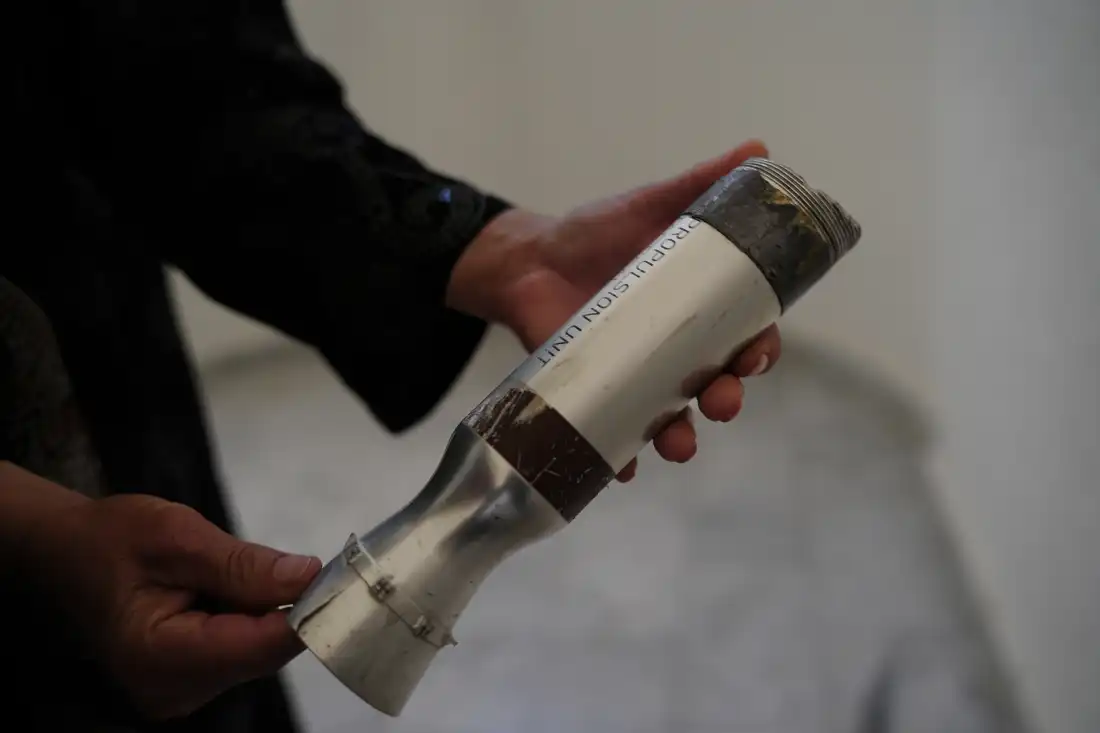
Soumaya Yaghi holds the metal casing of a drone or missile with English-language markings found in their home along with bullets throughout the house.
Mohammed Yassine for NPR
hide caption
toggle caption
i
Mohammed Yassine for NPR
There is no running water or electricity — Kadouh says the Israeli military destroyed the solar panels.
The Lebanese army told them that when it reentered the village many of the houses had been rigged to be blown up. It said it dismantled explosives left by Israeli forces in their house and others.
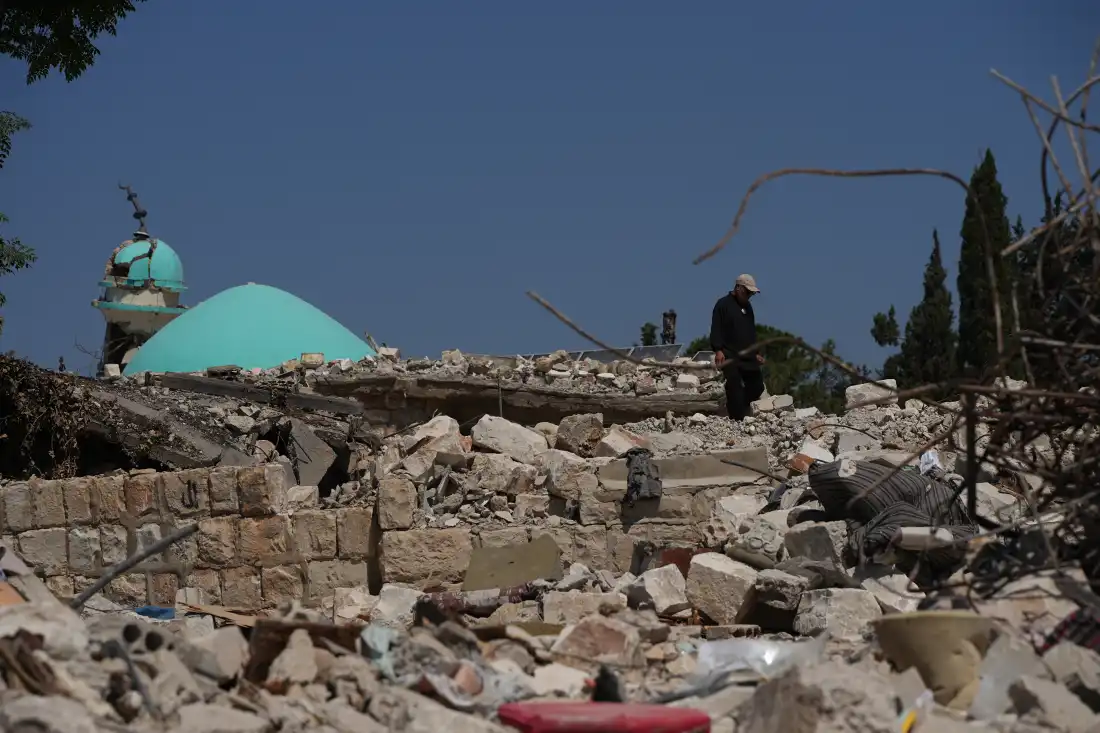
A man walks through the rubble of his destroyed home in Zawtar al-Gharbiyah, Lebanon.
Mohammed Yassine for NPR
hide caption
toggle caption
i
Mohammed Yassine for NPR
The Israeli army did not reply to NPR queries about why the house was damaged or set on fire. It said military policy bars burning homes or leaving explosives.
Unable to enter the village while Israeli forces were there, Kadouh said he saw a tank in their courtyard from drone images posted on social media.
Even the trees destroyed
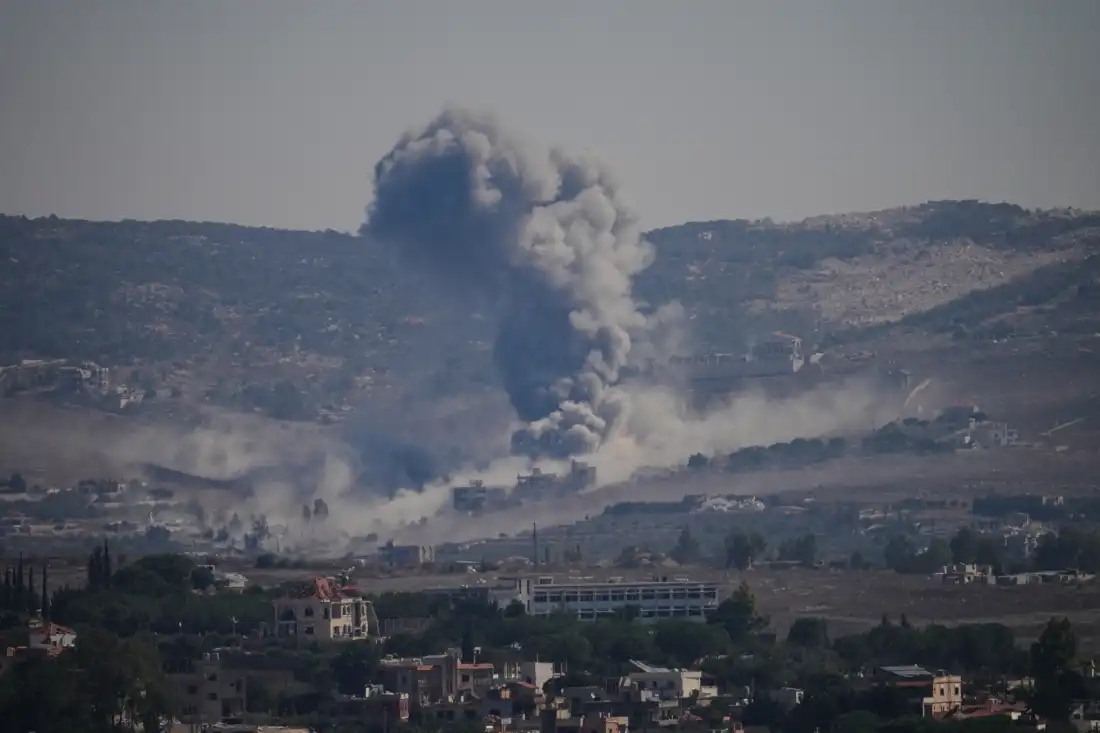
Smoke rises from an Israeli attack in the village of Kfar Tebnit, Lebanon.
Mohammed Yassine for NPR
hide caption
toggle caption
i
Mohammed Yassine for NPR
Yaghi says the Israeli army used a bulldozer to uproot the trees — including the pine trees which yield one of their most prized cash crops: pine nuts. When they had killed the trees, she says they demolished the family’s garage and destroyed their tractor.
“We are back to square one,” Kadouh says. “Starting from scratch.”
Even more precarious, though, than when they started decades ago. Despite a ceasefire, smoke rises from a nearby village where Israel is still attacking.

Amid all the damage, the destruction of the family’s trees cuts the deepest.
“I tended to them as if they were small children — they were all dear to me,” Kadouh says.
Yaghi points out where there were fruit-bearing cactus, olive trees, a fig tree one of her sons brought from Italy, avocado trees and fields of thyme, avocado.
Up until a decade ago, almost everyone here grew tobacco, diversifying crops when that market collapsed.
“We raised our children through hard work and thank God all of them were educated,” Yaghi says, noting with pride that they all became professionals.
She maintains a visceral connection to the land.

“Record this,” she asks, walking next to rose bushes that have begun to bloom again. “Our land is a paradise with everything in it. Our life is this land. Our life is our homes. Even if we were to die in our homes it would be much better than to live outside.”
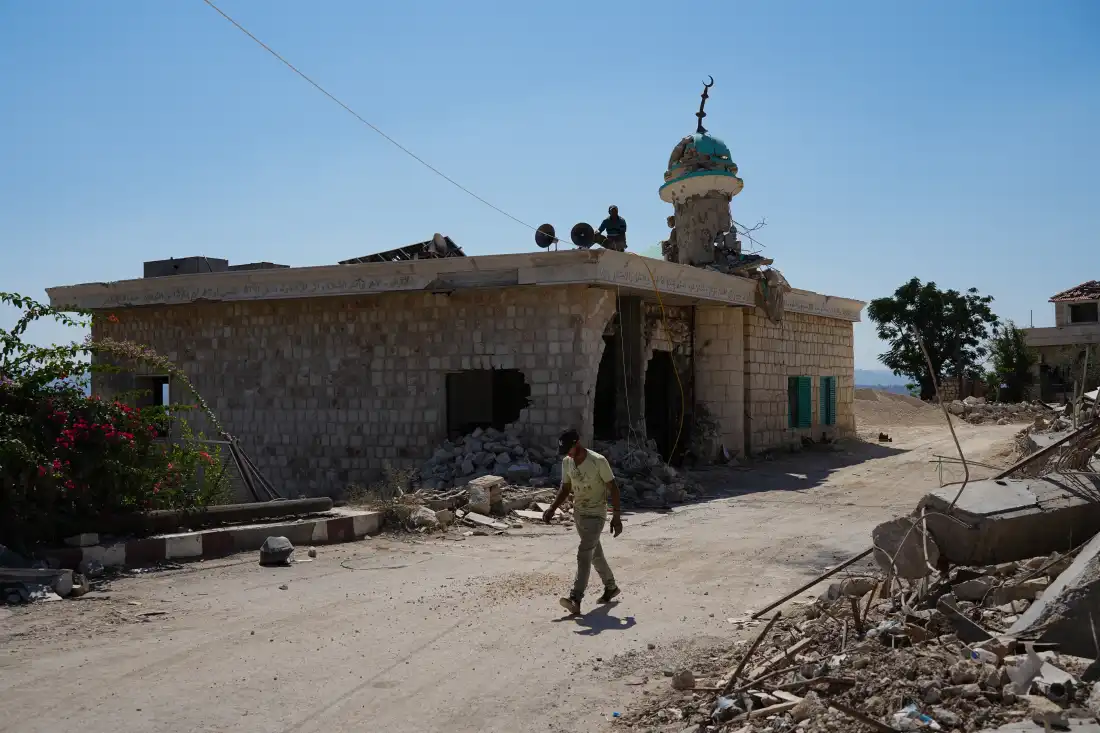
A man walks past a damaged mosque in the village of Zawtar al-Gharbiyah, Lebanon. There was still no electricity or running water in the village after attacks on the infrastructure.
Mohammed Yassine for NPR
hide caption
toggle caption
i
Mohammed Yassine for NPR
Villagers here feel abandoned by even their own government — and still in danger from nearby Israeli forces.
“Our homes were destroyed and no one came to check on us,” Kadouh says. “Not the Lebanese state or outsiders or the parties,” he says, referring to Hezbollah and its allies. “They just say ‘Go back, go back’ to the village. We came back and there are no essentials — no electricity, no water.”
Kadouh has a son in the Lebanese army and another in national security services but he says, because the Lebanese army is deliberately underequipped to avoid presenting a threat to Israel, they have never been allowed to do their jobs.
“The Lebanese state never sent a soldier here to protect us,” he says.” That is why the parties and others came in — Hezbollah or Amal or even the Palestinian factions decades ago. “But the vacuum that the Lebanese state has left brought us to this tragedy” he says.
“We love the Lebanese army — let them bring us an army, but let them protect us,” he says. “This army has a rifle — Israel has an F-35” fighter jet.
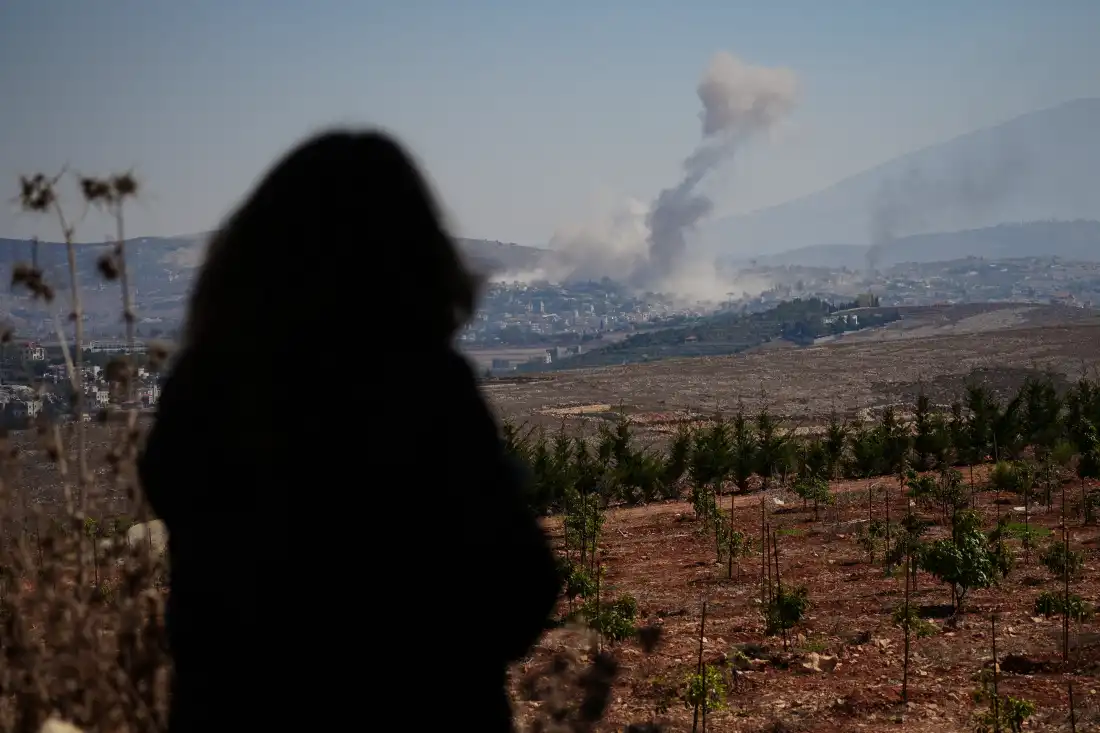
From the Lebanese Army checkpoint at the village of Zawtar al-Gharbiyah, Lebanon, smoke is seen rising from an Israeli airstrike on a nearby town.
Mohammed Yassine for NPR
hide caption
toggle caption
i
Mohammed Yassine for NPR
“But we would rather sit in the dirt,” he says. “Our soul, our life is here, I was born here.”
Kadouh says maybe someday there will be peace with Israel, but after all the deaths and destruction, not in his lifetime — and not with Israeli Prime Minister Benjamin Netanyahu.
“Netanyahu is the one who killed my son. Let him bring back my son,” he says. “If just yesterday Israel killed my son, am I supposed to tell the Israelis, ‘Put your hand in my hand’? If they want to be our neighbors they should do good. Instead they burn us.”