BMW finally built an M7. It just put an M5 badge on it.
That was the conclusion we kept circling back to after living with the M5 Touring this summer, and it has only hardened since. The G90 M5 is an extraordinary piece of engineering. It has 717 horsepower, 738 lb-ft of torque, near silent electric running for the school run and a V8 that can empty the horizon on request. It rides better than any M5 before it. It is also around 5,390 pounds, nearly 1,000 more than the F90 it replaced, and as we found in our first drive at the Performance Center, it’s a tick slower to 60 mph than that car despite the extra power.
None of that makes it a bad car. Quite the opposite, in fact. The new M5 is a breathtaking experience that embraces the duality hybridisation can bring. But the very soul of this new M5 is at odds with the singularity that BMW M has stood for in the past. Driving an M car daily used to demand dedication and even compromise. Today these cars ask nothing of you and deliver everything. To do so, they turn to synthetic means: electric power, sound from speakers rather than engines, and torque-vectoring all-wheel-drive systems that do their best to mask weight and driver inadequacy.
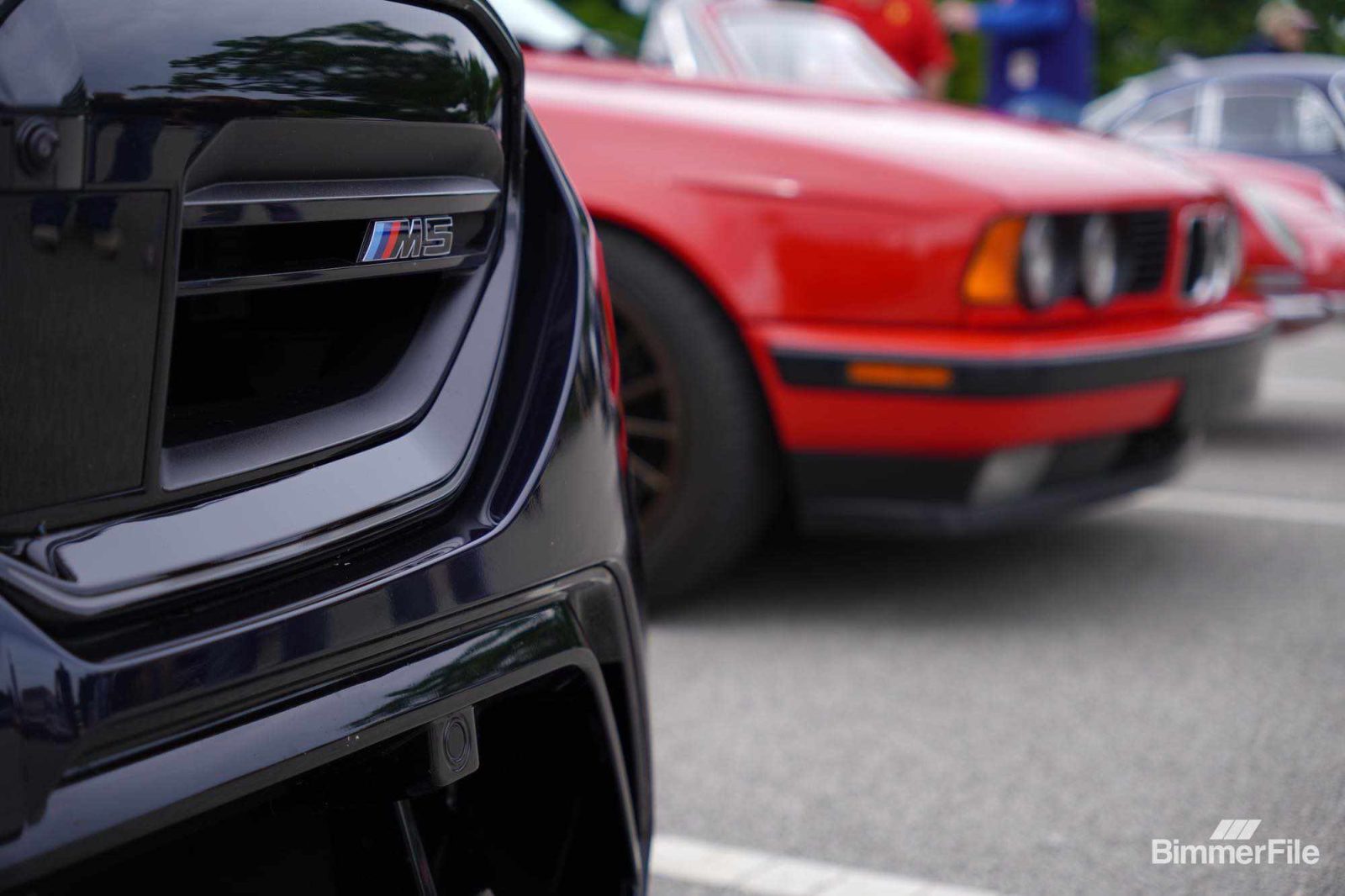
The M5 That Stopped Asking for Anything
Back in 2013, Albert Biermann told us not to be sad there wasn’t an M7, because the M6 Gran Coupe already was one. He was making a point about mission. The M6 Gran Coupe was a grand tourer that happened to be fast. The M5 was a sports saloon that happened to be comfortable. Those are different priorities, and for three decades M usually understood which came first.
The G90 flips the order. Luxury, isolation and technology lead, and the performance is engineered around them, often brilliantly. The steering is accurate but distant. The shove is enormous, but it arrives through a hybrid system whose character is managed rather than felt, with a soundtrack that leans on the speakers to fill in what the chassis won’t tell you. The car does everything. It just doesn’t ask much of you while doing it.
That is the real shift, and it’s bigger than one model. M cars used to be defined as much by what you gave up as by what you gained. The E28 M5 gave up presence so it could hide in plain sight. The E34 Winkelhock Edition gave up amenities to lose weight. The E46 M3 CSL gave up comfort for focus. Even the F10 M5 offered a six-speed manual in the US, and we spent a week in one knowing full well the DCT was quicker. People bought the manual anyway because involvement mattered more to them than a stopwatch.
The new M5 gives up nothing. That was the brief, and BMW met it.

When Everything Gets a Competition Badge
The problem is that the rest of the M lineup has drifted the same way, and the naming hasn’t kept up. Competition used to suggest something pared back. Today it mostly means more power and more equipment. CS has become a package of carbon, power and a price premium rather than a philosophy. Even the M4 CSL, the most purist statement M has made in years, shipped with an automatic and a very large touchscreen.
A crossover shouldn’t wear a competition badge. But we’d go further – a car with massaging seats shouldn’t wear a Competition badge. Not that we don’t love a highway massage but the essence of a competition giving up luxuries to get a level of focus not normally offered. This is about a naming strategy that should be both logical and aspirational.
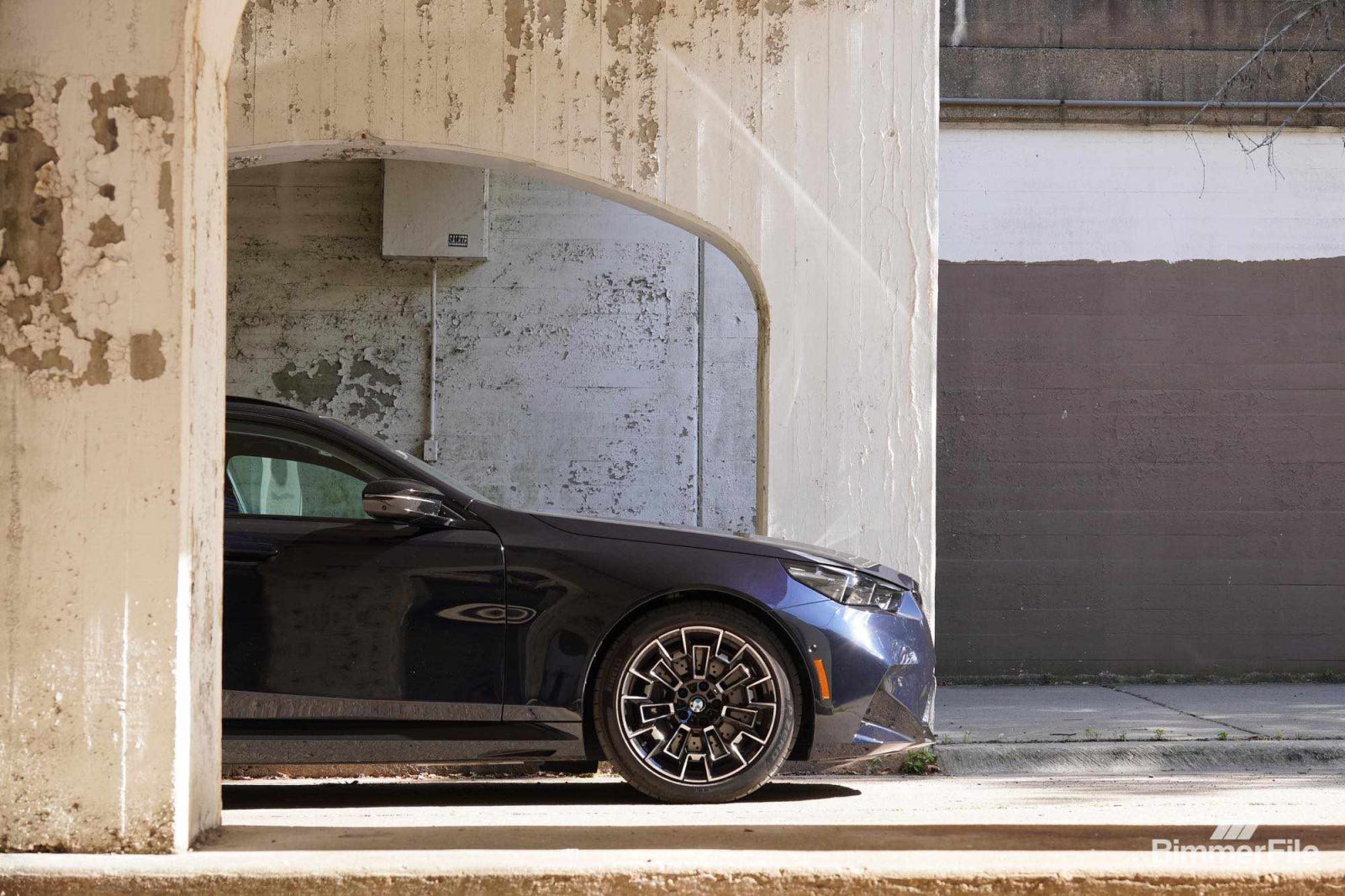
Two Paths, Not One Compromise
What if M stopped trying to thread one needle and instead ran two lines with clear intent?
The first is what the M5 already is: performance luxury. Electrified, loaded, devastatingly fast and effortless to live with. Call it what it is, market it honestly, and let it chase the AMG GT 63 S E Performance buyer without apology. There is nothing wrong with this car. It simply shouldn’t have to carry the entire meaning of M on its shoulders.
The second is the one M has been hinting at with the manual M2 but never committed to. Lightweight, analogue, and built around the driver rather than the options list. That means a manual gearbox wherever it can be engineered in, a hard weight target that trumps feature creep, smaller wheels and tyres chosen for feel rather than spec-sheet grip, fixed-back seats, and a drastically shorter list of drive modes. No gesture control, no ambient lighting menus, no synthetic noise. Priced where it needs to be, sold in the numbers the market supports, and badged with something that means exactly one thing.
This isn’t a fantasy. Porsche sells the 911 GT3 Touring and the S/T alongside the Turbo S and nobody confuses them. Cadillac built the CT5-V Blackwing with a manual and turned it into the most talked-about American sports saloon in decades. The market for involvement is smaller than the market for everything, but it’s loyal, it’s vocal, and it’s the reason the M badge carries weight in the first place.

The Case Against, and Why It’s Weaker Than It Looks
The obvious counterpoint is that buyers are voting with their wallets. The M5 Touring is selling beyond expectations, and the people signing for them want the massage seats, the EV mode and the ability to haul a family at 190 mph. Regulation isn’t helping either. BMW has been clear that hybridisation was the price of keeping a V8 in the M5 at all, and a manual adds engineering and homologation cost to low-volume cars.
All true. But M already knows scarcity works. The F90 M5 CS listed at around $30,000 over a Competition-spec car, only 1,132 were built, and today they trade for tens of thousands more than a standard F90 of the same age. That isn’t just a collector bubble. It’s a signal that a meaningful slice of M customers will pay more for less, provided the less is real. Reports suggest a CS could arrive with the G90’s mid-cycle update, though nothing is confirmed. If it does, it will likely add power and carbon to a 5,000-pound hybrid. That’s a stronger M7, not a return to the idea.
What M Is For
The G90 is proof that M can build a car with no trade-off at all, and plenty of buyers will be very happy it did. What it can’t do is stand in for the other half of the brand’s identity, the half that made you choose, and rewarded you for choosing. BMW has built its M7. The more interesting question is whether it still wants to build the car that asks something back.