BMW’s flagship SUV lineup has always been the place where the brand makes its boldest statements. The original X7 exceeded BMW’s own sales expectations, at times approaching MINI brand volumes in the US, which is a remarkable outcome for a vehicle that costs upward of $80,000 and seats seven. The XM, launched in 2022 as BMW M’s first dedicated hybrid performance vehicle, made a very different kind of statement: technically impressive, visually confrontational, and commercially underwhelming in a way that raised real questions about what BMW M stands for.
Both nameplates are being reinvented simultaneously. The G67 X7 arrives in September 2027 as a ground-up new generation, offered in combustion and electric form from launch, with a luxury specification that steps meaningfully beyond the current G07. The G79 iXM arrives in December 2028, replacing the hybrid XM entirely with a fully electric model that gets a clean slate to work with. Together they represent BMW’s most concentrated statement about what the top of its SUV range should be in the Neue Klasse era.
G67 X7 and G69 iX7 | Production September 2027, Running Until July 2036
The G67 X7 is a genuine clean-sheet design, not an evolution of the G07. It enters production in September 2027 at Plant Spartanburg and runs to July 2036, a nine-year window that gives BMW maximum return on the development investment. Unlike the current generation, which offered the i7 electric variant as a separate product on a shared platform, the G67 and G69 iX7 share a single body structure from launch, with combustion and electric powertrains offered side by side. The G69 iX7 carries its own chassis code, following the pattern BMW has established of assigning separate codes to meaningfully differentiated variants within a shared body, but buyers will experience the two cars as versions of the same product rather than entirely separate nameplates.
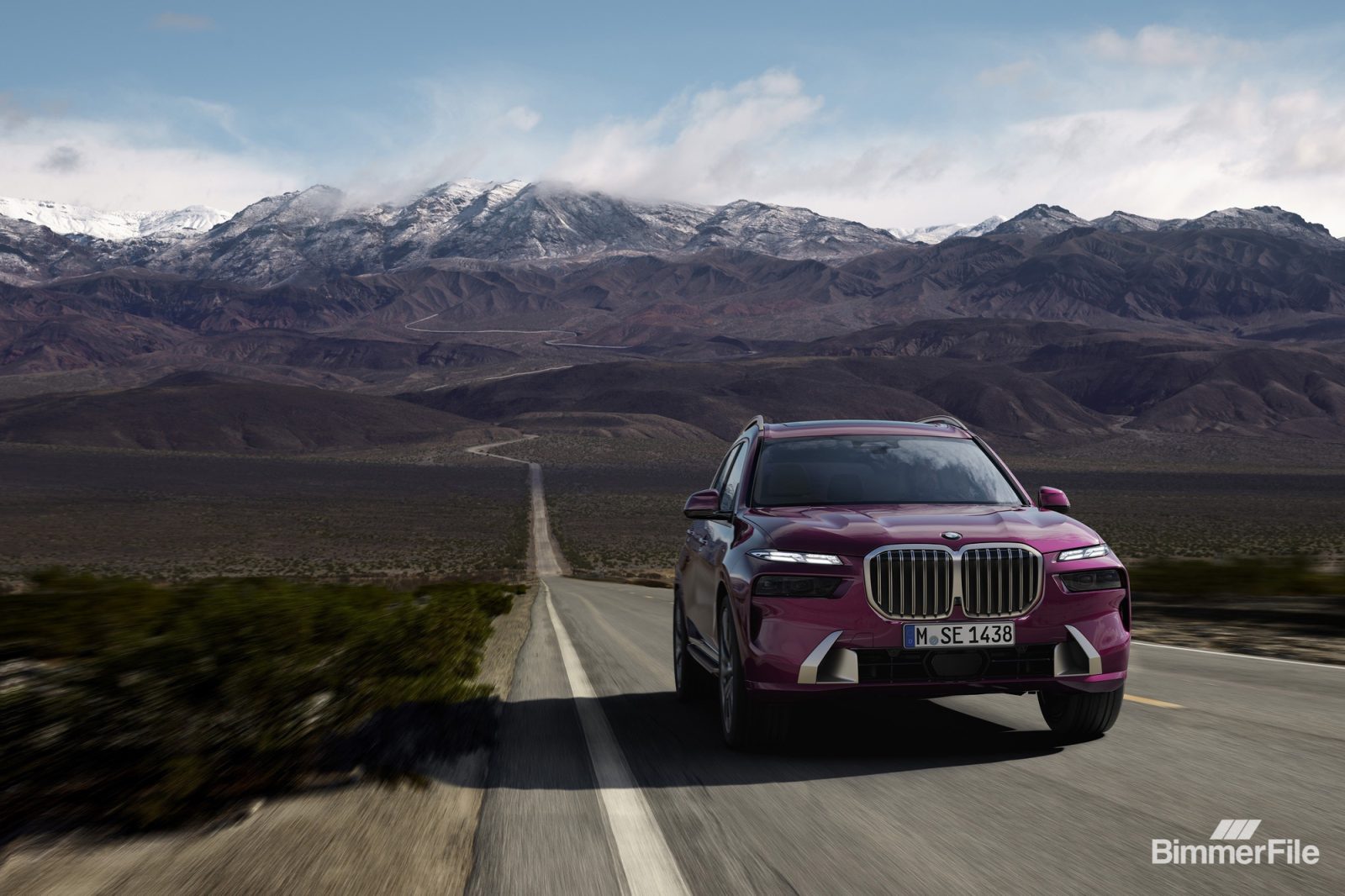
The feature list steps up meaningfully from the current G07. Fully automatic doors are available as an option, with soft-close standard across the range. Rear seat ventilation and massage arrive as configurable options. A rear entertainment system becomes available for the first time. Two-tone paint, previously available only on the 7 Series, opens up to the X7 family for the first time. These additions position the G67 more directly against the highest-specification versions of the Mercedes GLS and Range Rover, both of which have been expanding their luxury content faster than the current X7 could match.
The combustion G67 retains the familiar X7 engine range, including inline-six and V8 options with mild hybrid assistance, in a configuration that BMW’s dual-platform strategy is explicitly designed to sustain. The X7 has always been a car where combustion powertrain buyers represent the majority, and the G67 keeps that audience well served without requiring them to consider the electric option. The iX7, meanwhile, brings full Neue Klasse architecture: 800V charging, Gen6 eDrive, and the flat battery floor packaging that the current i7’s shared platform couldn’t fully optimize.
The design direction will follow the Neue Klasse visual language established by the 7 Series LCI, the iX3, and the i3: cleaner surfacing, more restrained use of chrome, vertical kidney proportions that reference the brand’s history rather than simply scaling up the current design. Whether BMW manages the visual transition of a three-row, nearly five-meter SUV through the Neue Klasse lens without the result looking incongruous is the design challenge that doesn’t resolve until the car is revealed.
G79 iXM | Production December 2028, Running Until November 2035
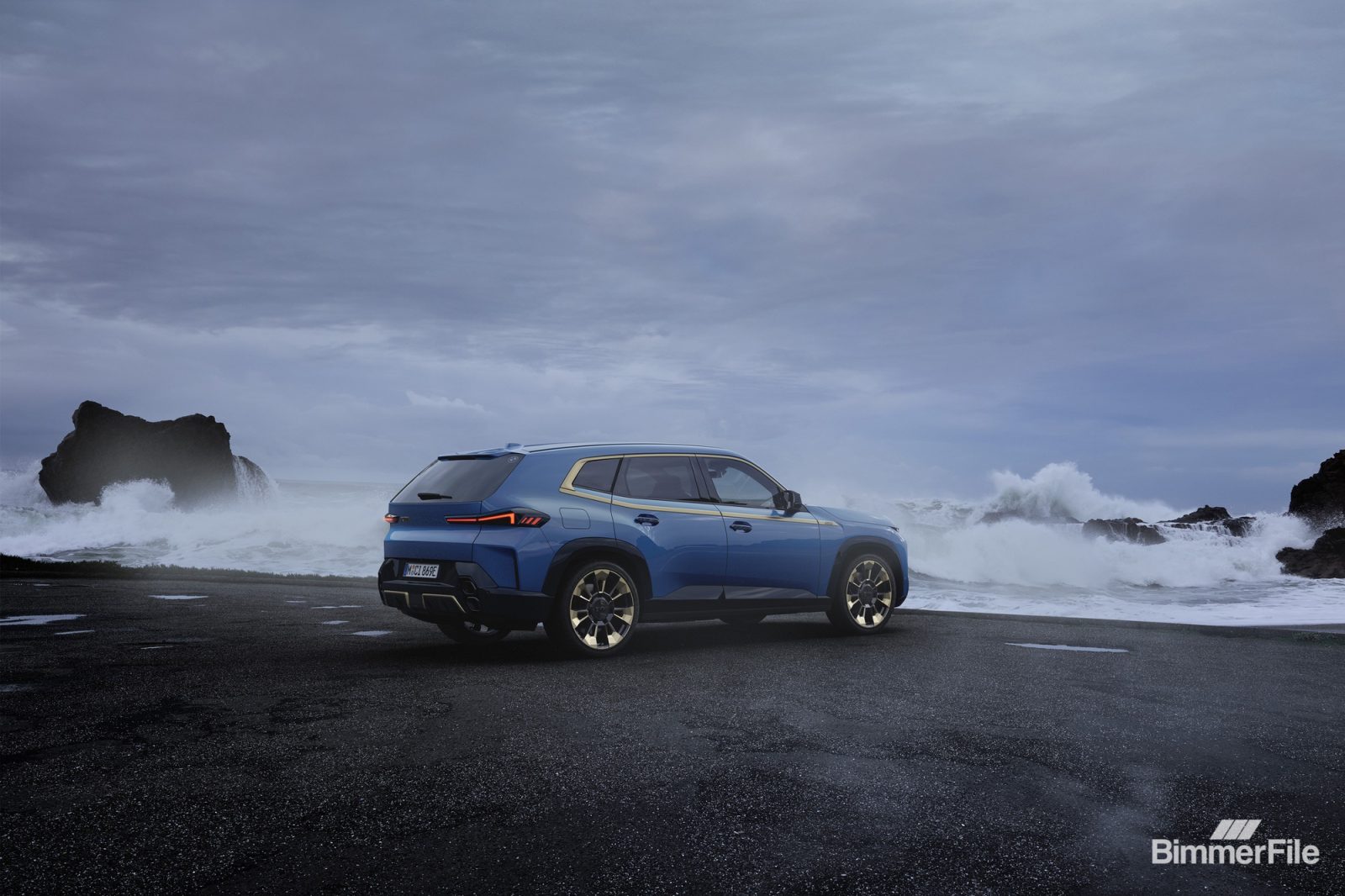
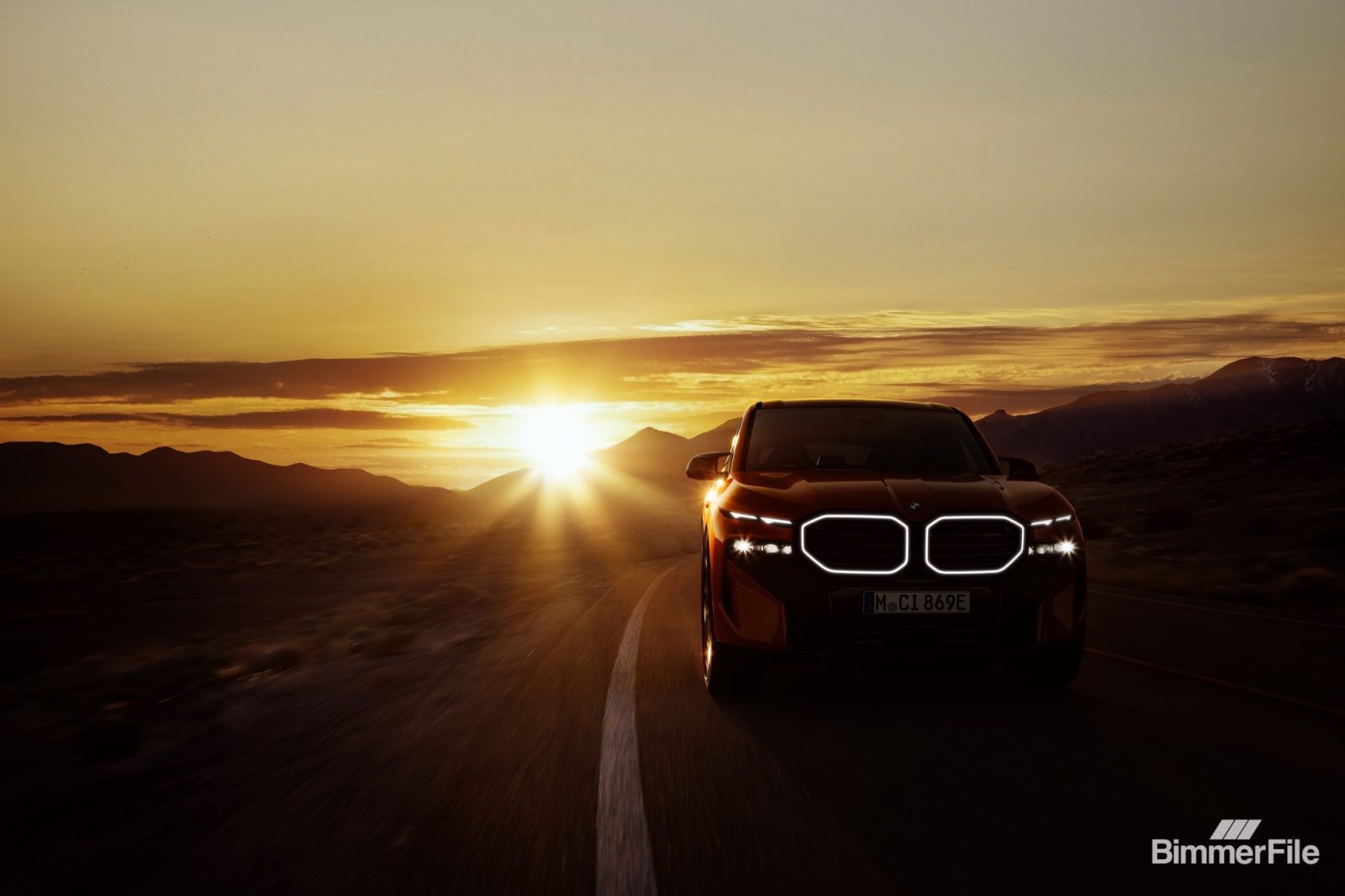
The XM story requires some honesty before discussing what comes next. The current XM was technically impressive and commercially disappointing. Sales dropped 25 percent in Q1 2025. The Label Red, producing 738 hp from a twin-turbo V8 and electric motor combination, was the most powerful production BMW ever built but failed to deliver the driver engagement that justifies the M badge in the eyes of the buyers who matter most. The design polarized in ways that BMW’s designer anticipated and accepted at launch, but the market’s response suggested the bet didn’t land the way BMW M hoped.
The G79 iXM enters production in December 2028 as a fully electric replacement. No combustion variant. No hybrid carry-over. The entire XM nameplate pivots to Neue Klasse EV architecture, which means the same motor family shared with the ZA0 electric M3, ZA5 X3 M, and G95 iX5 M, configured for the additional mass and SUV priorities of the body style. Power will be substantial: the motor family is capable of outputs that make the current Label Red’s 738 hp look conservative, and BMW M will have the ZA0’s development and real-world data to draw on when calibrating the iXM’s dynamics.
The more interesting question isn’t the power figure. It’s whether the G79 can resolve the engagement problem that defined the XM’s tenure. BMW M has been working on software-defined dynamics that aim to deliver genuine driver involvement from an electric powertrain, using four-corner torque vectoring to create the kind of rotation and balance that combustion M cars achieved through mechanical means. Whether those tools translate to a large, heavy SUV in a way that feels genuinely engaging rather than merely fast is the question the iXM has to answer to rehabilitate the nameplate.
The decision to go electric-only with the iXM is either the right call or a further retreat from what the XM’s buyers actually wanted. The current XM’s core audience, based on what we observed in South Carolina and on press drives, was not the traditional M3 customer. It was a buyer for whom visual presence, exclusivity, and power output mattered more than lap times. That buyer is arguably well served by a fully electric performance SUV with Neue Klasse hardware. The question is whether there are enough of them, and whether the iXM can attract buyers who looked at the XM and decided against it.

What These Two Cars Tell You
The G67 and G79 together represent BMW’s understanding of two distinct audiences at the top of its SUV range. The X7 buyer wants a large, luxurious, three-row SUV that does everything well and continues to improve in every measurable dimension across generations. The XM buyer, ideally, wants something that feels genuinely special and justifies its price with an experience you can’t replicate elsewhere. The current generation served the first audience reasonably well and the second audience imperfectly.
The G67’s additional luxury content, dual-powertrain availability, and clean-sheet architecture give it the tools to be the best X7 yet. The iXM’s clean-slate EV formula and Neue Klasse motor hardware give it the tools to be a more coherent performance SUV than its predecessor. Whether BMW M has learned the right lessons from the XM’s tenure will be visible in how the iXM drives, not in its spec sheet. The spec sheet was never the problem.