Czinger
California-based automaker Czinger has more than proved itself as not only a leader in hypercar performance and engineering, but a groundbreaking manufacturer in general thanks to its 3D-printed BioLogic construction that comes from parent company Divergent (both of which were started by father/son duo Kevin and Lukas Czinger). The Czinger 21C is already impressive enough sitting still, with its tandem seating position and wild aerodynamics, and then you hear about its 1,250-hp hybrid powertrain and all the lap records it’s set, from Laguna Seca to Goodwood. The car is also homologated and crash-tested for all 50 states, and the company has already delivered a bunch of them to customers.
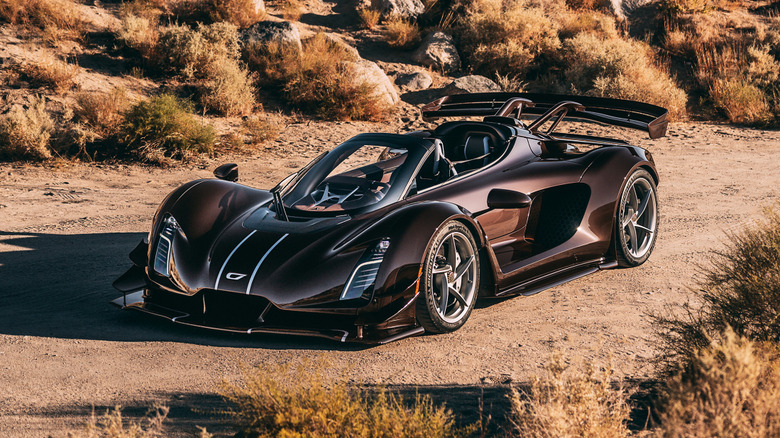
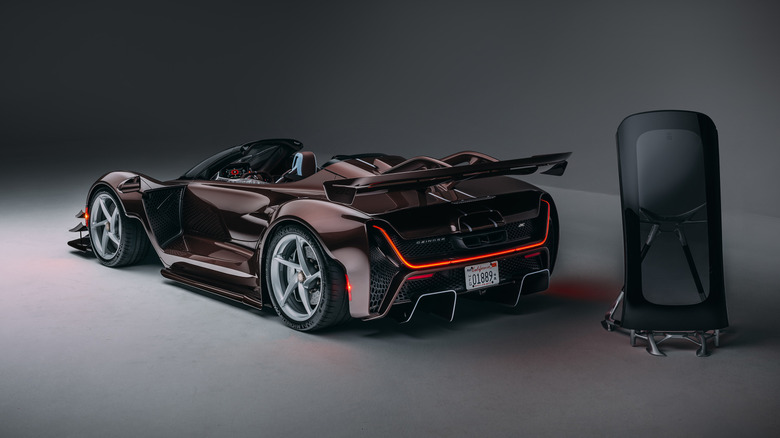
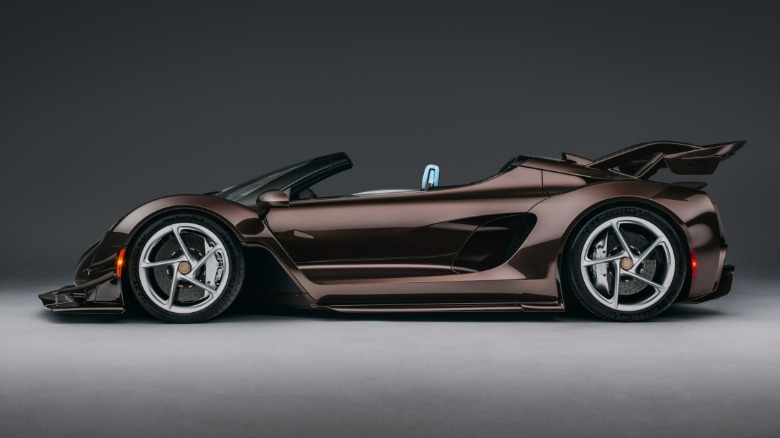
So how do you make a car like that even wilder? You slash the roof off. Enter the Czinger 21C Spyder, which is making its debut at Monterey Car Week. In addition to having a removable roof panel, the 21C Spyder features Czinger’s new BrakeNode technology, an updated dashboard design and new styling options. Did I mention that it has more downforce than any other open-top road car?
It’s quite fast
Czinger
 Czinger
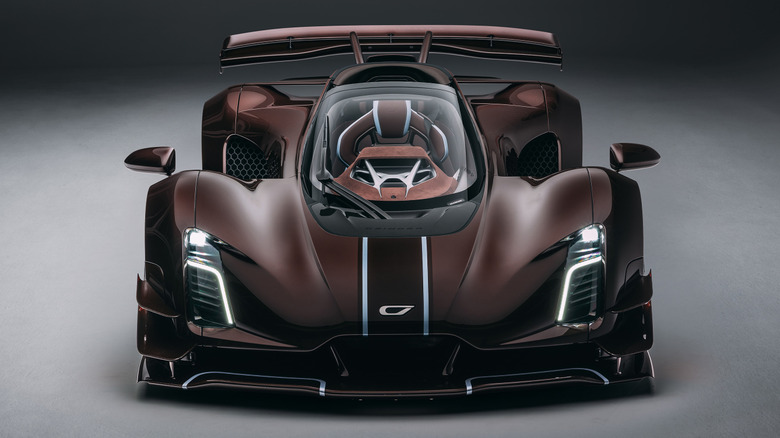
Other than the roof panel, the 21C Spyder looks identical to the coupe. It shares the High Downforce aero package that’s optional on the hardtop, which includes a front splitter, canards and that huge rear wing. Czinger says that at 150 mph the 21C Spyder produces 3,307 pounds of downforce with the roof on, matching the coupe, and with it off that figure slightly drops to 3,267 pounds. To put that into perspective, the McLaren W1 generates a maximum 2,205 pounds of downforce at 174 mph.
Like its coupe sibling, the 21C Spyder is powered by a Czinger-developed twin-turbocharged 2.88-liter V8 with a flat-plane crank, which makes 750 horsepower and 396 pound-feet of torque and revs to 11,000 rpm. It’s mated to a 7-speed sequential automated manual transmission and augmented by a trio of electric motors — two on the front axle and one connected to the crankshaft — that add another 500 hp and 295 lb-ft. That rear motor helps to reduce turbo lag, but it’s mainly used as a generator for the pair of 800-volt 2.1-kWh battery packs. Total combined output is 1,250 horses and 691 torques, which is good enough to send the all-wheel-drive Spyder from 0 to 60 mph in 1.9 seconds and through the quarter-mile in 8.7 seconds. Czinger says it’ll reach 205 mph with the roof on.
The fanciest brakes you’ll see all week
Czinger
 Czinger
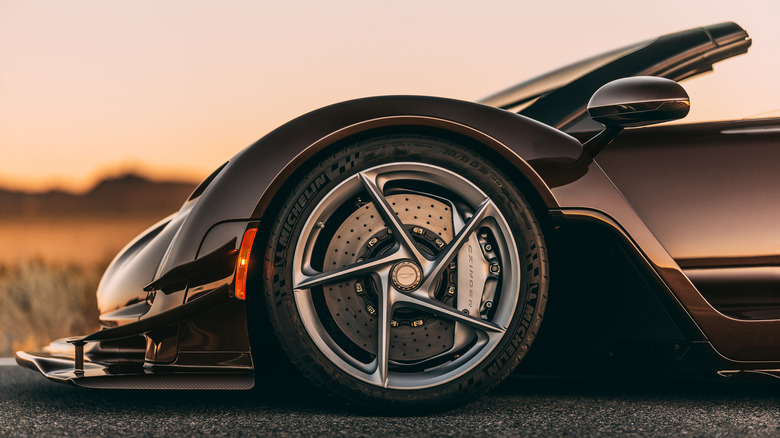
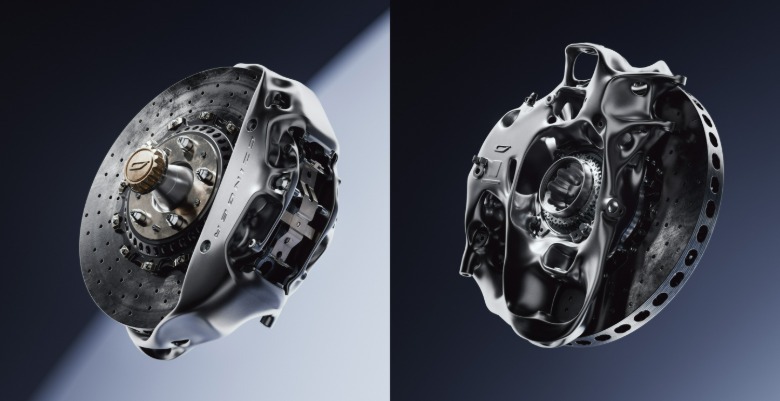
Here’s more interesting tidbits about the BrakeNode:
Internally, an integrated hydraulic fluid passage threads directly through BrakeNode to feed each caliper piston. This not only contributes to mass reduction, but also eliminates a failure point, removing the possibility of any outside interference that poses a risk with traditional external brake lines. Further, with the brake caliper now directly integrated into the upright, the possibility of caliper separation in the event of mount failure is eliminated.
BrakeNode has been tested at up to 500 bars of pressure — eight times greater than 21C’s normal operating pressures — demonstrating the resistance to failure of both the component itself and the aluminum alloy it is constructed with. In its front calipers, BrakeNode incorporates titanium pistons. A material choice trickled down from Formula 1, BrakeNode takes advantage of the titanium’s greater heat resistance to reduce brake fade under sustained high-performance use and keep hydraulic fluid 15% cooler compared to stainless steel pistons. With less heat dissipation required, the rear calipers use aluminum pistons to save weight.
BrakeNode also enables easier serviceability than a traditional brake assembly. Unlike a typical brake system, there is no need to disconnect the caliper to remove the brake pad or rotor: instead, the pads can be reached through the top of the structure, while the rotors can be tilted out from the side. A drain plug at the bottom of BrakeNode™ makes removing hydraulic fluid a simple process.
If you have an existing 21C HDF or VMax, you’ll be able to upgrade to the BrakeNode setup. Czinger says the calipers are offered in a bunch of different colors, and the Spyder’s gorgeous 5-spoke wheels were designed to show it all off.
More nodes
Czinger
 Czinger
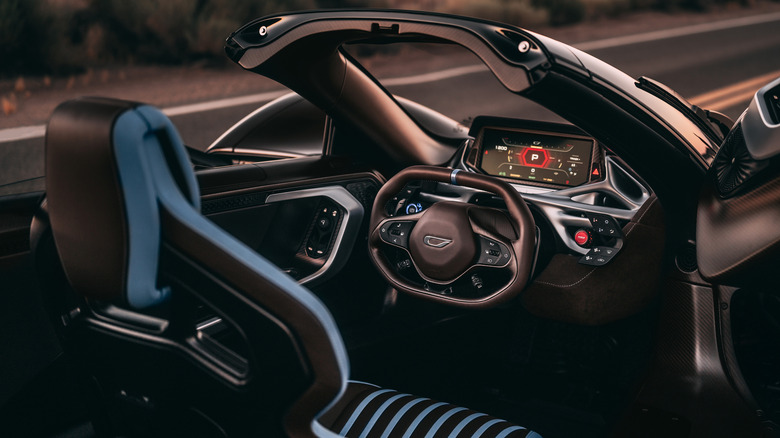
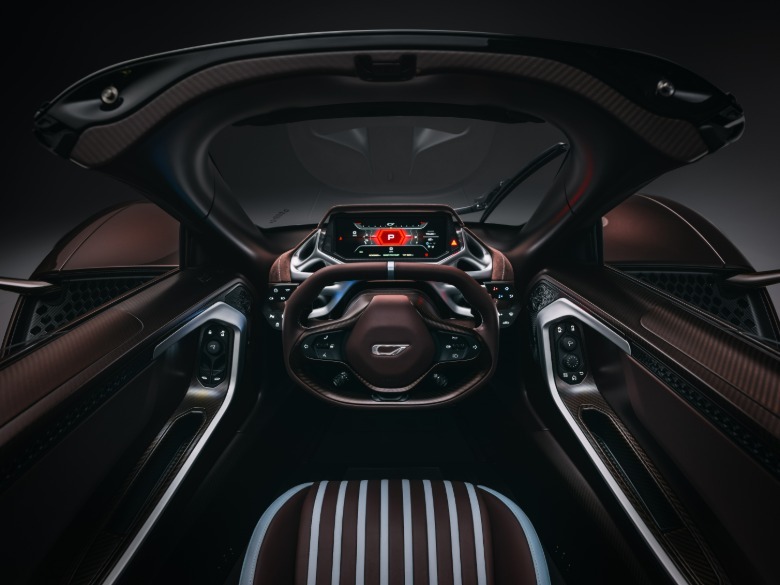
The steering wheel is reshaped and now fully wrapped in leather, and Czinger added a cupholder and new phone and key mounts. Wireless Apple CarPlay is available through the gauge cluster screen, and there’s an 8-speaker Morel Hi-Fi system with a pair of thin subwoofers and three speakers in each long door, all of which use carbon-fiber speaker cones. But really, you’ll want to listen to the 21C’s powertrain. A new roof scoop means “every cycle of the airbox [is] now prominently heard, while the rush of wind on either side of the central seating layout makes clear this is an experience that is singular in automotive.”
We need more brown hypercars
Czinger
Czinger will make 30 of the 21C Spyder, all of which will of course be personalized to the owners’ wishes. Those 30 units are separate from the 80 21C coupes that will be built. Prices start at $2.75 million, about half a million more than the hardtop, and if you nab one you’ll be able to proudly say you drive something American-made — Czinger produces its cars in Torrance, California.