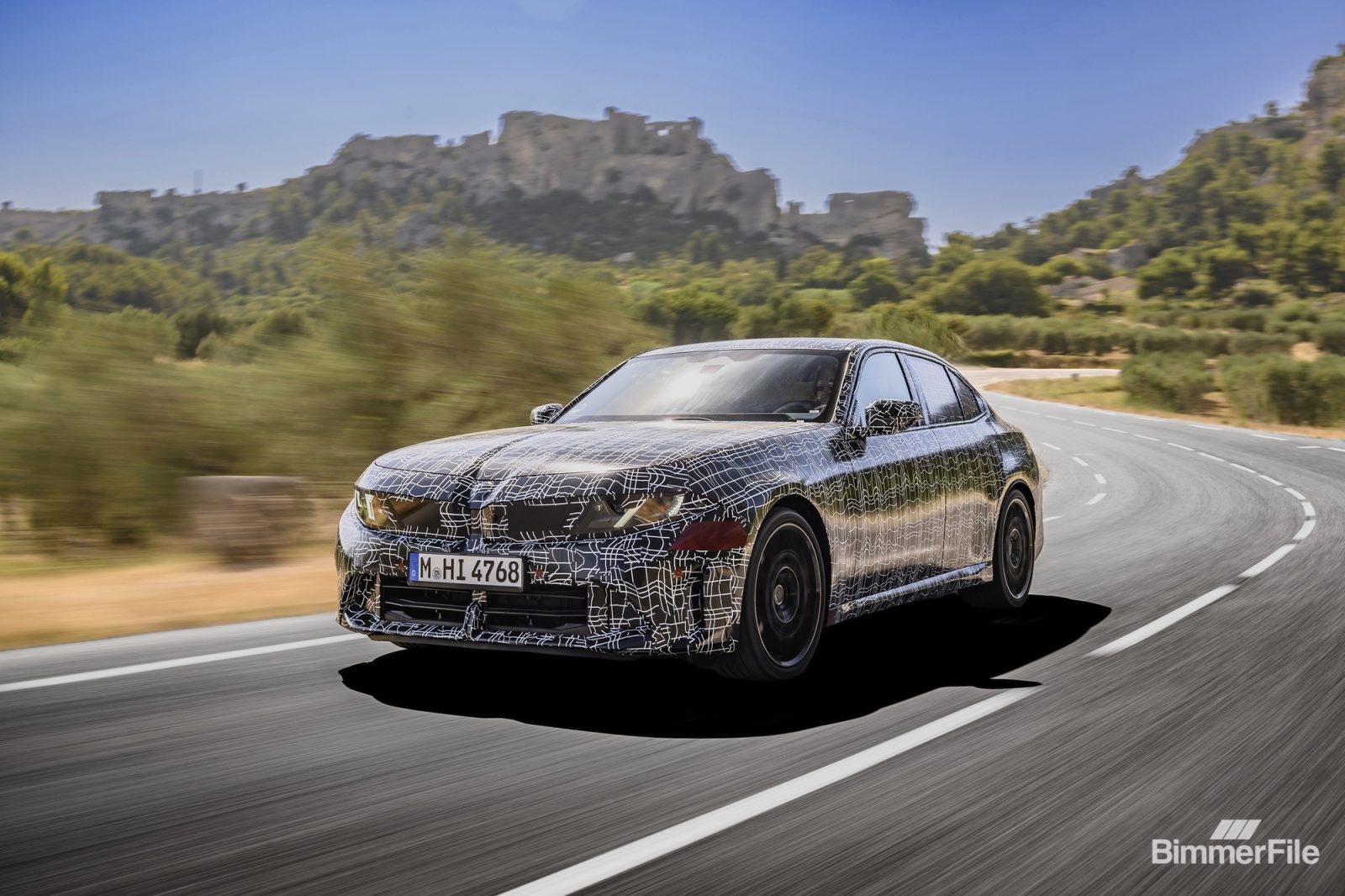
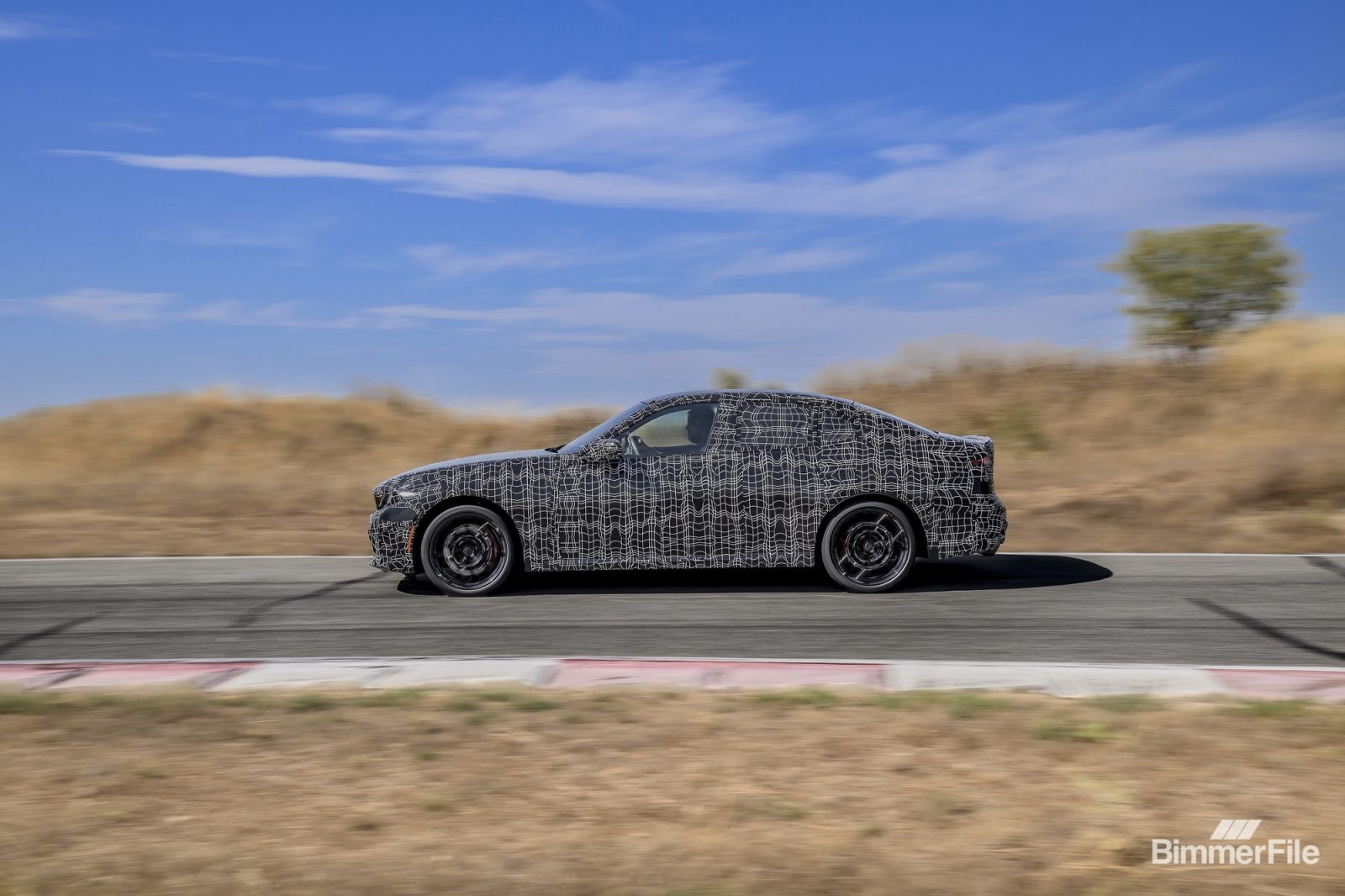
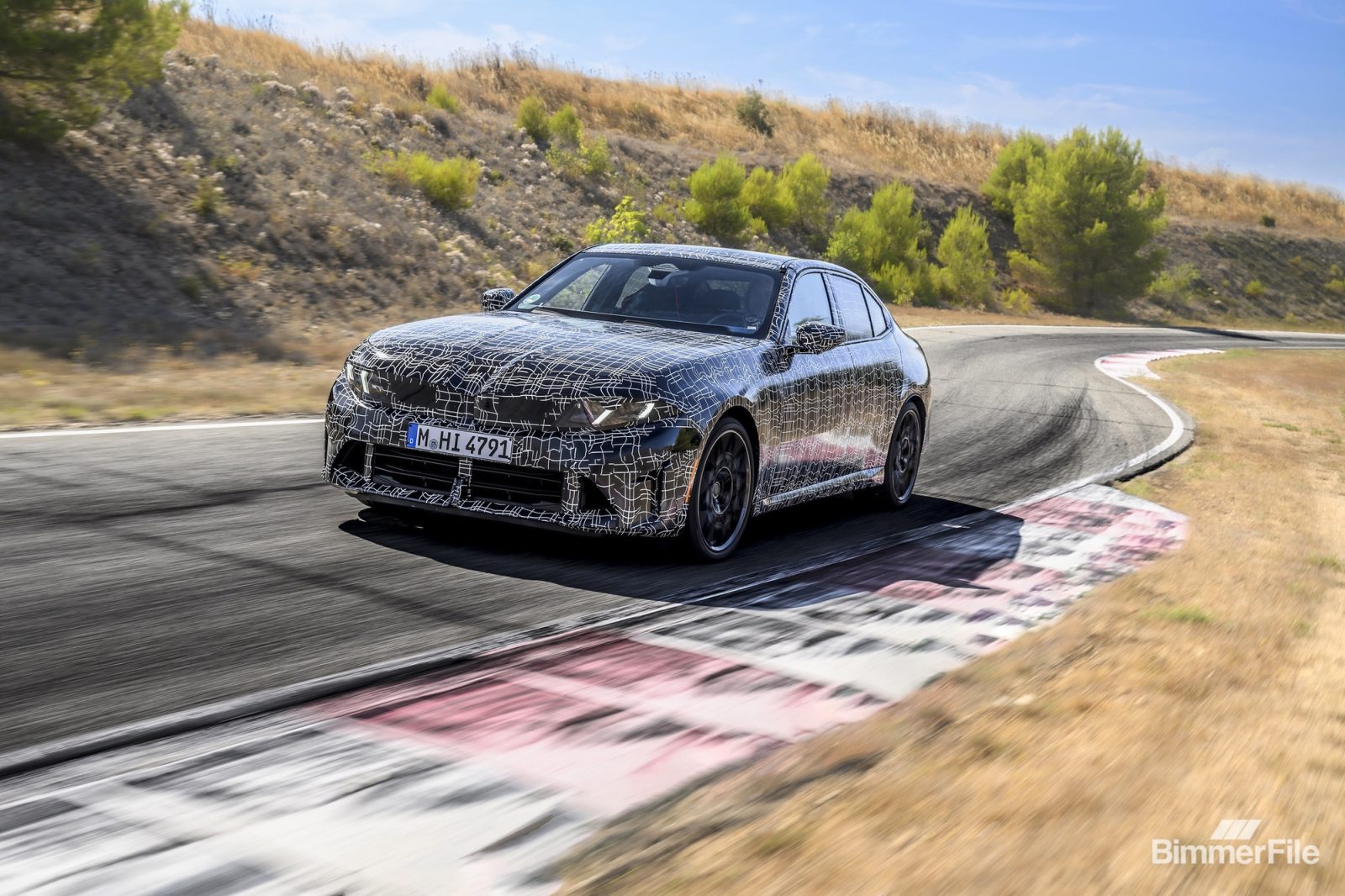
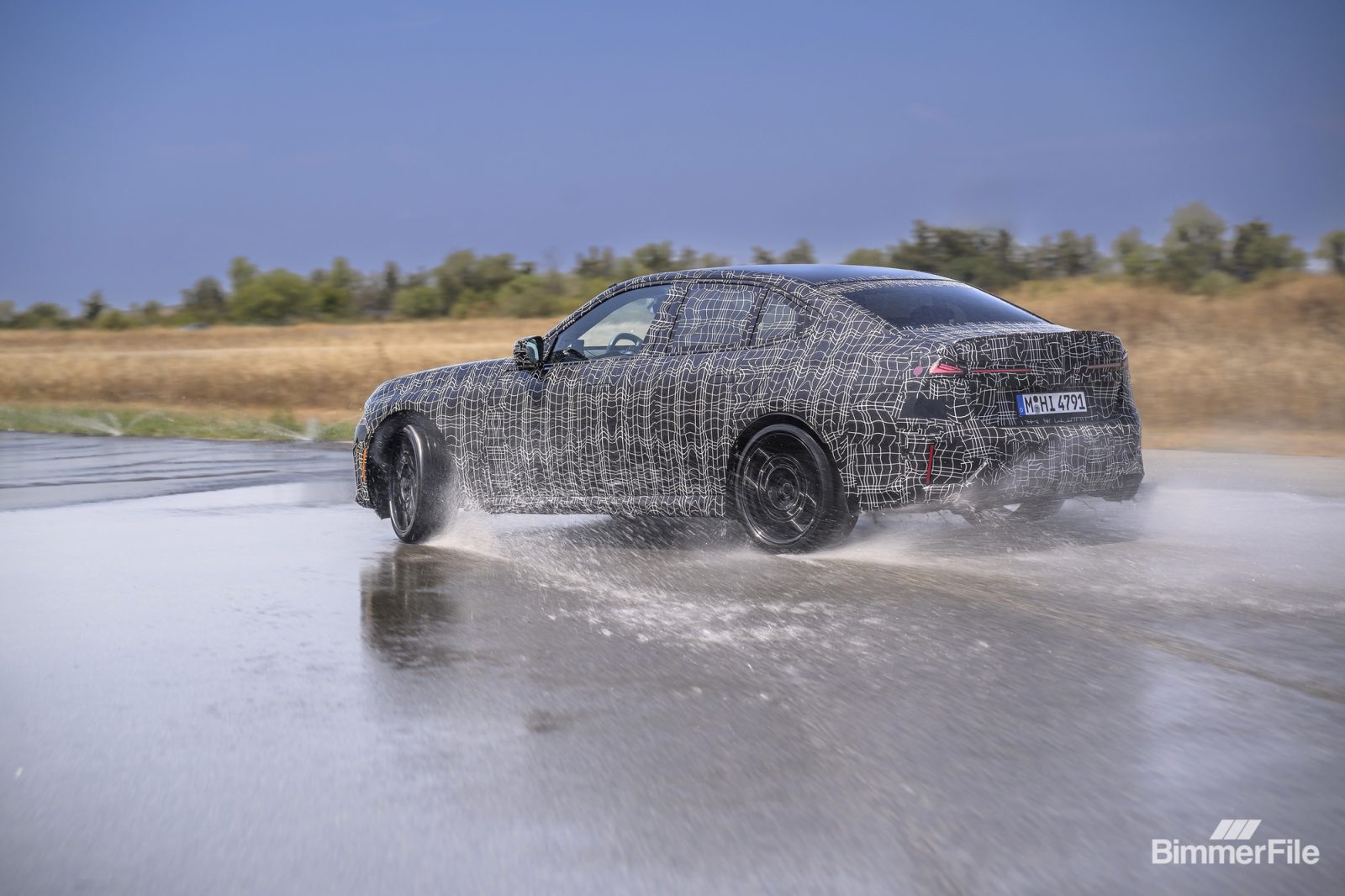
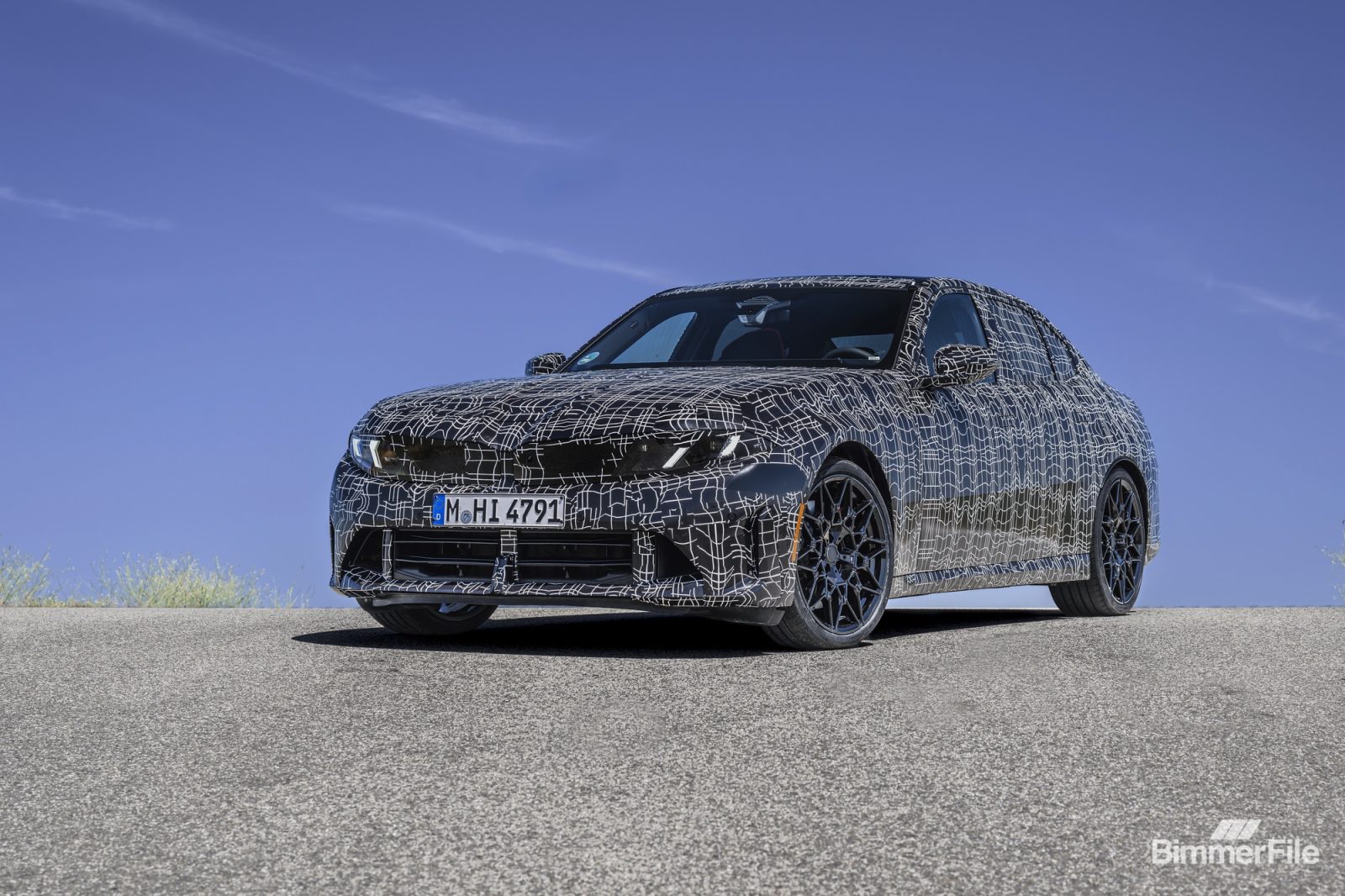
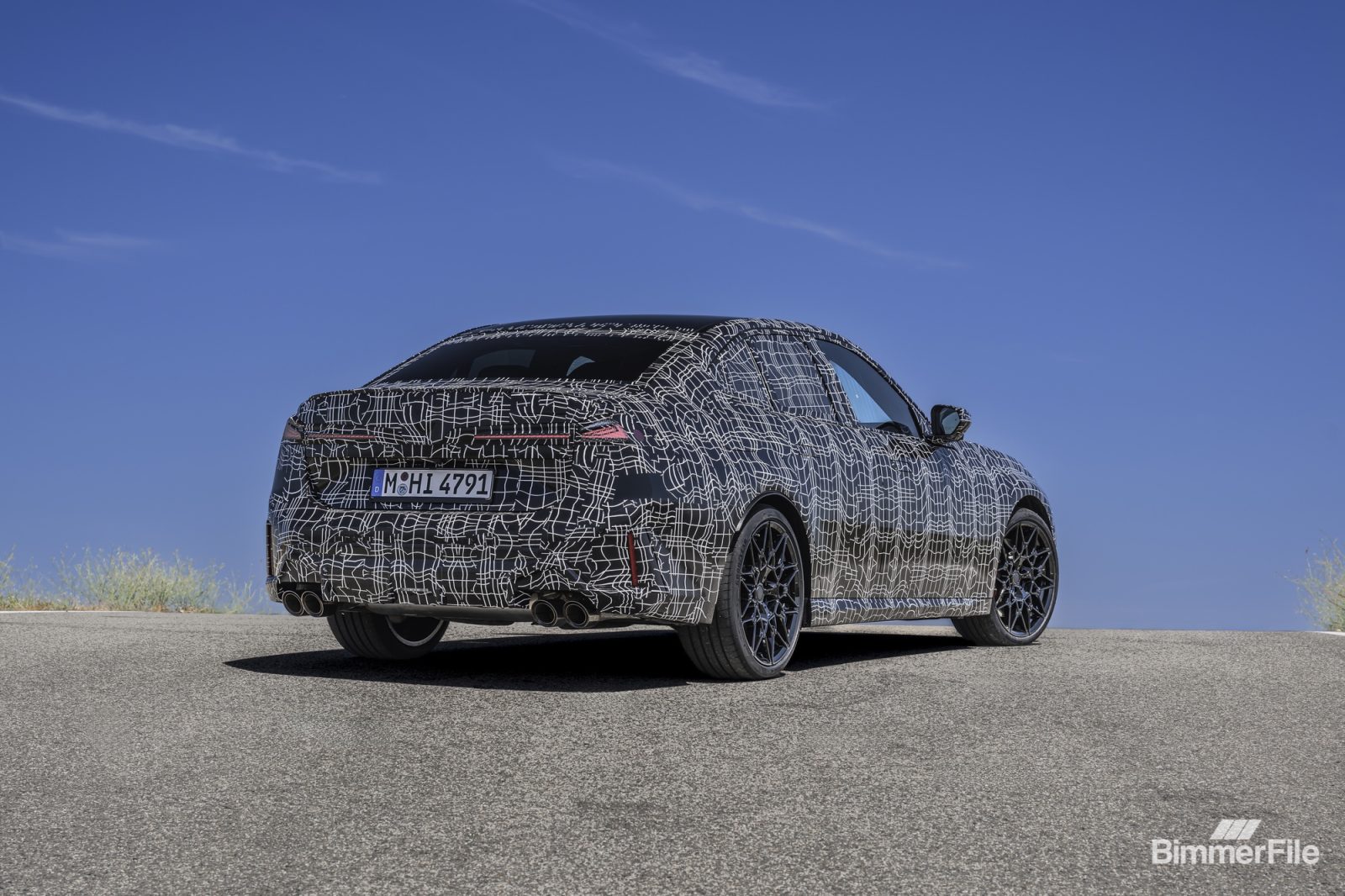
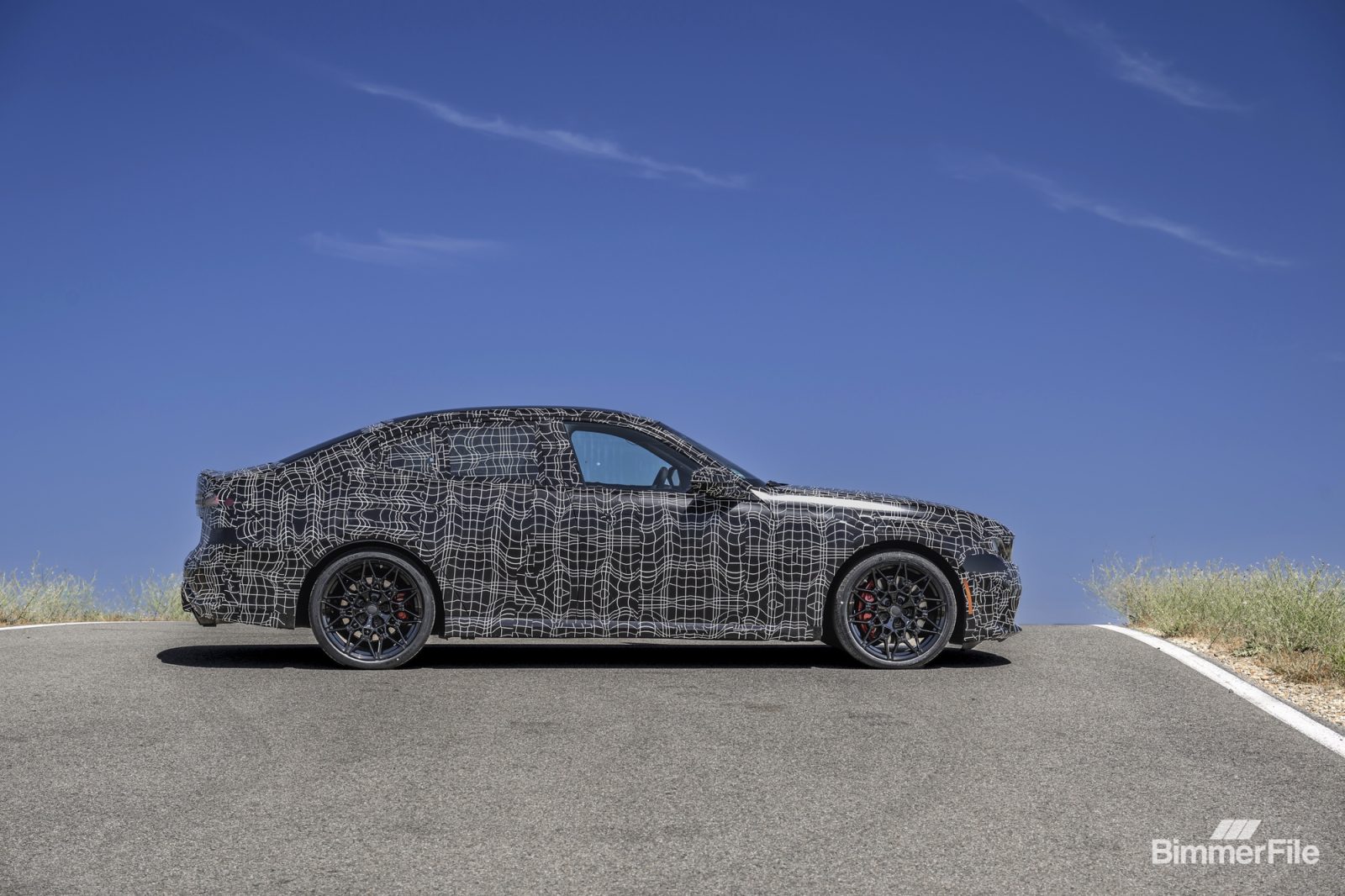
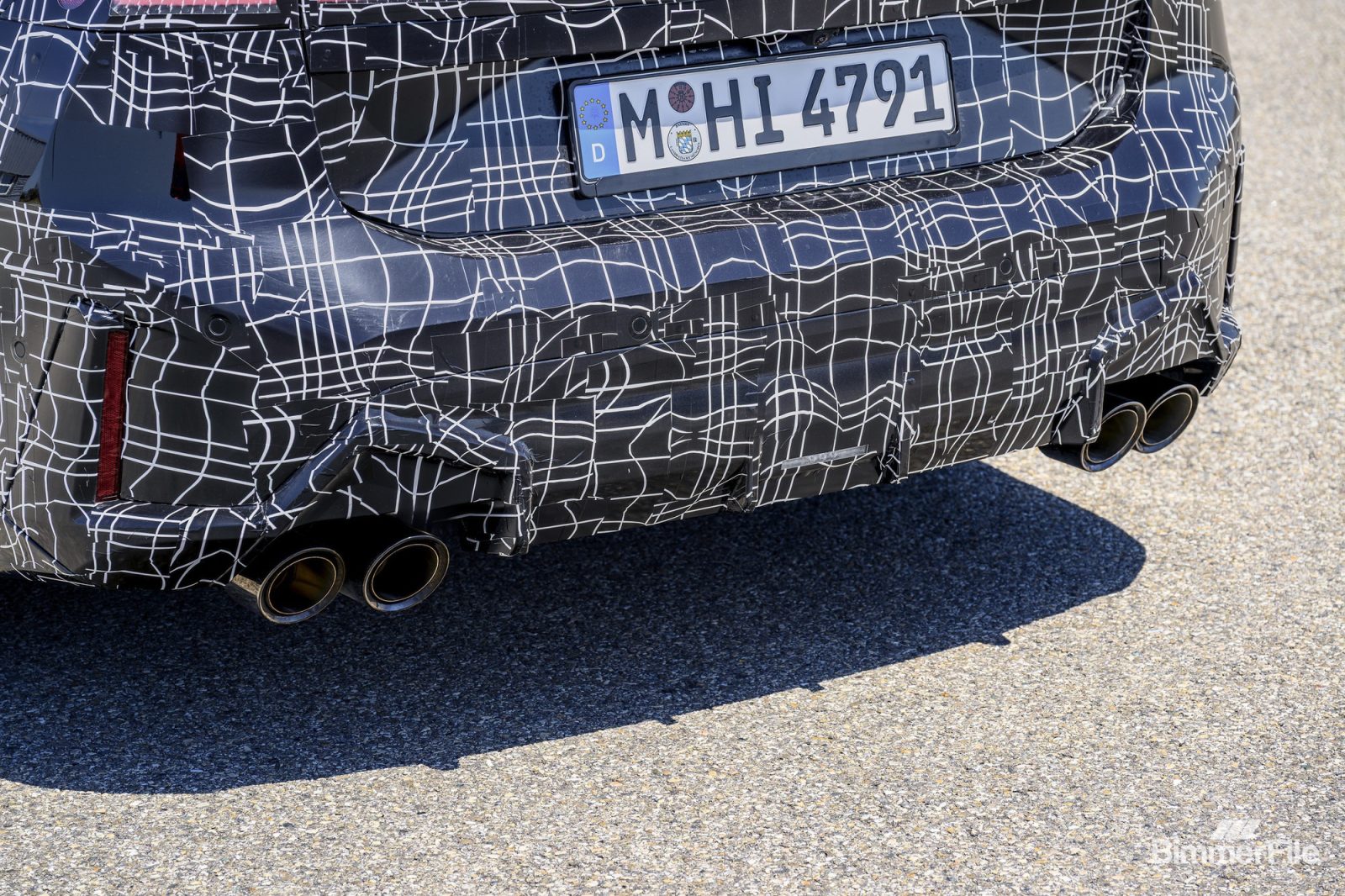
ICE isn’t dead at BMW. If anything, it’s getting more potent while staying just as efficient, and at the top of the range sits the new BMW M350 xDrive. BMW confirmed the car has wrapped its final major round of driving dynamics testing at the automaker’s Miramas proving ground in southern France, following earlier sessions on the frozen lakes of Arjeplog and laps of the Nürburgring, closing out the last chapter of development before production begins.
We’ve been tracking this car’s staggered rollout for months, from the i3 and G50 sharing a design language to the full production timeline, but this Miramas update is the first real look at how the ICE cars are shaping up dynamically, and it comes with two genuinely interesting pieces of news: a new flagship engine designation and a feature that BMW has never offered outside its M GmbH models.
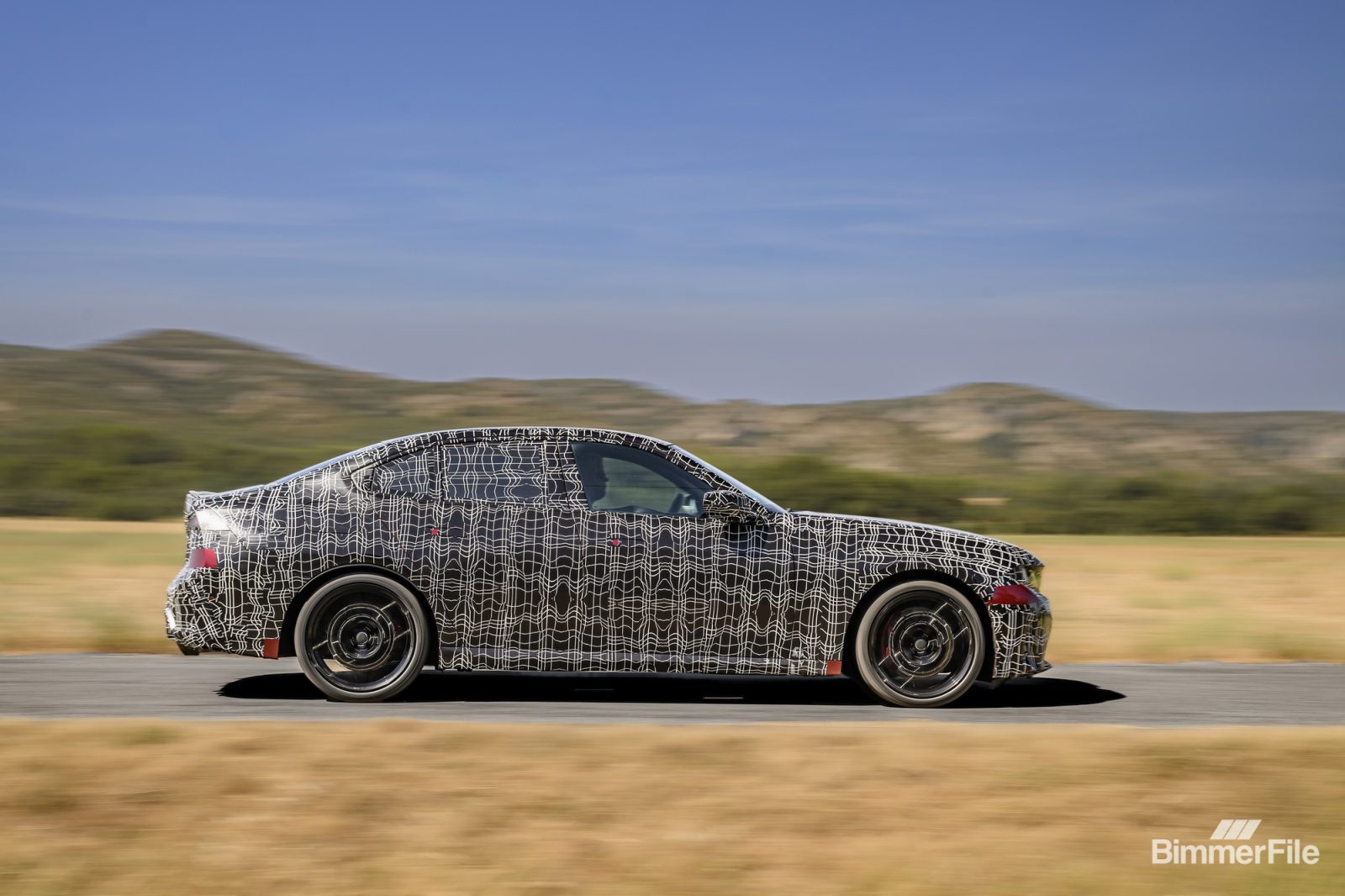
The M350 xDrive Replaces the M340i
BMW’s naming here is a departure. Rather than continuing the M340i badge, the range topping ICE 3 Series arrives as the M350 xDrive, powered by a 3.0 litre TwinPower Turbo six with 48V mild hybrid assistance. BMW’s own figures put combined output at 326 kW, which the automaker quotes as 443 PS on the European metric scale, though UK reporting has put the same output at 437bhp, a reminder that the horsepower BMW leads with in press materials shifts slightly depending on which market’s conversion you’re reading. Torque lands at 580 Nm (428 lb ft). BMW quotes a 0 to 100 km/h time of 4.1 seconds and a 155 mph top speed, with production starting in the second half of 2026. For context, that sprint time sits roughly six tenths behind the current M3, which tracks with the M350 sitting a clear notch under a full M car rather than encroaching on it.
That output figure is a meaningful jump over the outgoing M340i xDrive. For comparison, we recently drove the 50 Jahre Edition M340i, which uses the same basic engine family at a lower state of tune, and called it the sweet spot of the current lineup. The M350 pushes well past that car’s output while keeping the eight speed Steptronic and standard xDrive, along with an M Sport differential and variable sport steering as standard equipment. Adaptive M suspension also comes fitted from the factory, rather than sitting on the options list.
Drift Moment Comes to a Non-M Car for the First Time
The more surprising announcement is Drift Moment, a function that sends engine drive fully to the rear axle via the central display, paired with M style multi disc clutch control and DSC switched off. BMW has offered variants of this feature on M GmbH cars before, but this marks its first appearance on a non-M badged model. It won’t be there at launch. BMW is holding it back for a software update sometime in 2027, then pushing it to already delivered cars over the air rather than gating it behind a mid cycle refresh.
Dr Mihiar Ayoubi, BMW’s Senior Vice President for Driving Experience Development, framed the new car as building on decades of dynamic credibility for the nameplate, tying the chassis hardware to what BMW calls its Driving Stack software layer. That software piece matters more than it might first appear. The G50 gets its own tuned version of the Driving Stack for combustion cars, running parallel to the Heart of Joy system found in the electric i3. Both are meant to deliver a similar driving character despite fundamentally different underpinnings, which is really the whole story of this generation of 3 Series.
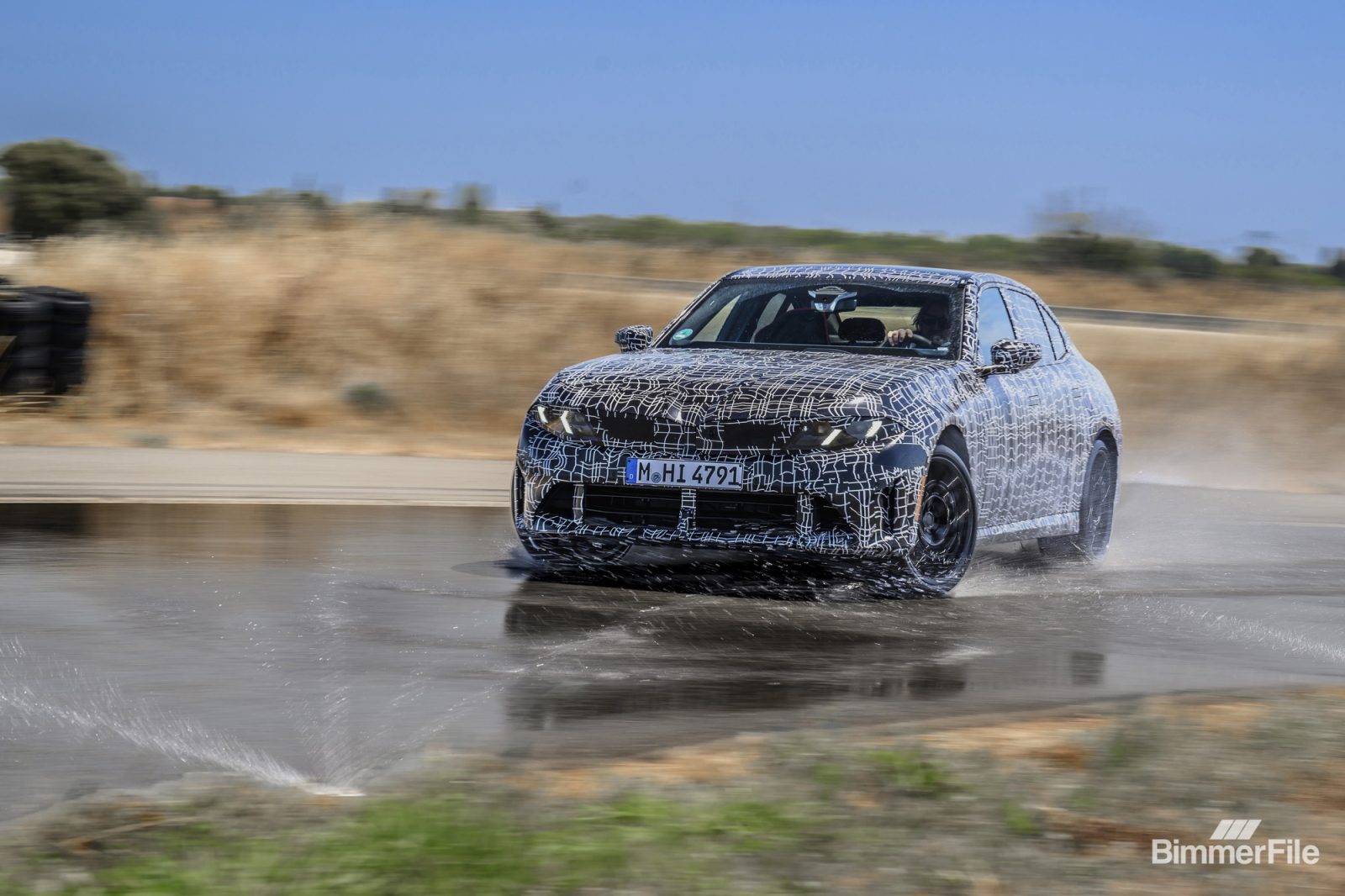
What an Actual Drive Suggests
We haven’t driven the M350 xDrive ourselves, so consider this secondhand, but our friend Horatiu Boeriu from BMWBlog spent a full day in a camouflaged prototype at Miramas, across a technical handling track, a wet slalom, a high-speed circuit, and a public road loop, with BMW engineers riding along to explain the chassis work. His verdict: the spec sheet reads closer to M3 territory than any M Performance 3 Series before it, but the car settles into an easy daily driver character once left in its softer modes, with the gap to the M3 itself narrower than it’s ever been. He also got to sample DSC fully off, which BMW’s own engineers described as the closest preview available of what Drift Moment will eventually feel like, since the software isn’t finished. Worth a full read once you’re deep into this car, there’s a lot of engineering detail in there, including how BMW adapted its i3 Heart of Joy torque logic for a combustion engine’s slower actuators.
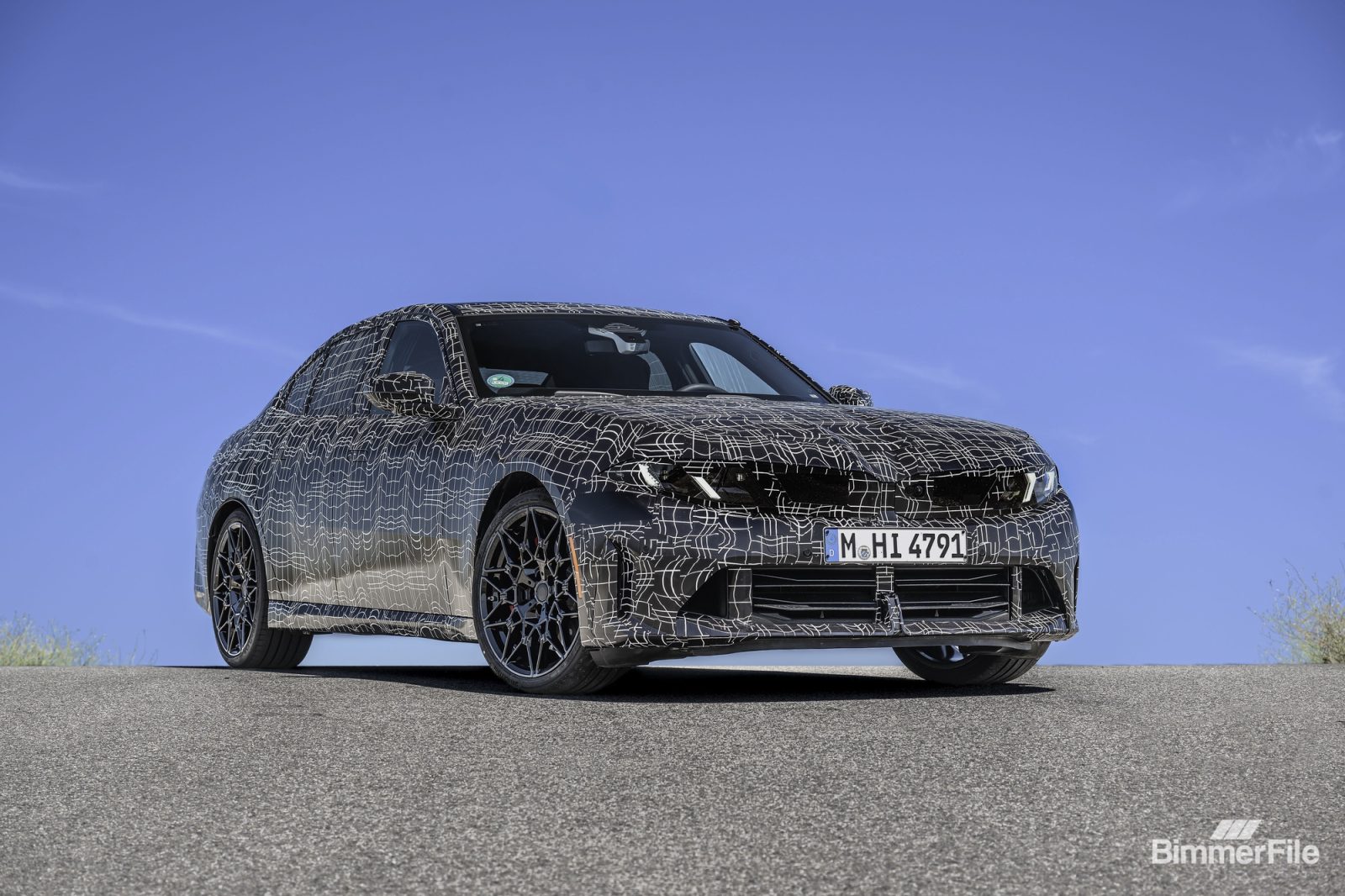
One Body, Two Very Different Cars Underneath
This is the same trick BMW pulled with the i3 and G50 sharing Neue Klasse styling despite running on entirely separate platforms, and it is worth noting that BMW’s MINI division has been doing exactly this with the F66 and J01 Coopers for two years now, wrapping a heavily revised UKL platform in styling nearly identical to its EV sibling. BMW has said combustion isn’t disappearing anytime soon, and the G50’s chassis work in Miramas is the clearest evidence yet of a company betting on visual continuity while letting the engineering underneath diverge sharply by powertrain.
That dual track thinking extends beyond the M350. The next M3 arrives in 2027, and unlike this car, it will be offered with both petrol and electric power. BMW M boss Frank van Meel has described the coming electric M3 as the combustion car’s own natural rival inside the M lineup, which puts the M350’s soft launch of Drift Moment in a slightly different light. It reads less like a one off gimmick and more like BMW testing rear biased theatre on a mainstream car before the full M3 twins arrive and have to answer the same question properly.
The new suspension hardware backs up the dynamics focus. BMW cites a longer wheelbase than the outgoing G20, wider tracks front and rear, a double joint spring strut front axle and five link rear, plus newly developed lift related dampers as standard, with adaptive and adaptive M suspension as options. Buyers can also spec staggered 245/35 R20 front and 275/30 R20 rear sport tyres for the first time on this generation.
Like the previous M340i xDrive, the catch is that xDrive-only isn’t a footnote, it’s the whole car. Yes, the added traction pays off in genuinely miserable weather, and the Drift Moment mode gives buyers a taste of rear bias without asking BMW to engineer a separate driveline. But none of that comes free. xDrive adds a transfer case, extra driveshafts and a meaningful chunk of weight over a rear-drive equivalent, weight that a car chasing sharper steering and better body control then has to spend the rest of its engineering budget fighting. It’s also a further step away from the formula that actually built the 3 Series’ reputation: a manual gearbox, a rear-biased chassis tuned around 50/50 weight distribution, and drive sent to the wheels doing the least amount of other jobs. None of that is gone entirely, the M350 still drives through the rear axle by default and the chassis work at Miramas sounds genuinely serious. But simulating oversteer through software is not the same as building a car light and rear-biased enough that oversteer was simply how it behaved.
Of course the M340i made the identical trade, xDrive standard, no manual on offer, and it sold well enough that we called it the sweet spot of the current lineup. In fact we called it that. Buyers, it turns out, mostly didn’t ask for the purist formula back. That doesn’t make the trade-off disappear, it just means BMW isn’t wrong about where the market actually sits. What they have done with the m340i and now even further with the M350 is create a car that does it all with as little trade-off as possible.
All figures are still provisional given the car remains in development testing, and WLTP fuel consumption numbers haven’t been published yet. Expect the non-US 50 xDrive to lead the rollout, with the M350 xDrive and US market cars following later in the staggered launch we outlined in our full G50 production breakdown.