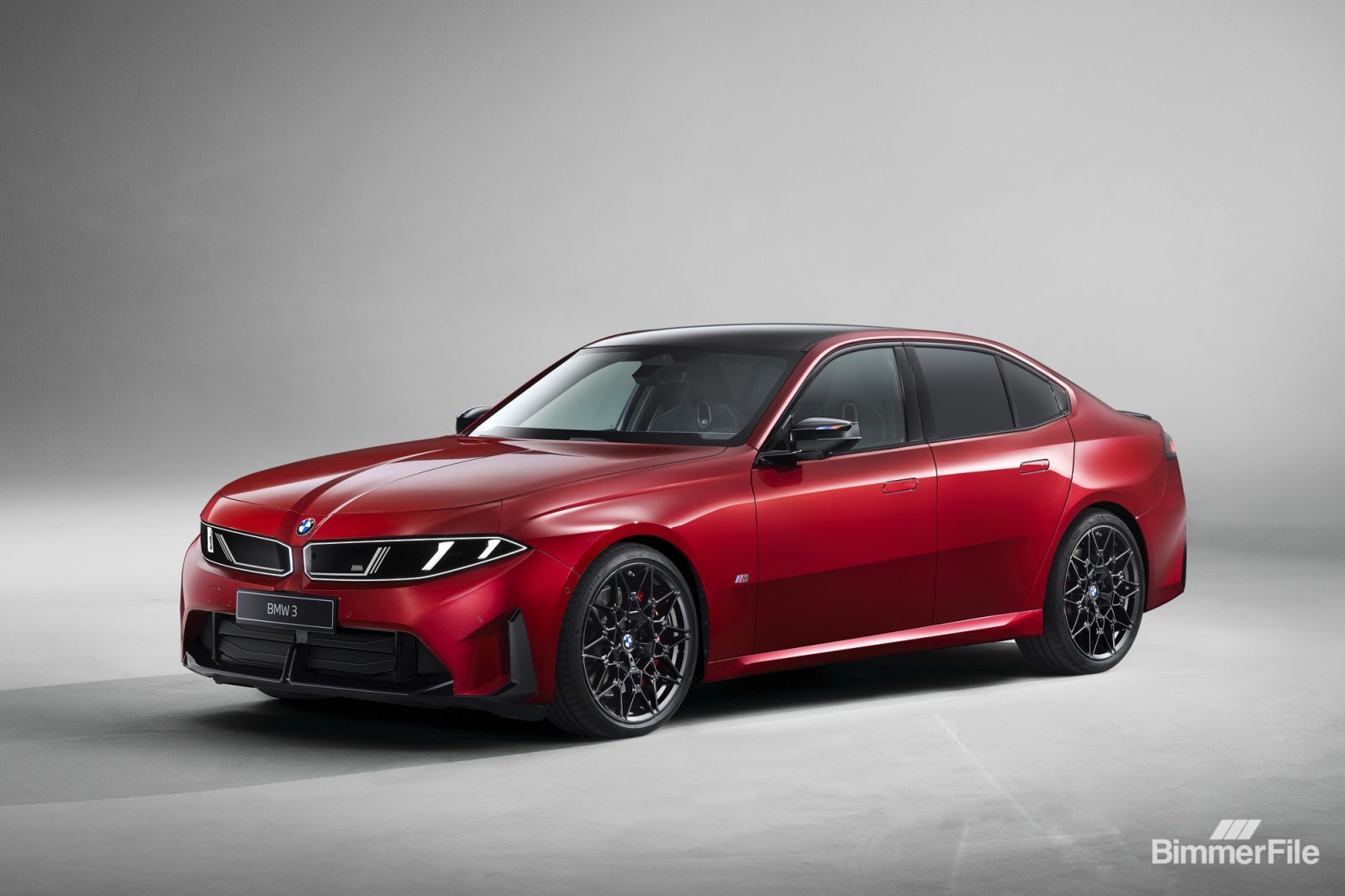
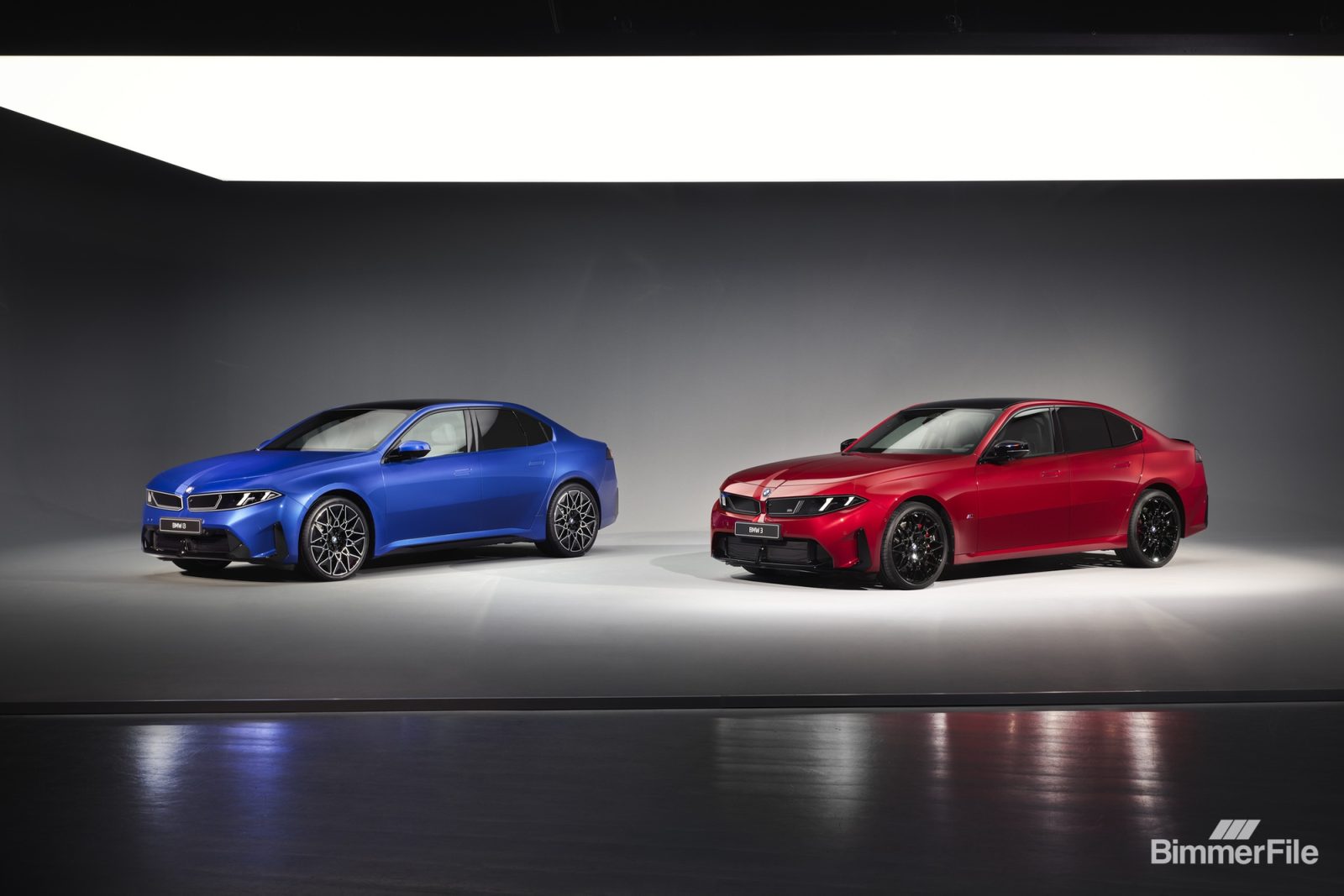
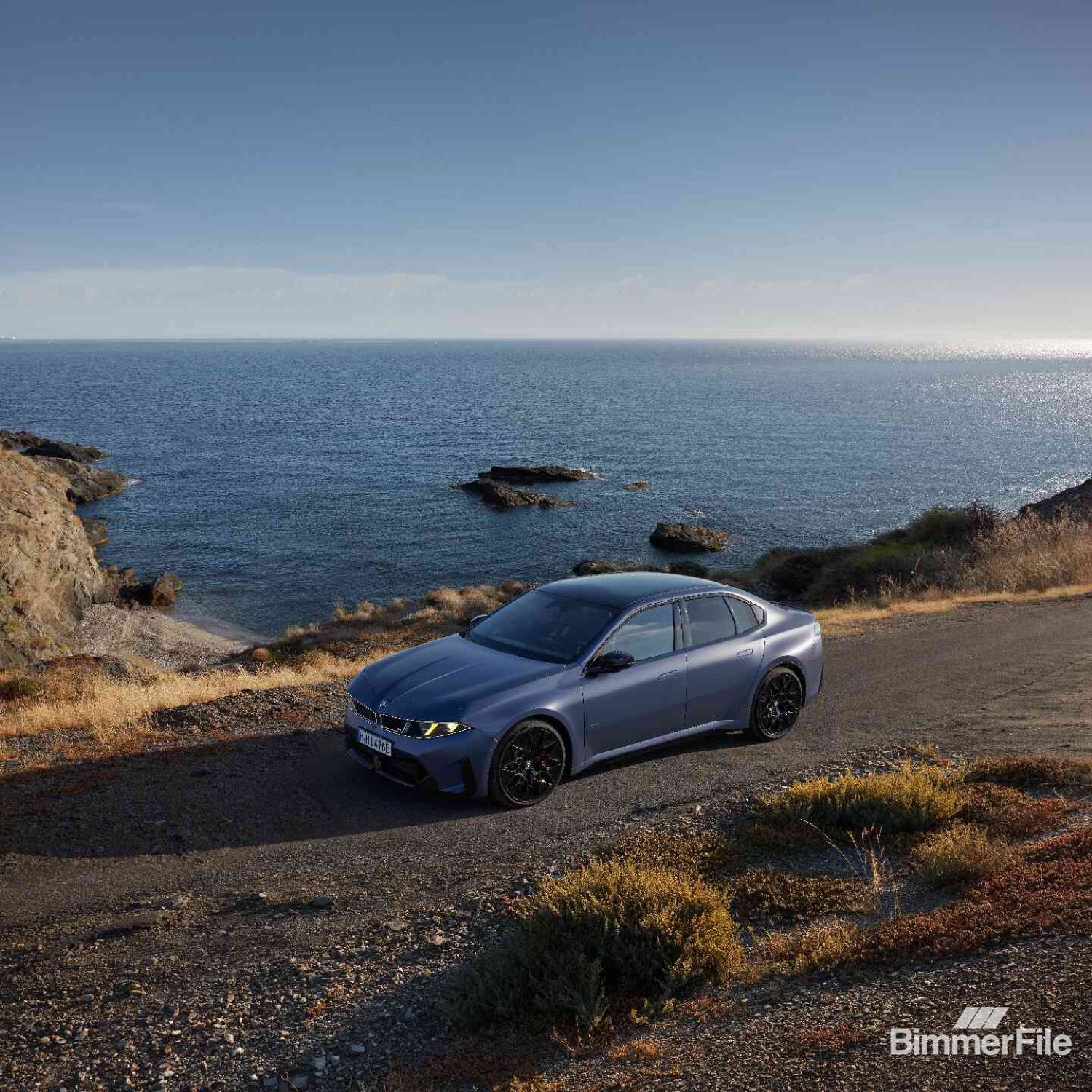
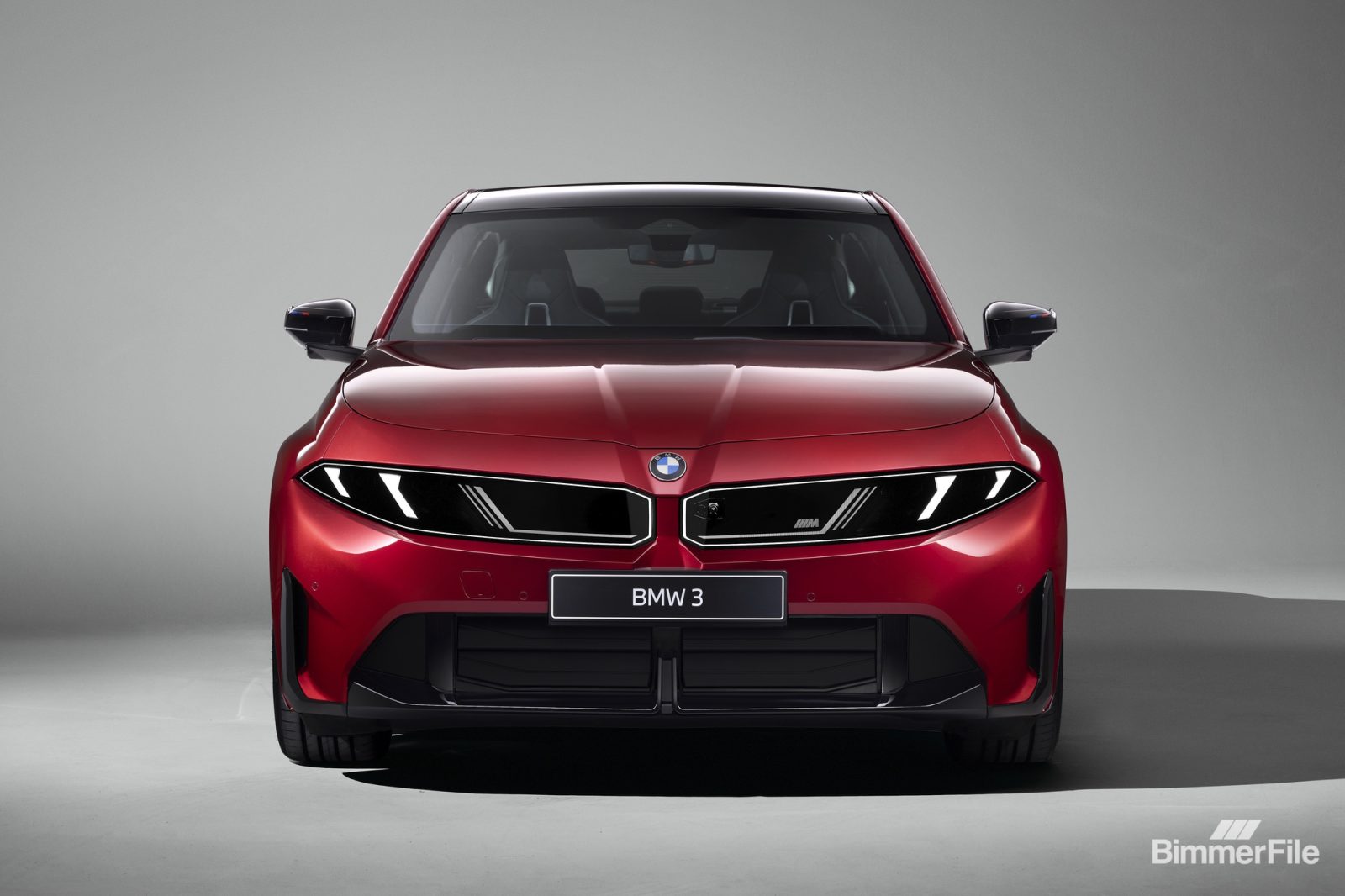
The combustion 3 Series is here, and it looks like the future. BMW has revealed the eighth-generation 3 Series, the G50. It’s a petrol sedan that will be sold alongside the all-electric i3, and at a glance you’ll struggle to tell the two apart. Prices start at $49,900 for the rear-drive 330. The range tops out with the 437 hp M350 xDrive at $65,900. US deliveries begin in the first quarter of 2027.
That’s the news. The more interesting story is what BMW did underneath, and what it did to the car you see in these photos.
Same face, very different bones
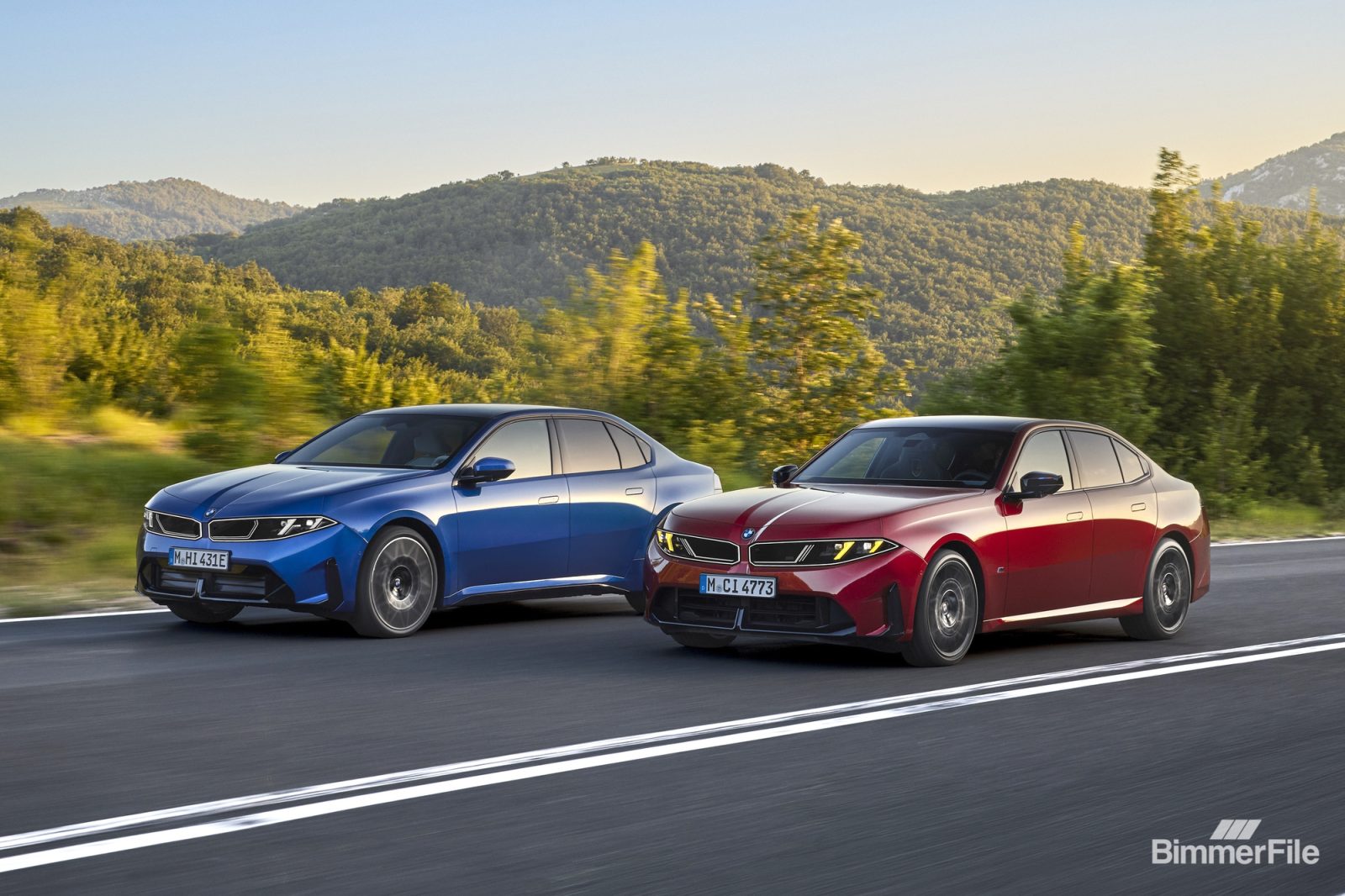
BMW has spent two years telling us it would build two 3 Series and make them look like one. As we laid out in April, the i3 is a clean-sheet Neue Klasse EV. The G50 is something else entirely: a heavily reworked evolution of CLAR, the longitudinal architecture under the outgoing G20, with updated B48 and B58 engines up front.
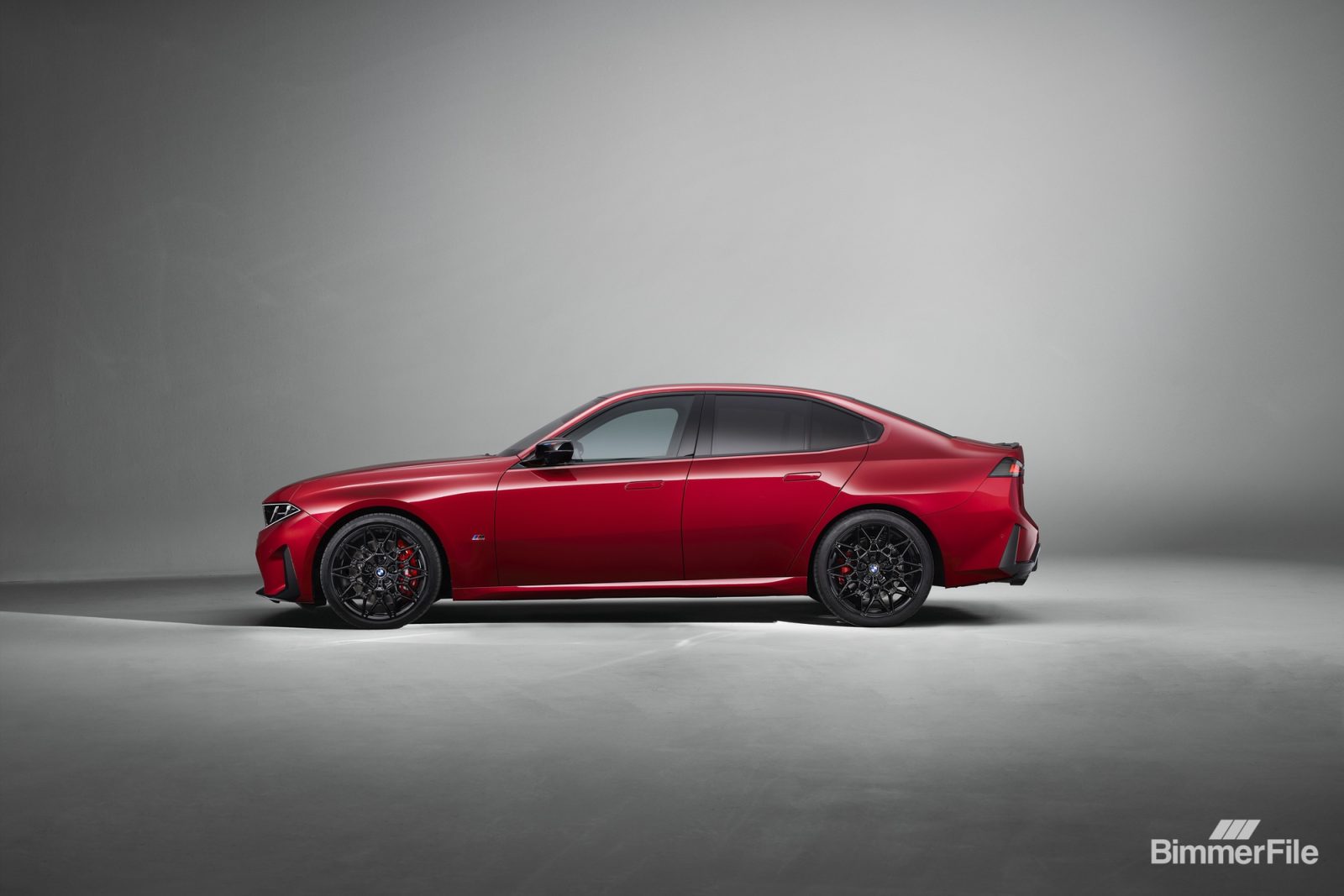
The shared design hides that well, but not perfectly, and the differences are where the car gets interesting. The two cars are nearly the same length, at 187.2 inches for the petrol car and 187.4 for the i3. But the G50 rides on a 112.6-inch wheelbase, a full 1.5 inches shorter than the EV’s. It’s also narrower and an inch lower.
The combustion car carries more overhang and more nose, and BMW’s own description mentions a “set-back greenhouse.” That’s the inline six asking for room. The i3 has no engine to package, so its wheels sit at the corners and its cabin can push forward. The G50 gets the long hood and rearward cabin that defined every 3 Series before it. Oddly, the car built on older bones has the more classically BMW proportions.
Mixing new sheetmetal with old architecture isn’t a new trick inside the BMW Group. MINI did the same with the current Cooper, where the electric J01 and the petrol F66 share a face and very little else. The difference here is scale. This is BMW’s most important car, and the stakes of getting the split right are considerably higher.
About all Those M Logos
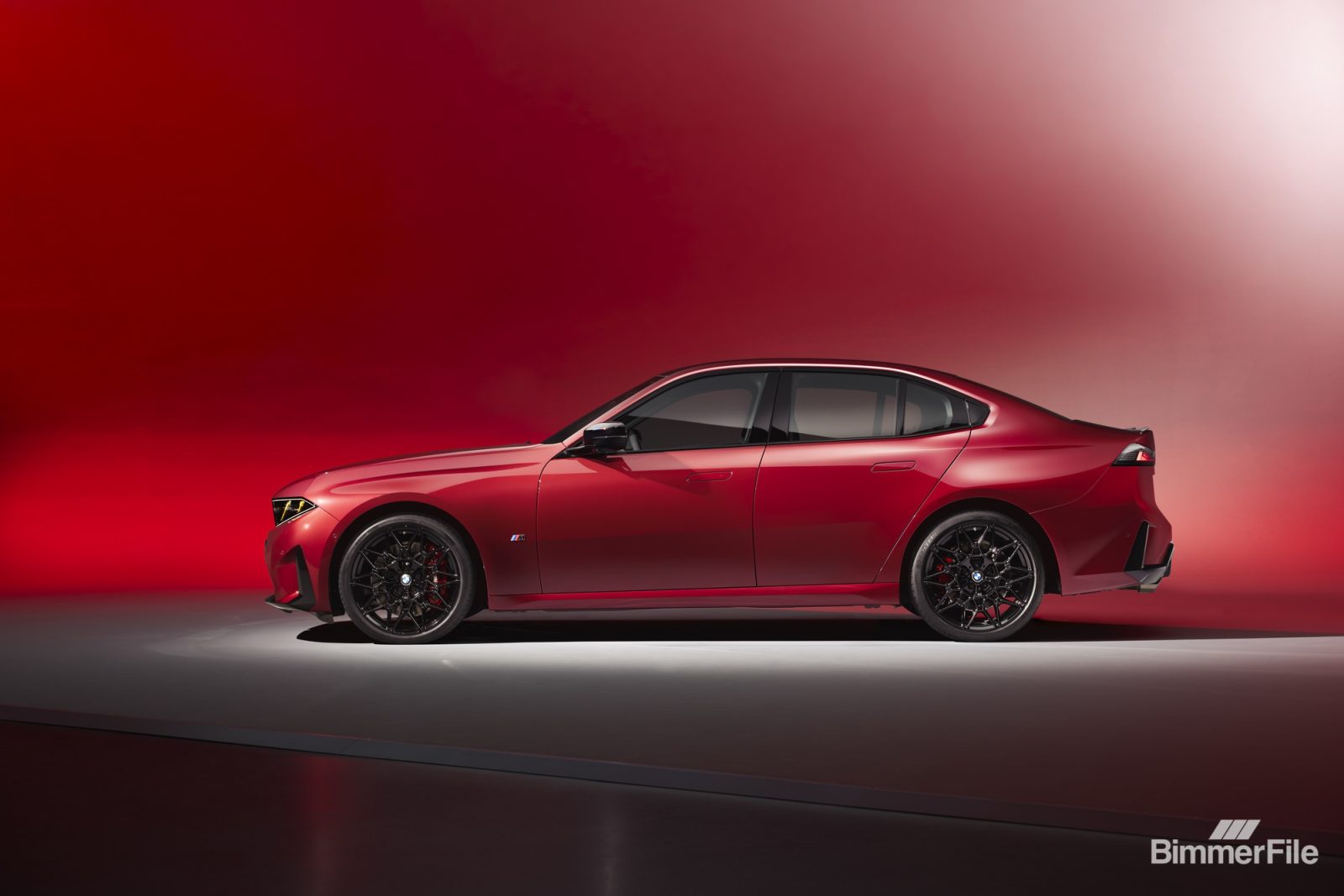
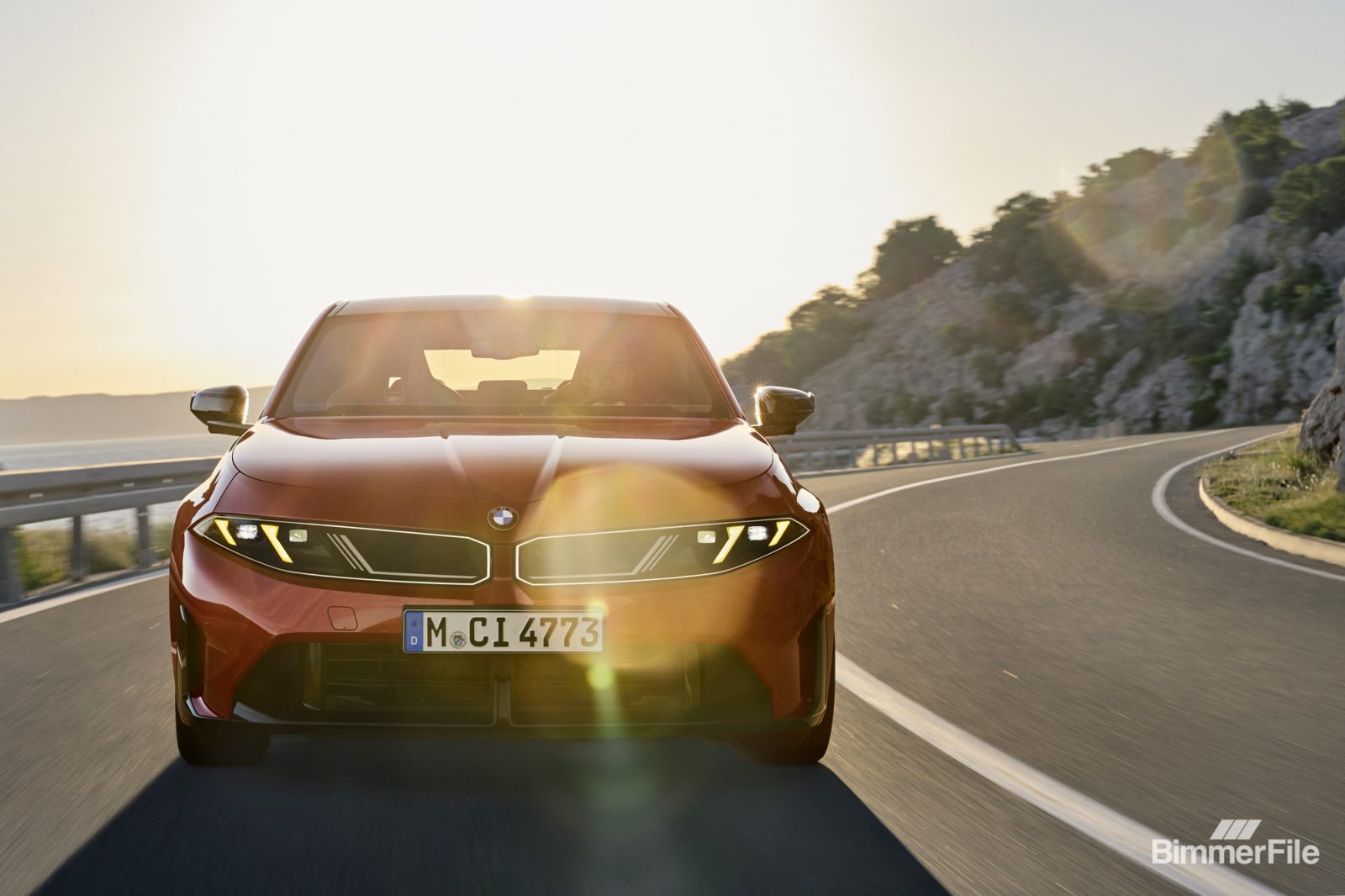
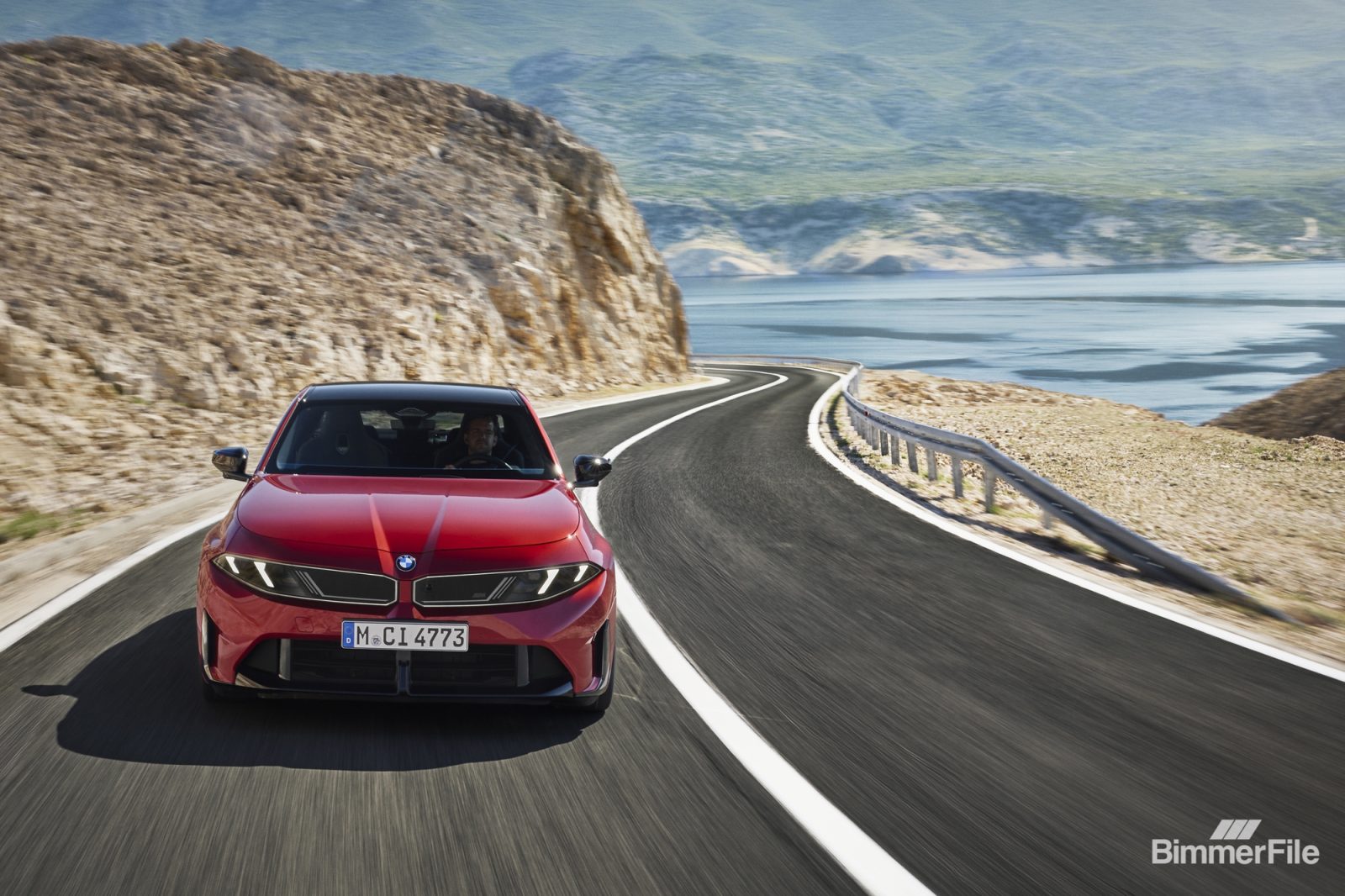
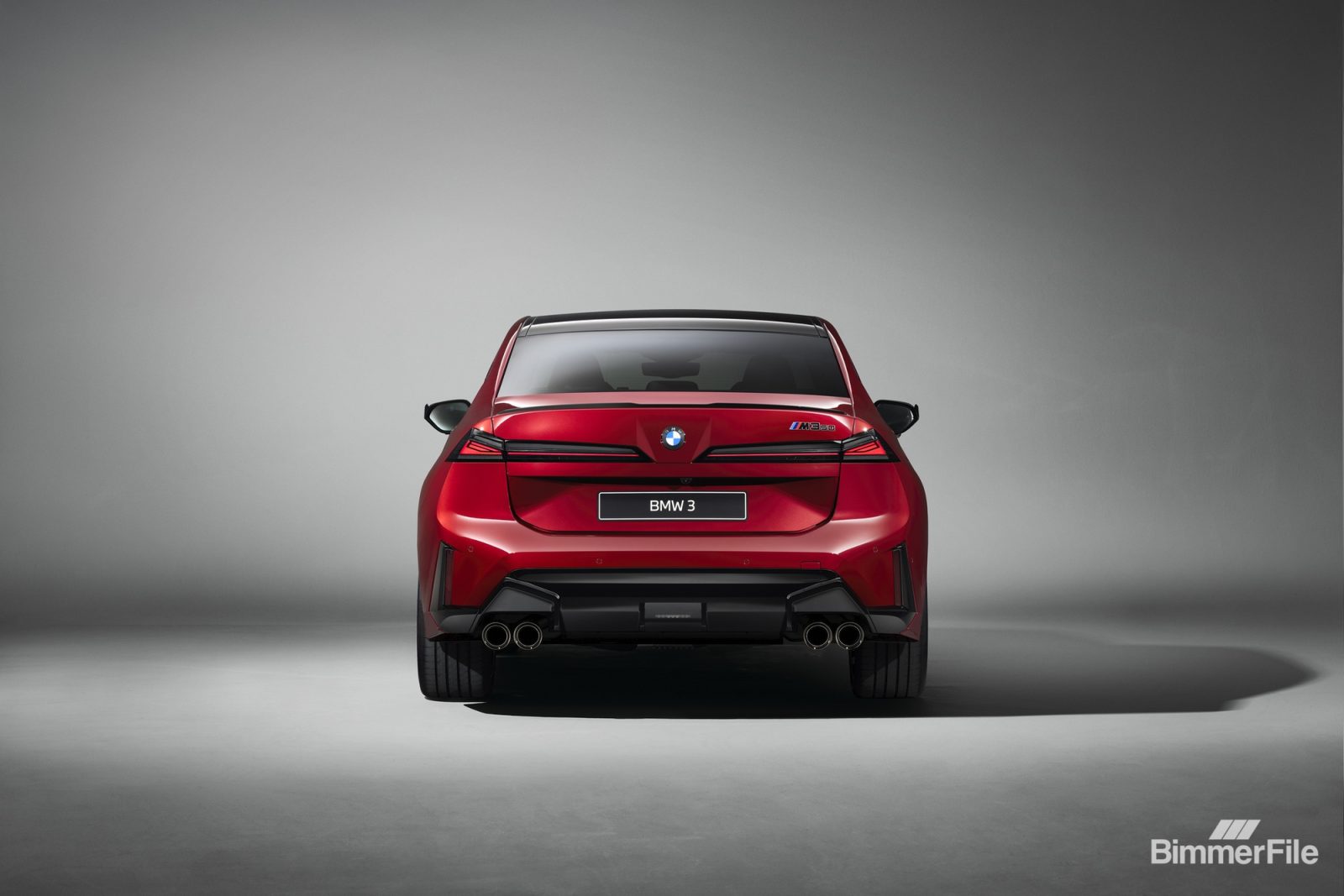
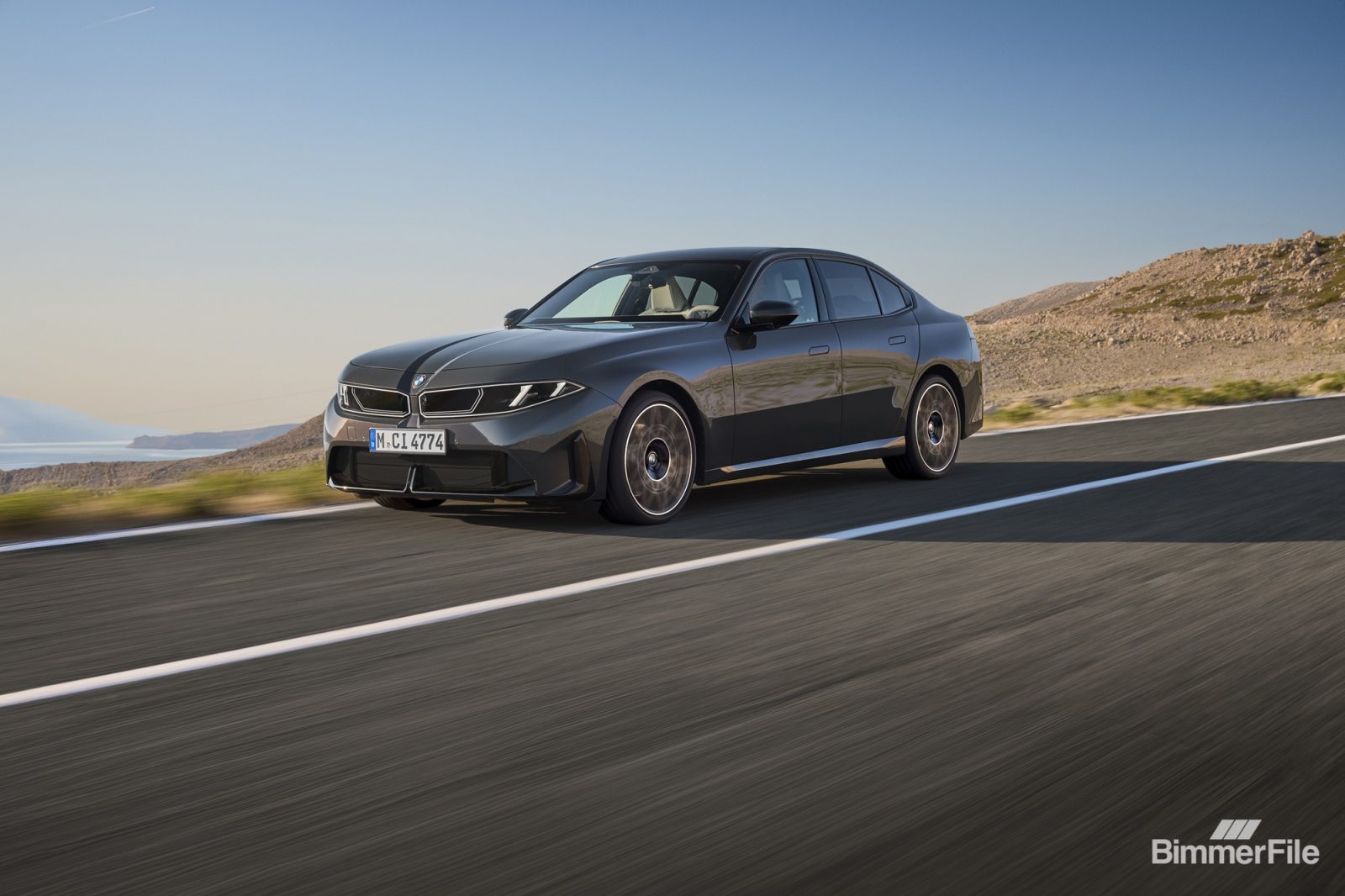
The car in these photos is the M350 xDrive, and BMW has not been subtle about it.
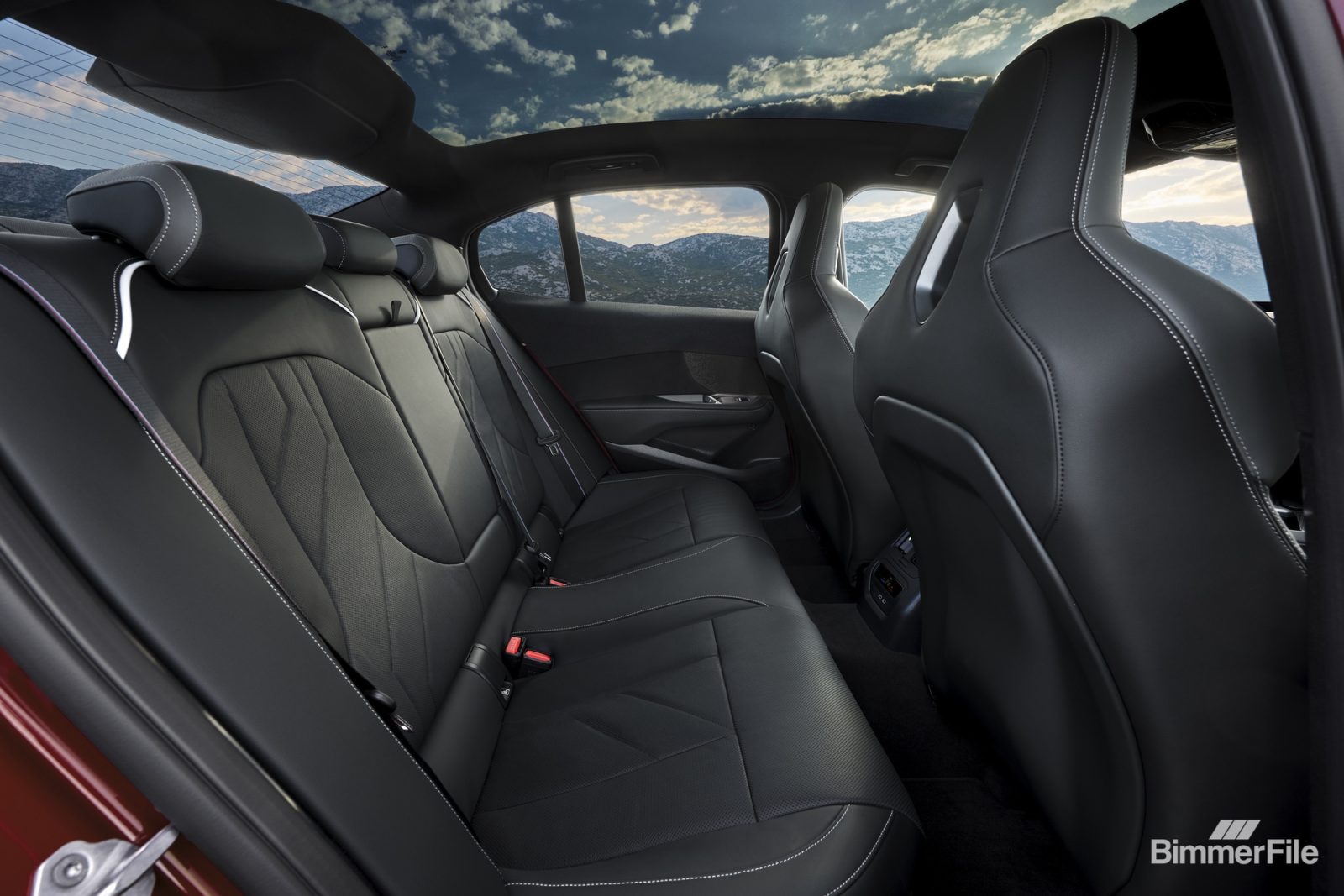
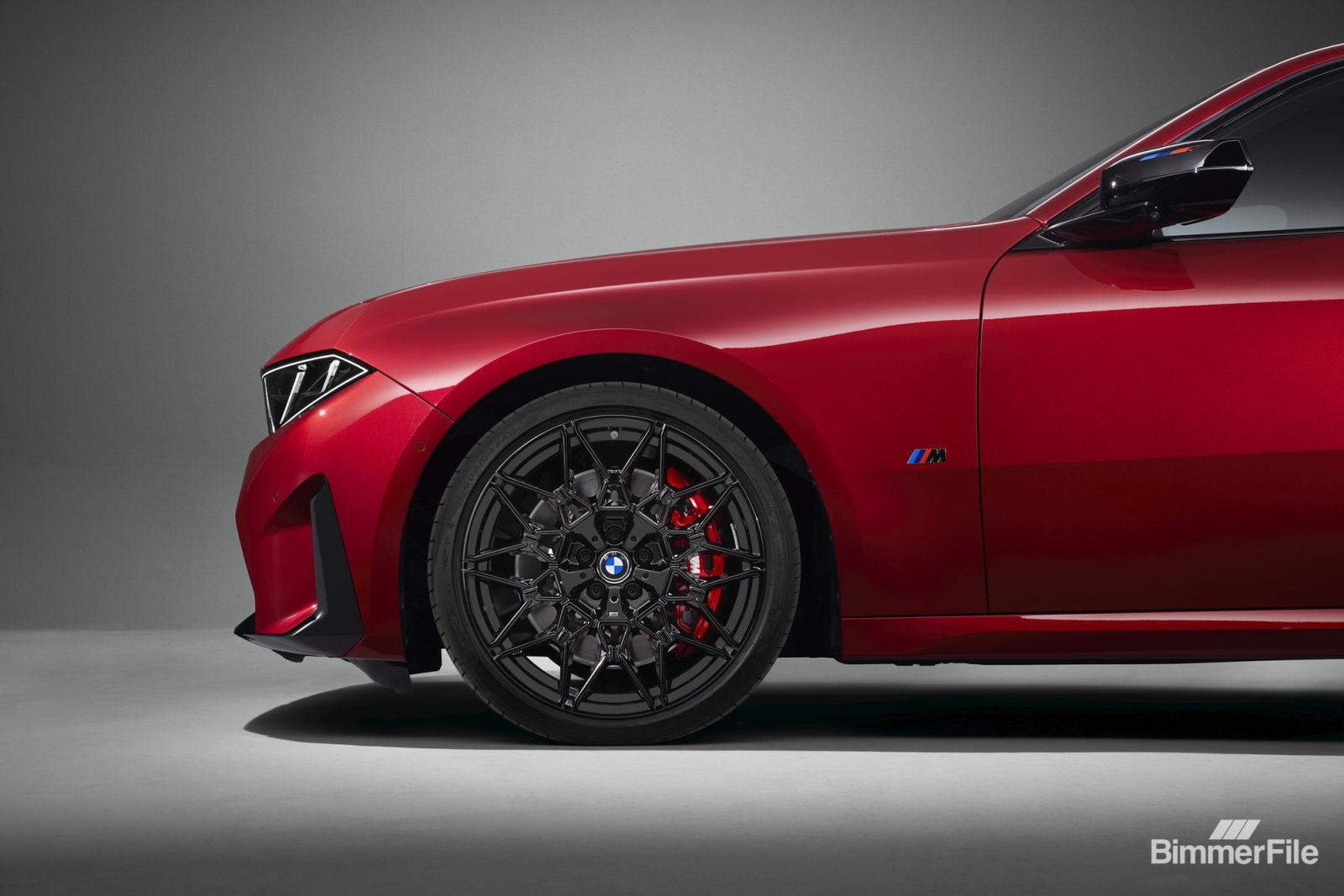
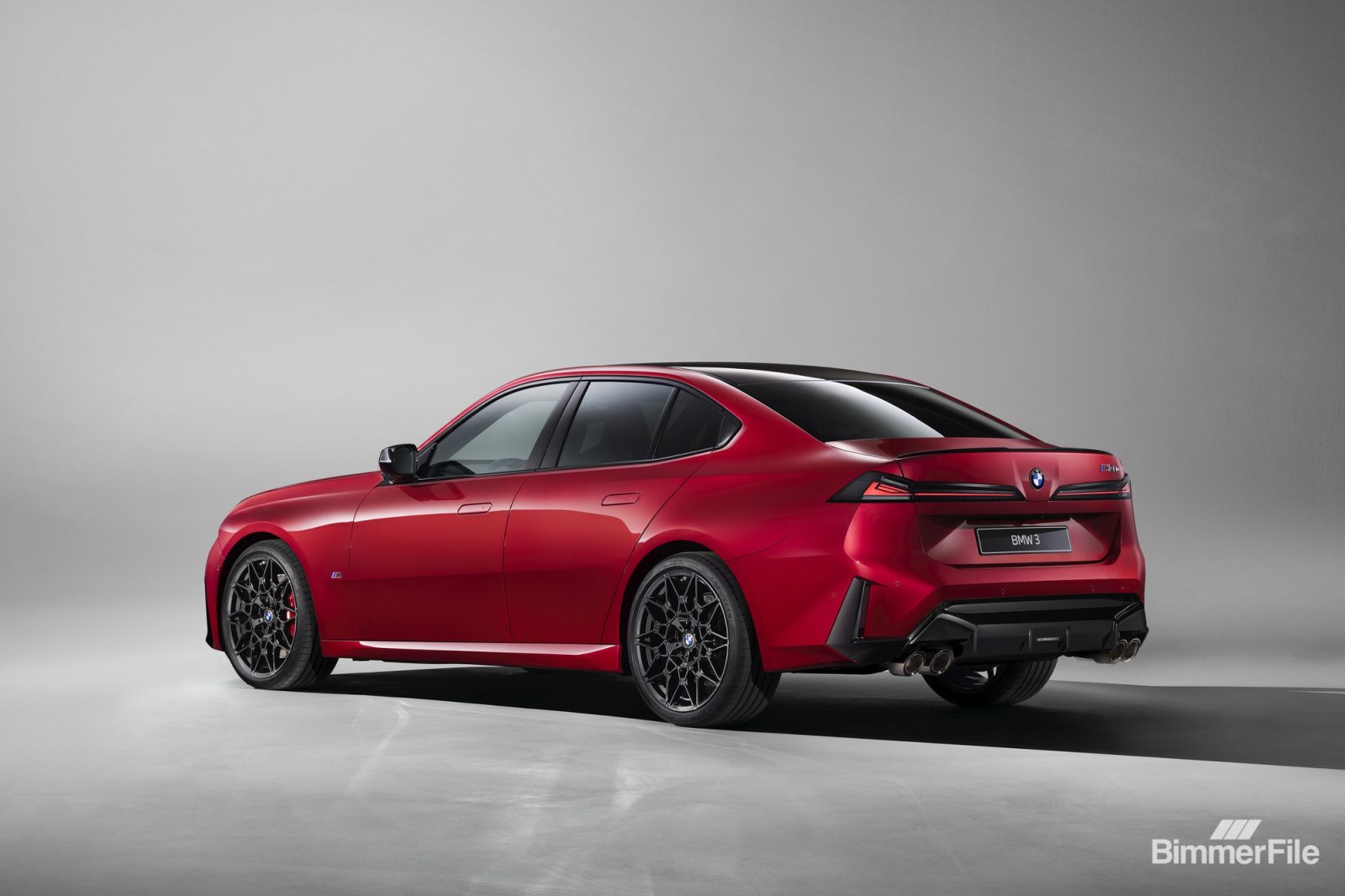
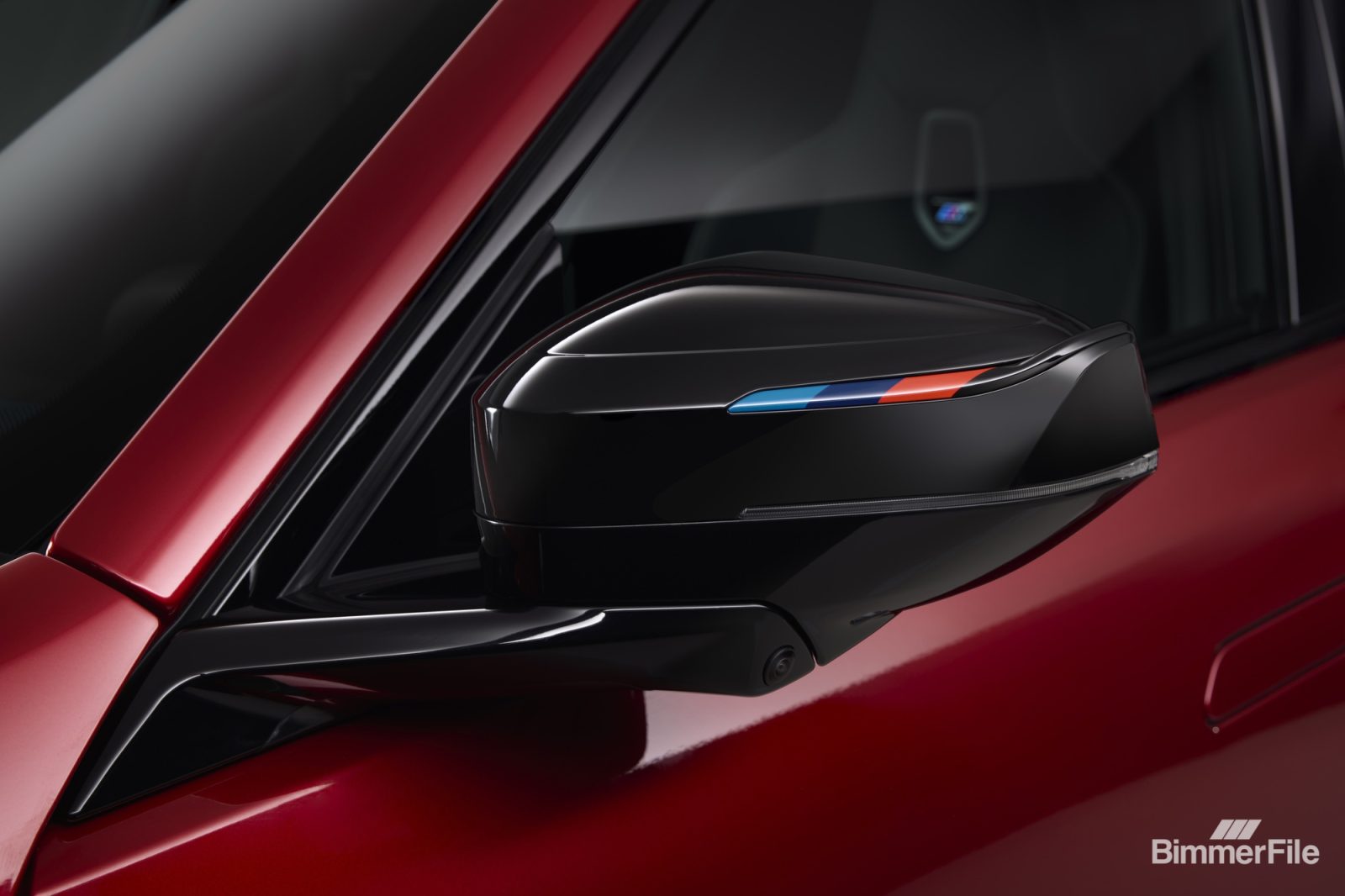
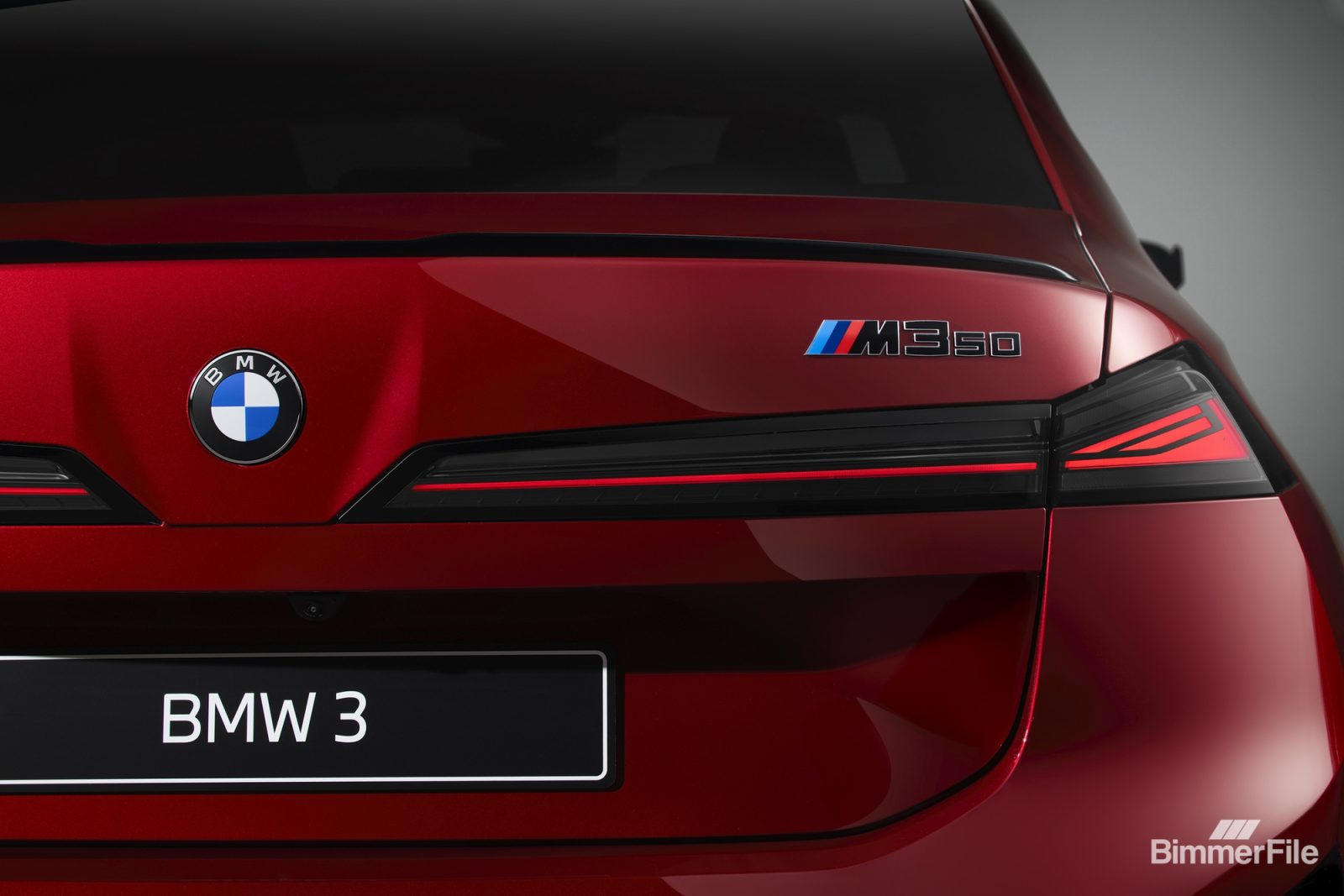
There are optional yellow daytime lights, once reserved for CS and CSL cars and now explained as inspired by GT racers and the M Hybrid V8. There’s a standard rear spoiler, four tailpipes, and bi-colour Jet Black M wheels. The Iconic Glow kidney lighting is standard. Inside is an M steering wheel. The optional M Sport seats carry illuminated M logos that are deliberately visible from outside the car, through the windscreen and side glass. Tick the Digital Premium box and you get an M Drag Meter app on the Central Display.
This is not an M car. BMW describes it as the range’s entry point to BMW M, which is a careful way of saying it isn’t one. The yellow lights are the clearest example. On an M4 CSL they signalled something rare and hard-won. On a $65,900 sedan with an options list, they signal an options list. It’s a lot of badging for a car that doesn’t wear the full badge.
But set the costume aside for a moment, because the hardware underneath is more serious than the styling suggests.
The M350 xDrive is quicker than its predecessor by a wide margin
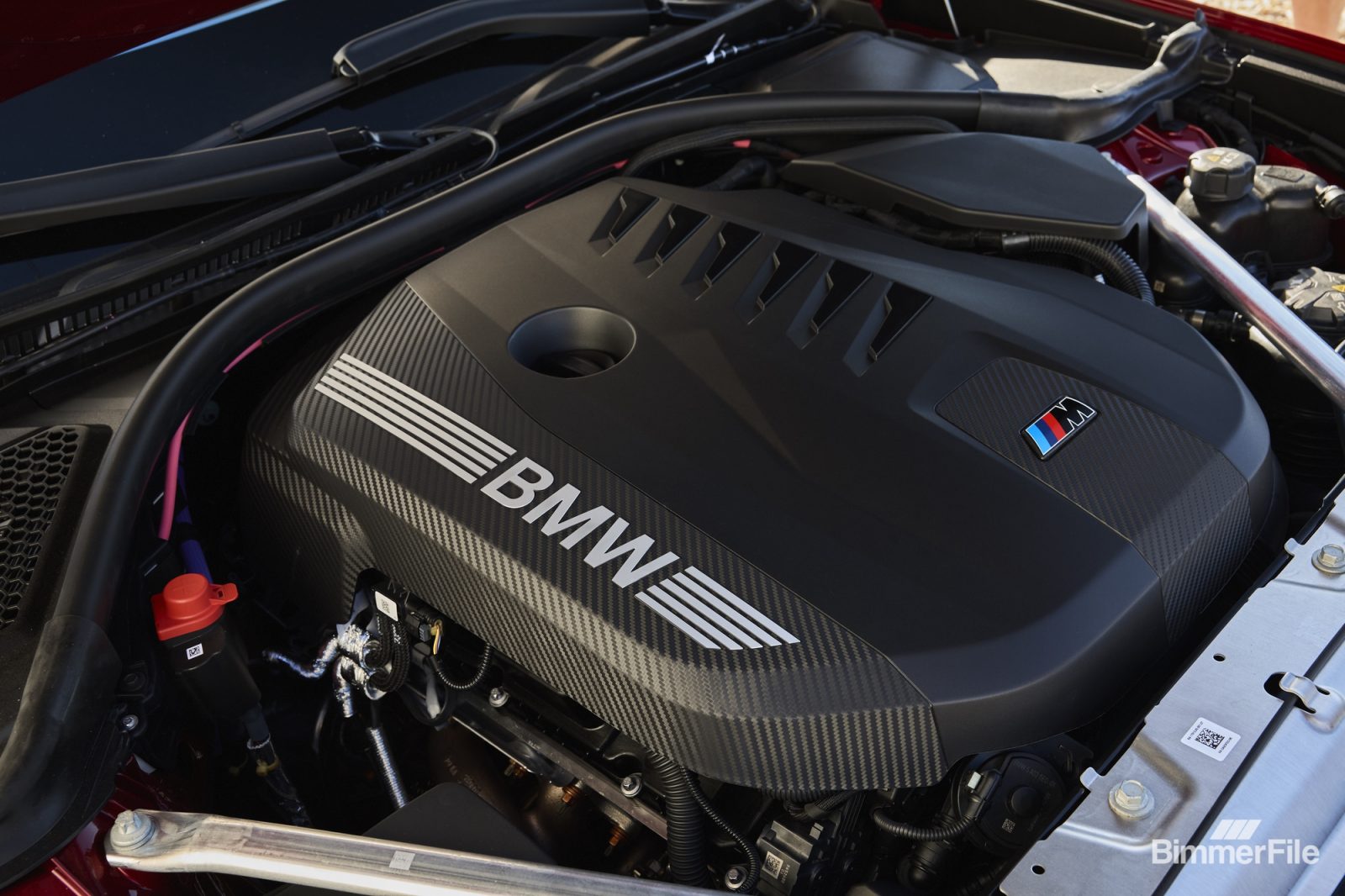
The engine is the latest B58, code B58B30M3. It’s a 3.0-litre inline six with a crankshaft-mounted 48V starter generator built into the transmission housing, and that generator contributes up to 17 hp on its own. Total output is 437 hp and 428 lb-ft, up from the M340i’s 386 hp. That works out to 145.7 hp per litre.
BMW has moved the engine to the Miller cycle and added switchable exhaust valves. Those valves cut engine drag torque by roughly two thirds, so the mild-hybrid system can recover much more energy when you lift off the throttle. New turbochargers account for much of the power gain. The official 0 to 60 mph time is 3.9 seconds, or 3.6 seconds measured the way American magazines usually measure it, with a one-foot rollout. Top speed is limited to 130 mph, or 155 mph with performance tyres.
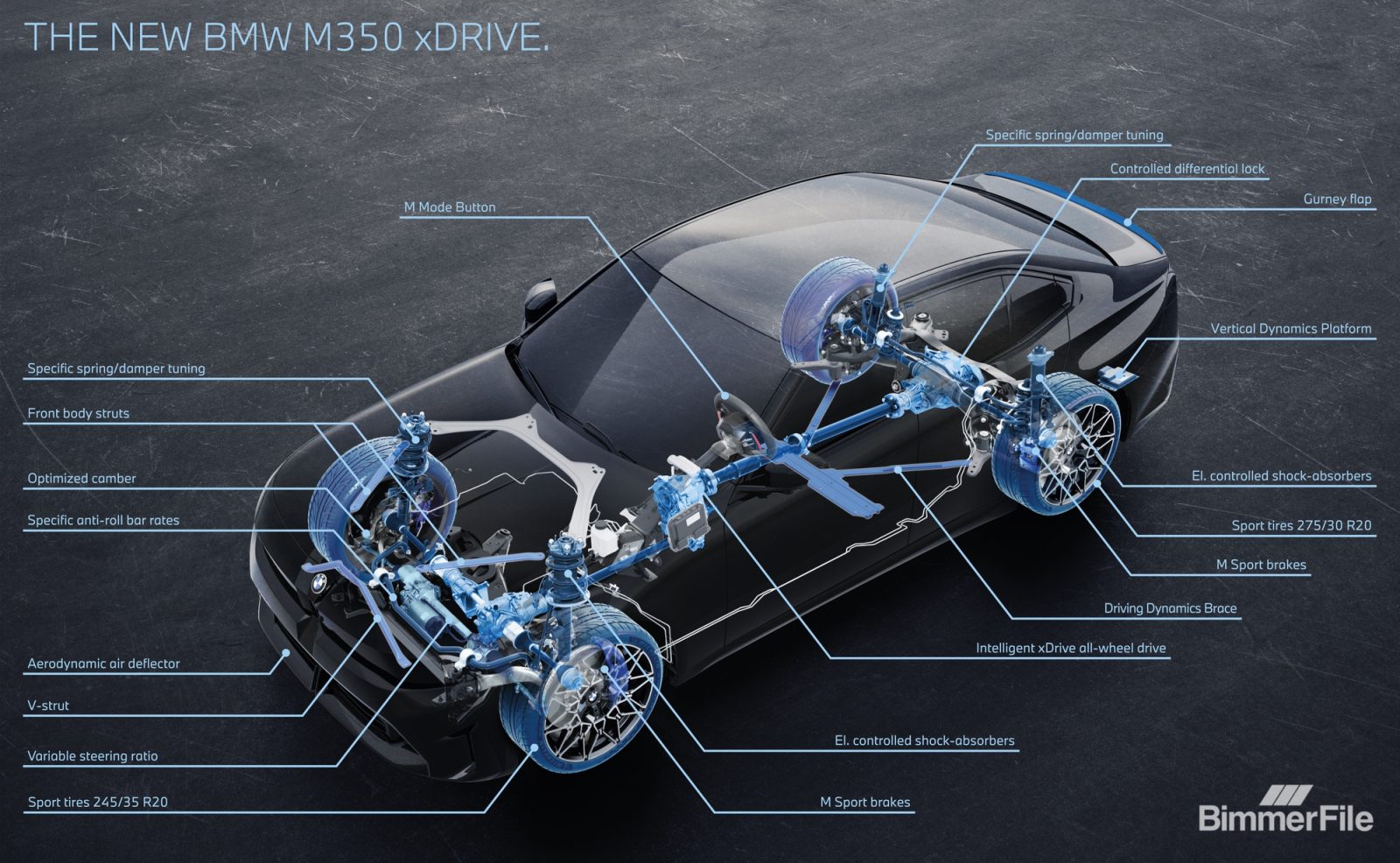
The chassis work matters more than the numbers. Adaptive M Suspension, variable sport steering, the M Sport differential and M Sport brakes are all standard. BMW has added a strut tying the front towers to the front end and improved the anti-roll bar mounting, and it says both torsional and vertical rigidity are up significantly. The standard spoiler isn’t purely decorative; BMW says it reduces lift at speed. The M Sport and M Sport Plus drive modes are exclusive to this car.
Then there’s Drift Moment. It’s a rear-wheel-drive setting, selected on the Central Display and paired with DSC Off. An M-specific clutch strategy sends all drive to the rear axle. It’s the kind of feature that used to belong only to full M cars, and it’s genuinely welcome. The catch is that it doesn’t exist yet. Drift Moment arrives during 2027 as a software update, including for cars already delivered. Selling a car on a feature it will receive later is now standard practice across the industry, and BMW is no exception.
One number is worth sitting with: 4,169 lbs, with 54 percent of that weight over the front wheels. BMW’s press materials talk about near-perfect weight distribution for the petrol range. That holds for the four-cylinder cars. The M350 xDrive is noticeably nose-heavy by 3 Series standards, and the xDrive system and M differential will be working hard to hide it. As we noted when BMW confirmed the car, xDrive isn’t an option here. It defines the whole car.
The 330 might be the one that matters
The M350 xDrive gets the attention. The 330 is the car most people will actually buy, and it may be the purer 3 Series of the two.
It uses the B48B20O3, a 2.0-litre four with a belt-driven 48V starter generator, making 255 hp and 295 lb-ft. That’s essentially where the outgoing 330i left off, so the gains here are in efficiency rather than output. An eight-speed Steptronic is standard. Both the rear-drive 330 and the 330 xDrive reach 60 mph in 5.9 seconds.
The good news is that rear-wheel drive returns as the base configuration, at $49,900. At 3,827 lbs with a 52/48 split, it’s the lightest and best-balanced car in the range. It’s still roughly 245 lbs heavier than the rear-drive 2023 330i we tested. That weight gain is the price of the screens, the sensors and the extra size.
The chassis revisions are extensive. Tracks are wider and the wheelbase is longer than the G20’s. The front axle gets more caster trail and less camber. The five-link rear gets more camber and a revised caster setup. High-preload anti-roll bar mounts sit at both ends. Newly developed lift-related dampers are standard, and overall wheel diameter grows from 654 mm to 680 mm for better ride and traction. Staggered 245/255 tyre setups are available. Optional 20-inch wheels bring 275-section rear tyres.
Adaptive suspension and Adaptive M Suspension are both available, but only with sport steering, which uses a variable ratio. That’s a sensible pairing. Anyone buying adaptive dampers is probably also the buyer who wants the quicker rack.
There’s a subtle distinction in how the two 3 Series are controlled. The i3 gets the Heart of Joy, BMW’s centralised driving-dynamics computer, which runs ten times faster than previous systems. The petrol cars use what BMW calls an optimised Driving Stack, with functions spread across dedicated control units refined over decades. In plain terms, the EV gets the new brain and the combustion car keeps a proven one. For a sport sedan still built around mechanical grip, that may be no bad thing.
| 330 | 330 xDrive | M350 xDrive | i3 50 xDrive | |
|---|---|---|---|---|
| Base MSRP | $49,900 | $51,900 | $65,900 | $61,500 |
| Powertrain | 2.0L I4, 48V | 2.0L I4, 48V | 3.0L I6, 48V | Dual-motor EV |
| Power | 255 hp | 255 hp | 437 hp | 463 hp |
| Torque | 295 lb-ft | 295 lb-ft | 428 lb-ft | 476 lb-ft |
| 0 to 60 mph | 5.9 sec | 5.9 sec | 3.9 sec | 4.5 sec |
| Curb weight | 3,827 lbs | 3,909 lbs | 4,169 lbs | 4,960 lbs |
| Weight distribution (F/R) | 52/48 | 52.8/47.2 | 54/46 | 49/51 |
| Wheelbase | 112.6 in | 112.6 in | 112.6 in | 114.1 in |
| Drive | RWD | AWD | AWD | AWD |
Inside, the future arrives regardless of fuel
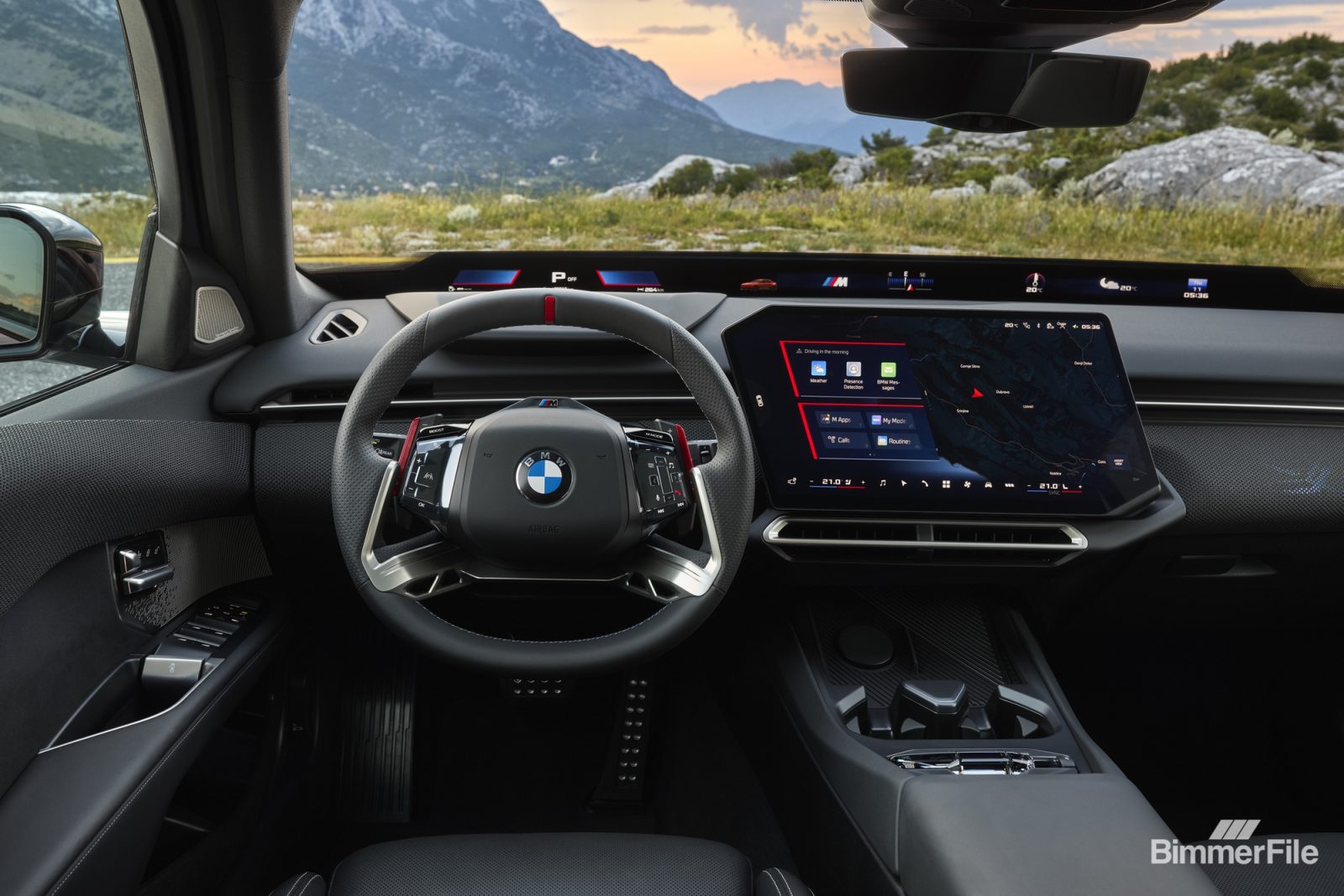
Whatever is under the hood, the cabin is pure Neue Klasse, and it’s shared almost entirely with the i3. Panoramic Vision projects information across the full width of the lower windscreen. A 17.9-inch Central Display sits angled toward the driver, and a 3D head-up display is optional. Everything runs on BMW Operating System X, which is built on Android. There’s an Alexa+ powered voice assistant that BMW says can handle natural conversation rather than set commands.
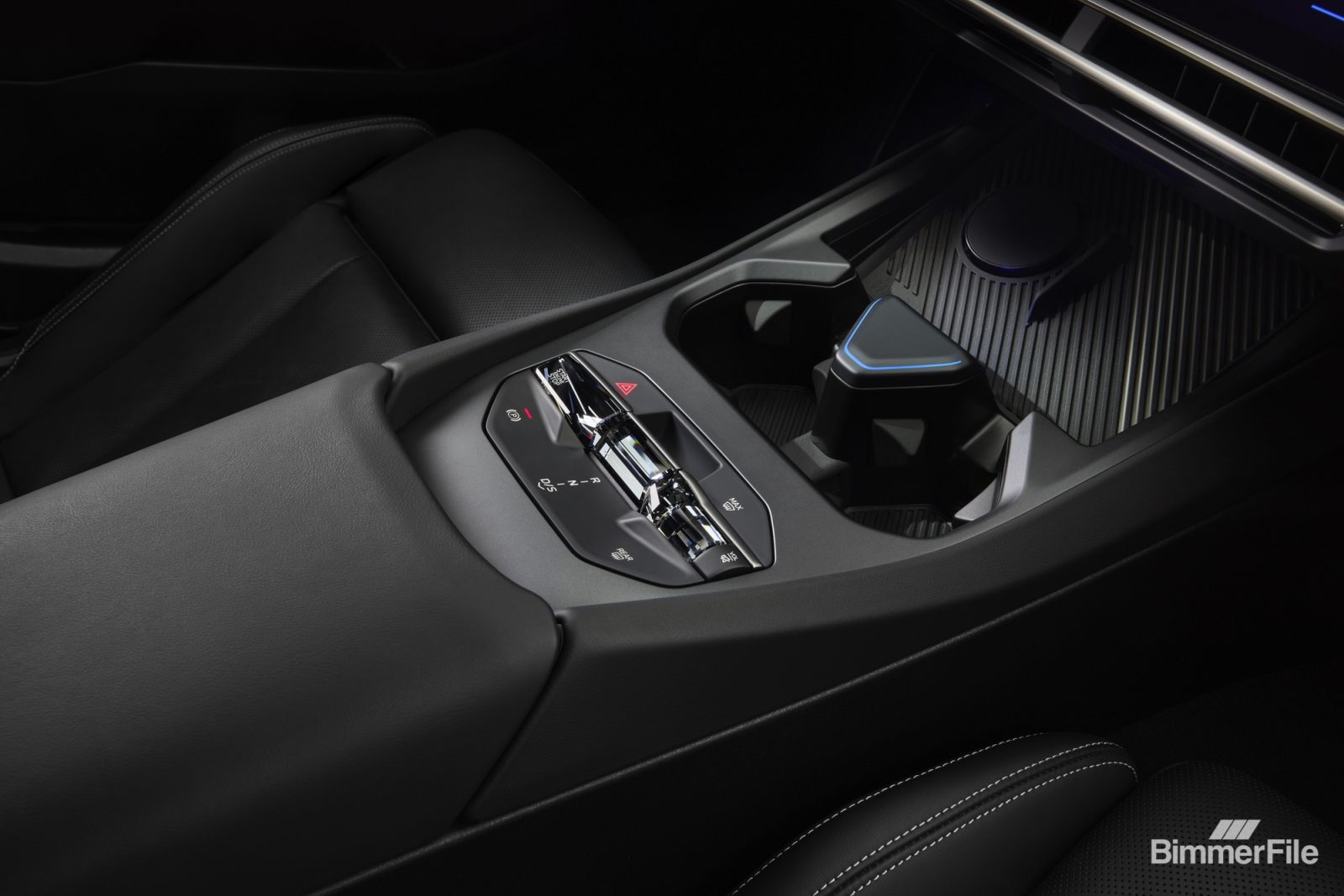
The new steering wheel has a central upper spoke, a first for the 3 Series, and every petrol car gets shift paddles as standard. BMW has kept physical controls for volume, hazards, the parking brake and the rear defroster. Its materials say nothing about a rotary iDrive controller, and our earlier reporting pointed to its departure. That will be the biggest adjustment for existing owners, and the first thing long-time 3 Series drivers will judge the car on.
A panoramic glass roof is standard. Optional multifunction seats add ventilation on the petrol cars; the i3 gets massage instead. Driving Assistant Plus is standard. The optional Highway Assist allows hands-free driving on suitable highways at up to 85 mph.
A 3 Series from Dingolfing
For the first time in its modern history, the combustion 3 Series leaves Munich. G50 production starts at Dingolfing in November 2026, on the same line as the 4, 5 and 7 Series. This is actually a return: Dingolfing built 3 Series from 1980, before production consolidated elsewhere. Munich, where the E21 went into production in 1975, now builds the i3 and goes fully electric from 2027. Engines for both the four and the six come from Steyr in Austria.
BMW’s development chief Joachim Post is already calling it the best 3 Series of all time. That’s what every development chief says at every launch, and it’s for the road to decide.
What’s clear already is the shape of the bet. BMW has built one 3 Series for where the brand is going and one for the buyers it still has, and it has made them look almost identical. The M350 xDrive dresses up to make the petrol car feel special. The 330, rear-drive, four-cylinder and $49,900, may make that case better without any help from yellow lights. BMW has said combustion isn’t going anywhere, and the G50 is the car that has to show it meant it.