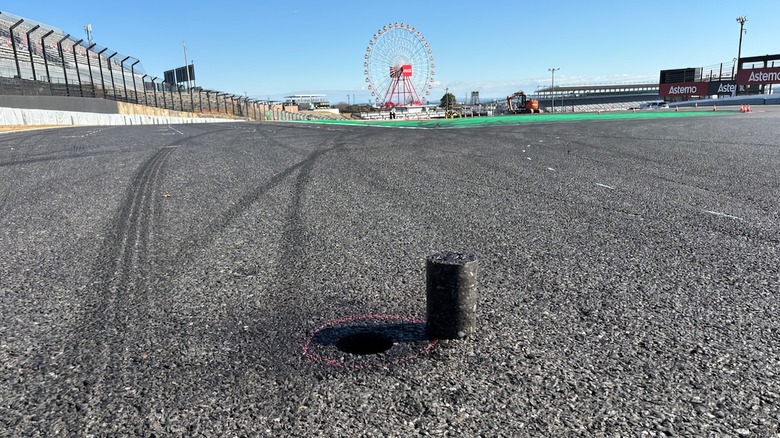
Suzuka Circuit
If you’re still gift-hunting for a die-hard racing fan, there’s a legendary Japanese circuit that might have the perfect present available soon. Suzuka Circuit announced on Saturday that it will be selling pieces of the racing surface. It would definitely be an impressive conversation piece for a coffee table. Suzuka’s F1 date might have shifted to spring, but the round has decided the world championship on numerous occasions from the 1980s through the 2000s. The venue hasn’t revealed how much the chunks of asphalt will cost to purchase.
鈴鹿サーキット西コース路面張替え工事に伴い、F1や鈴鹿8耐など様々なビッグレースが行われたレーシングコースの「アスファルト」を販売します。
画像はくり抜きの様子の1シーン。価格等、詳細は後日改めてご案内します。#F1jp #鈴鹿8耐 #SUPERGT #JRR #スーパー耐久 #Sformula pic.twitter.com/rbZ6UlWnET
— 鈴鹿サーキット Suzuka Circuit (@suzuka_event) December 28, 2025
The unique memorabilia is a byproduct of preparations ahead of next March’s Japanese Grand Prix. Suzuka revealed in a post on social media: “As part of the Suzuka Circuit West Course resurfacing project, we are selling asphalt from the racing course where various major races like F1 and the Suzuka 8 Hours have been held.” Track resurfacing isn’t uncommon on tracks that are regular stops for Formula 1, as the asphalt-scraping cars are sensitive to bumpy surfaces. It’s even more of a problem for motorcycle racing. While MotoGP hasn’t visited Suzuka since Daijiro Kato’s fatal crash during the 2003 Japanese Grand Prix, the circuit’s 8-hour race is still a crown jewel of the motorcycle endurance racing calendar.
There’s history buried under older tracks
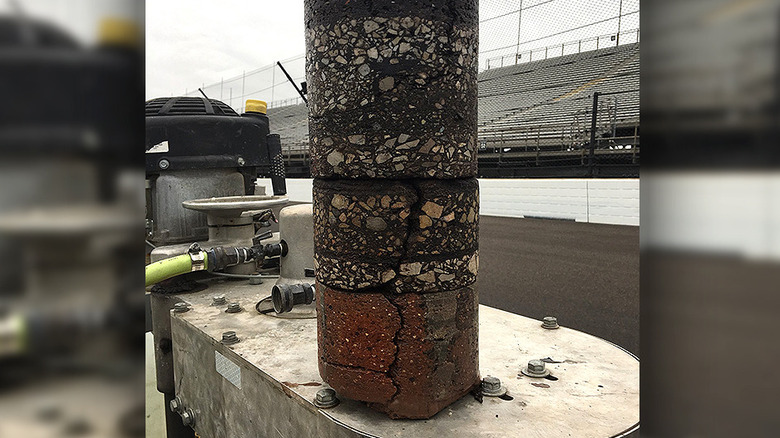
Indianapolis Motor Speedway
The Speedway’s most recent project was a partial repave in Turn 2. The hope was to remove the bumps in the corner, which can be a problem when drivers are averaging speeds over 230 miles per hour during Indy 500 qualifying. The underlying bricks were causing issues after a century of freeze-thaw cycles over Indiana winters. The bricks in certain areas of Turn 2 had to be torn up and removed. The rest of the bricks aren’t going anywhere, including the three-foot-wide strip of bricks still exposed at the start-finish line.